
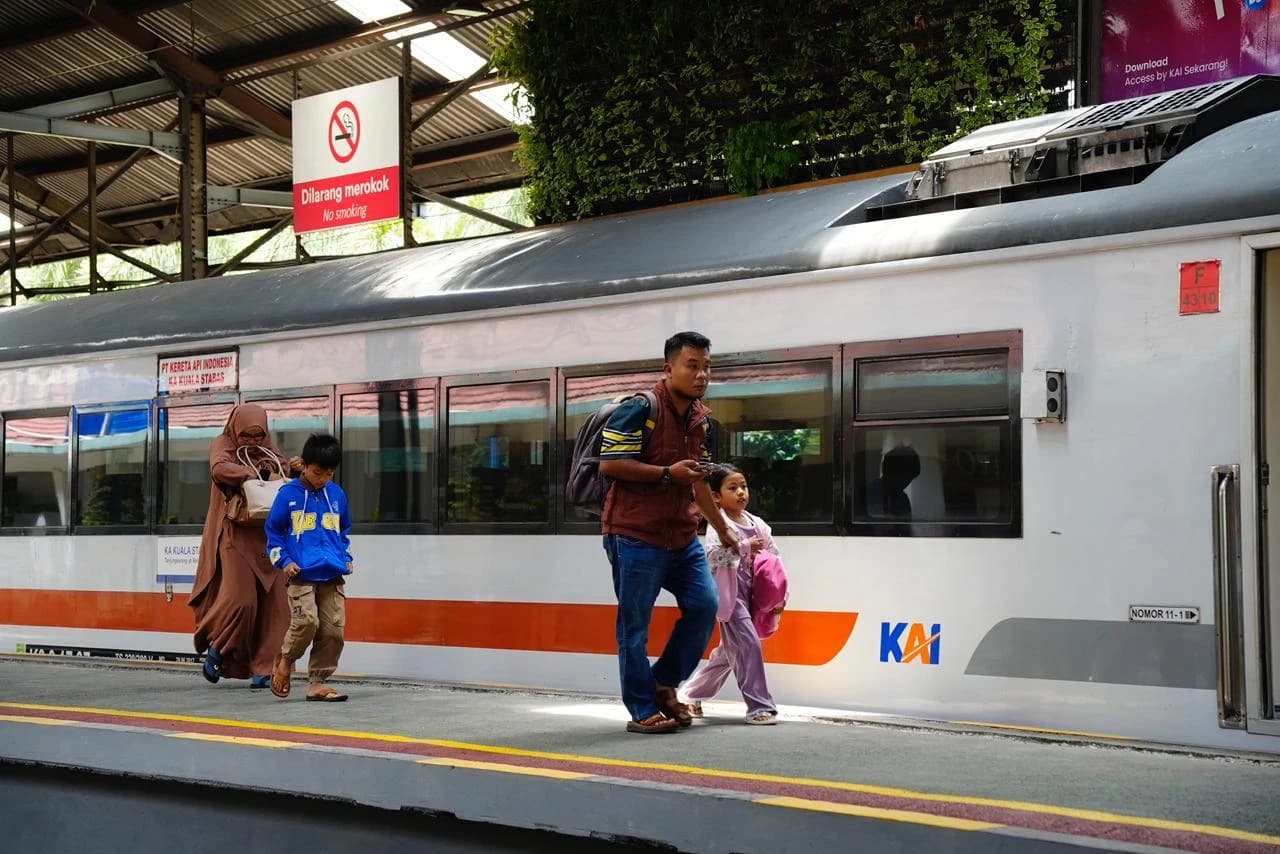
Train Travel in Sumatra Continues to Grow, Passenger Numbers Rise by Up to 19.2%
More people are choosing to travel by train throughout January–July 2026. Nationally, KAI’s long-distance and local train services served 35,257,646 passengers, an increase of 7.63% compared with the same period in 2025.
The growth was also seen across several operating areas in Sumatra. KAI’s Regional Division II Sumatra Barat served 1,359,748 passengers from January to July 2026, an increase of 19.2% from 1,140,348 passengers during the same period last year. Meanwhile, Regional Division IV Tanjungkarang served 782,548 passengers, up 14.9% from 681,150 passengers in January–July 2025.
The increase in passenger numbers shows that there is still strong potential for railway transportation in Sumatra. Trains have become part of people’s daily mobility for various needs, including intercity travel, education, work, trade, and tourism.
As demand continues to grow, strengthening capacity and service quality is important to ensure that train services can meet the needs of people in each region.
In the South Sumatra–Lampung area, KA Rajabasa served 439,984 passengers in the first half of 2026. This figure increased by 36.44% compared with 322,485 passengers in the first half of 2025. To respond to this growth, KAI strengthened the service capacity and has used modified premium economy-class coaches on KA Rajabasa since July 2026.
Passenger growth was also recorded in other operating areas in Sumatra. Regional Division I North Sumatra served 1,630,266 passengers from January to July 2026, while Regional Division III Palembang served 704,091 passengers during the same period.
The growth across Sumatra shows the importance of adjusting train services to local needs. Each route has different passenger characteristics and economic activities, so the development of capacity and service quality needs to consider the conditions of each region.