
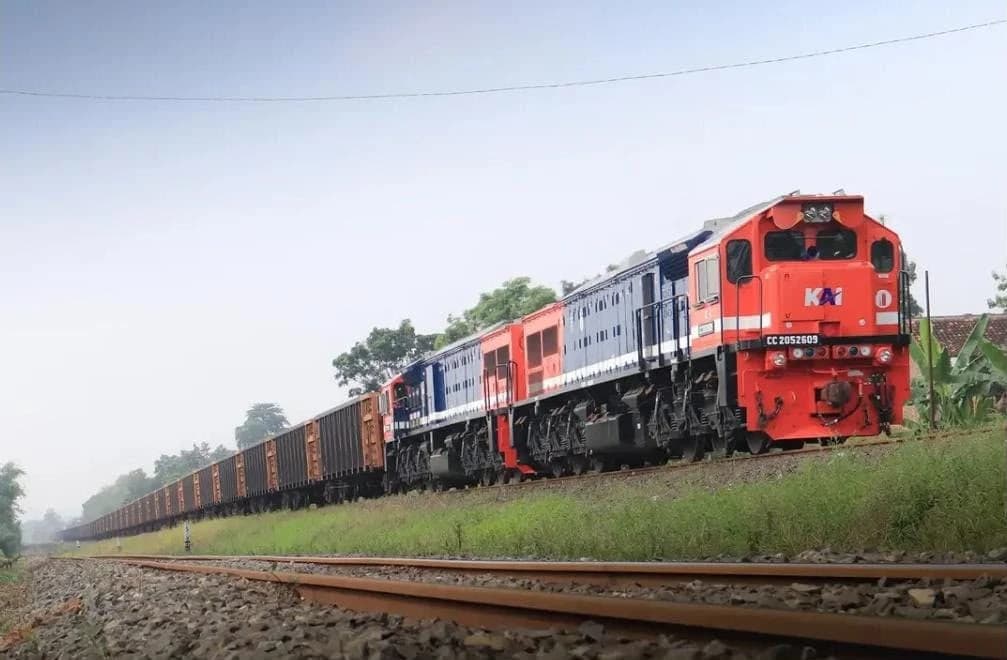
KAI Strengthens Logistics Transportation as Coal Volume Exceeds 5 Million Tons in July
Coal transportation reached its highest monthly level of 2026 in July, with 5,127,674 tons transported. The figure increased by 6.05 percent compared with the same period in 2025, when the volume reached 4,835,202 tons.
From January to July 2026, KAI has transported a total of 31,661,769 tons of coal. The volume highlights the important role of railways in supporting the distribution of large quantities of energy commodities, particularly in southern Sumatra.
The increase in coal transportation was supported by a gradual expansion of service capacity. This included the readiness of locomotives and freight cars, infrastructure, terminals, operating patterns, maintenance facilities, and human resources involved in operations.
Coal transportation plays an important role in supporting energy needs and industrial activities. Reliable distribution is needed to ensure that commodities can move from production areas to receiving points according to demand, helping the energy supply chain run in a more organized way.
Railways have an advantage in supporting this need because they can carry large amounts of cargo in a single train. Scheduled trips also help make the distribution of goods more organized and efficient.
As transportation volume continues to grow, the readiness of all operational supporting facilities needs to be strengthened. KAI is improving track capacity, the availability of rolling stock, loading and unloading facilities, maintenance, and train scheduling to ensure that the growth in transportation volume remains safe and reliable.
This capacity expansion is also being carried out in southern Sumatra. KAI has completed the delivery of 54 CC205 locomotives from Progress Rail to support operations at Regional Division III Palembang. The locomotives were delivered gradually from August 2025 to May 2026.
The addition of these locomotives strengthens KAI’s readiness to serve freight transportation in an area with high logistics demand. The availability of rolling stock is important for maintaining smooth operations, service time, and long-term operational continuity.
In addition to locomotives, KAI and PT INKA are procuring 1,125 flat cars to support logistics distribution in South Sumatra. The addition of these freight cars is being carried out in line with customer needs and the readiness of supporting infrastructure.
Capacity expansion must be carried out comprehensively because higher transportation volumes need to be supported by the readiness of locomotives, freight cars, tracks, terminals, maintenance facilities, and operating patterns. The readiness of all these components is needed to maintain safe and reliable services.
From a broader perspective, rail-based freight transportation allows large quantities of commodities to be moved more efficiently. The use of trains can also reduce the need for heavy vehicles on highways to transport the same volume of goods.
Freight transportation activities also provide benefits to various parties involved in the service chain. Operations involve train crews, operational staff, technicians, terminal workers, suppliers, and various supporting businesses, creating economic activity around freight transportation services.
Downstream, smooth coal distribution also supports power generation and industrial activities. When the supply chain operates more smoothly, energy needs and production activities can be supported more effectively, helping economic activities continue.
The growth of freight transportation is part of efforts to strengthen the role of railways in Indonesia’s national logistics system. KAI will continue to improve capacity, rolling stock productivity, and cooperation with customers and stakeholders to make logistics services stronger and more sustainable.
Stronger rail-based logistics services can provide greater benefits for the energy sector, industries, workers, and communities. This development is expected to further strengthen the role of railways in supporting smooth commodity distribution and Indonesia’s economic growth.