
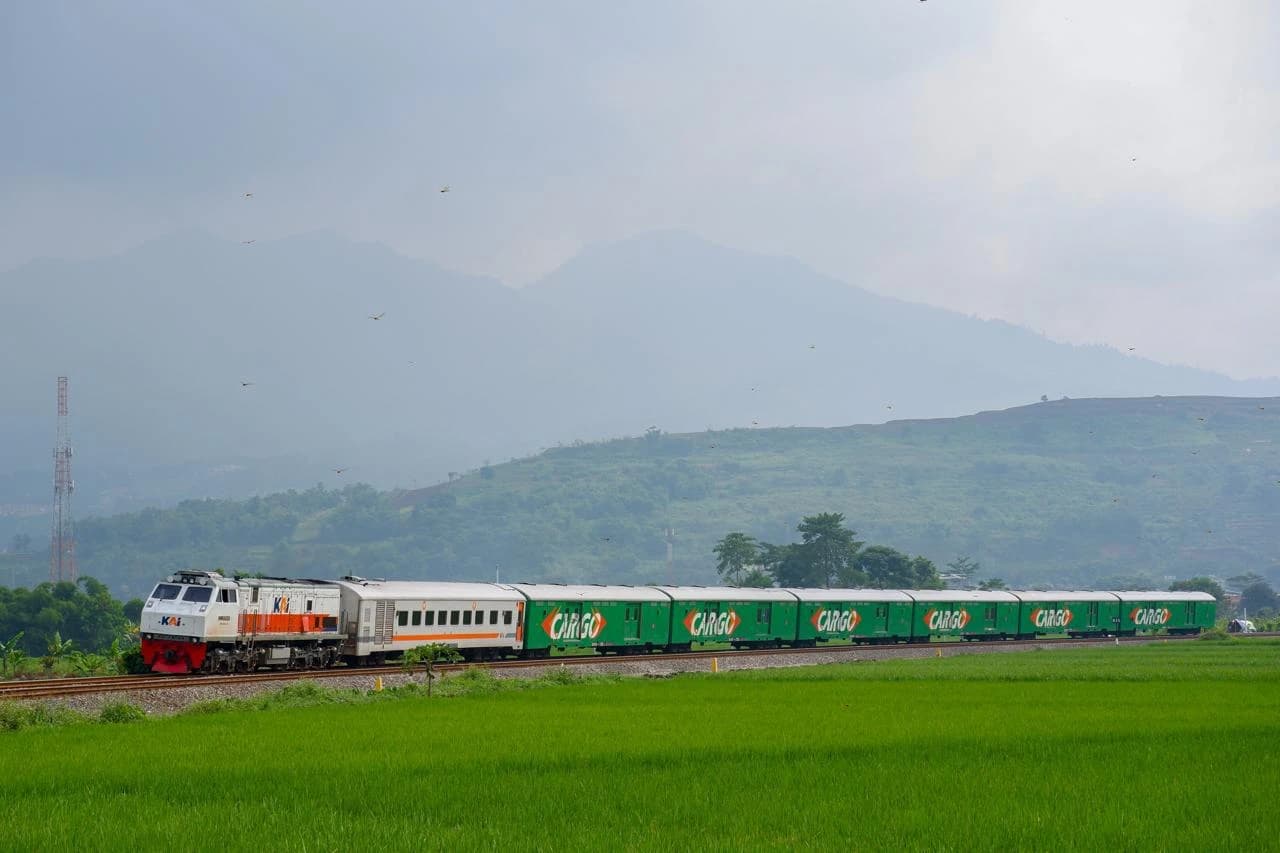
More Goods Take the Rails as KAI’s Retail Freight Grows 19.59 Percent
The distribution of goods by rail is increasingly becoming part of the intercity logistics chain. From January to July 2026, retail freight volume reached 146,617 tons, an increase of 3.59 percent compared with the same period in 2025 and 19.59 percent compared with January–July 2024.
Over two years, an additional approximately 24,000 tons of goods have moved through the railway network. The growth shows increasing demand for distribution services with regular schedules, large capacity, and connections to other modes of transportation.
Behind these figures are various economic activities, ranging from the distribution of business products and MSME needs to intercity trade. Smooth deliveries are one of the factors helping goods move from production centers to markets and consumers.
Rail-based retail freight services generally play a role in the main or middle-mile journey. Goods are first consolidated by logistics companies, then transported by rail before being continued through other distribution networks until they reach recipients.
This model means that rail does not operate independently within the logistics chain. Road transportation is still needed to collect goods from their starting points and deliver them to their final destinations, while rail can handle intercity journeys with greater capacity and more predictable schedules.
The need for an increasingly efficient distribution system is also aligned with the national agenda. Indonesia’s logistics costs are currently recorded at 14.29 percent of GDP, with targets to reduce them to 12.5 percent by 2029 and 8 percent by 2045.
The target shows that logistics efficiency is not only a matter for transportation companies, but requires connectivity between various modes, businesses, government, and infrastructure operators. Each mode needs to be positioned according to the functions that best match its characteristics and needs.
In this context, rail has the opportunity to strengthen the distribution of large volumes of goods and intercity transportation. Integration with road transportation and other logistics networks is key to ensuring that goods can not only move quickly between regions but also reach customers more effectively.
The strengthening of rail-based freight transportation is also receiving attention as global logistics systems continue to develop. Rail infrastructure can support freight transportation efficiency, strengthen supply-chain resilience, and provide an option for reducing the cost and emissions pressures associated with distribution activities.
The need is becoming increasingly apparent as global supply chains face changing trade patterns, geopolitical uncertainty, and growing demands for more sustainable distribution. For businesses, a strong domestic logistics system can help maintain the availability of goods while reducing dependence on external conditions.
The future development of retail freight will be pursued through collaboration with logistics companies, businesses, industrial areas, and various stakeholders. Cargo consolidation, distribution integration, schedule reliability, and the utilization of rail capacity are areas that can continue to be developed according to market needs.
The more goods that can move efficiently between cities, the greater the opportunities for businesses to expand their market reach. The growth in retail freight volume by rail is therefore not only an indicator of stronger freight transportation services, but also part of efforts to build a more connected and competitive Indonesian logistics chain.