
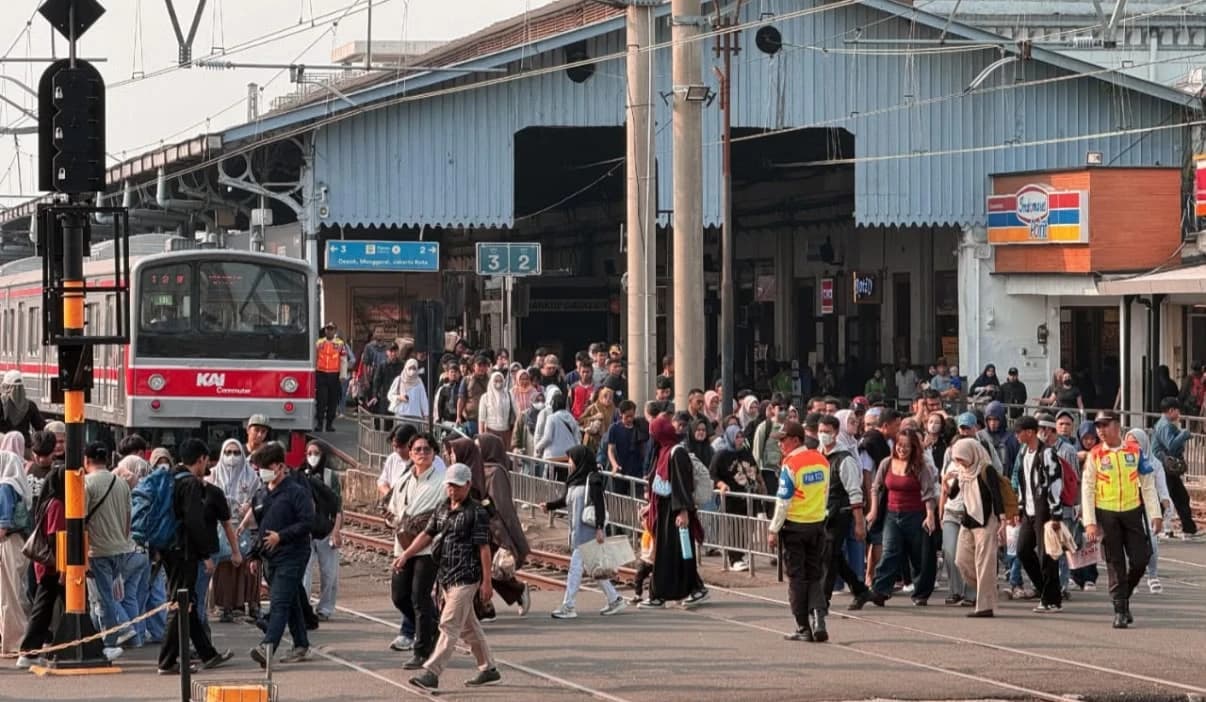
Supporting Hundreds of Thousands of Daily Passengers, KAI Expands Bogor Station Capacity with the Development of Platforms 6, 7, and 8
Eighteen of the 27 new commuter trainsets are already in service, marking another step in KAI Group's commitment to delivering a more comfortable travel experience while accommodating the region's growing mobility needs.
Every day, hundreds of thousands of commuters rely on the Bogor Line to travel to work, school, universities, and various daily activities. To keep pace with this growing demand, PT Kereta Api Indonesia (Persero) continues to strengthen service capacity through the development of Platforms 6, 7, and 8 at Bogor Station. The project is designed to create a smoother passenger flow, reduce platform congestion, and provide a more comfortable commuting experience, particularly during peak hours.
During the first half of 2026, the Bogor Line served 78,077,679 passengers, averaging approximately 431,368 passengers every day. This consistently high ridership underscores the importance of expanding capacity to support the region's increasing mobility.
KAI Vice President of Corporate Communication Anne Purba said the initiative goes beyond infrastructure improvements by focusing on the overall passenger experience—from the moment customers enter the station until they arrive at their destination.
Hundreds of thousands of people depend on the Bogor Line every day for work, education, and other daily activities. That's why every enhancement is designed around the customer journey, from entering the station and waiting on the platform to boarding the train and reaching their destination.
The need for additional capacity is also reflected in the activity at Bogor Station, one of the busiest commuter rail hubs in Greater Jakarta. Between January and June 2026, the station recorded 18,451,462 passenger movements, comprising 9,371,057 entries and 9,080,405 exits, or an average of 101,942 passenger movements per day.
To accommodate this demand, KAI is preparing Platforms 6, 7, and 8 to serve 12-car commuter trains (SF12). Previously, these platforms could only accommodate 10-car trainsets (SF10). The upgrade will provide greater operational flexibility for train arrivals and departures while helping distribute passenger flows more evenly across the station.
Before entering service, the new platforms underwent a series of integrated operational tests involving infrastructure, rolling stock, and operational teams. The assessments covered track readiness, platform facilities, overhead catenary systems, SF12 train compatibility, and operational procedures to ensure the facilities meet safety and service standards.
These tests followed a locomotive load test conducted on 29 June 2026 and an operational trial of the commuter trains on 1 July 2026. The results have been used to complete the final refinements before the facilities are opened for passenger service.
These integrated tests ensure that our infrastructure, rolling stock, and operational systems are fully aligned. Passenger safety and service reliability remain our highest priorities before any new facility enters operation.
The project includes platform and track extensions, structural and architectural improvements, upgrades to the overhead electrical system, mechanical and electrical works, and supporting passenger facilities. Platform canopies (overcapping) have also been installed to provide greater comfort for passengers waiting for trains in both hot and rainy weather.
Once Platforms 6, 7, and 8 begin accommodating SF12 trainsets, train movements can be managed more efficiently. This is expected to spread passengers more evenly across the station, reduce crowding at specific platforms, and improve boarding and alighting flows.
The infrastructure enhancement is being carried out alongside the renewal of the Jabodetabek Commuter Line fleet. KAI Group is procuring 27 new trainsets, equivalent to 324 railcars, consisting of 11 trainsets manufactured by CRRC and 16 trainsets produced by PT INKA (Persero).
According to the latest internal update, 18 trainsets (216 railcars) are already in operation, including all 11 CRRC trainsets and 7 INKA trainsets. The remaining nine INKA trainsets are progressing through their respective production and commissioning stages before entering passenger service.
The new fleet is being deployed gradually across the Jabodetabek commuter network based on operational requirements. On the Bogor Line, fleet modernization began in June 2025 with the introduction of two CRRC trainsets, followed by two INKA-built trainsets that entered regular operation in December 2025 after receiving safety and operational certification from the Directorate General of Railways of the Ministry of Transportation.
Anne explained that 12-car trainsets provide significantly greater passenger capacity on every trip. To maximize these benefits, larger trains must be supported by upgraded platforms, tracks, electrical systems, maintenance facilities, trained personnel, and integrated operational planning.
Our primary focus is improving the daily travel experience for passengers. With greater capacity, better passenger distribution across platforms, smoother boarding and alighting, and more reliable rolling stock, we expect congestion during peak periods to be significantly reduced.
As the project enters its final stage, KAI and KAI Commuter continue preparing passenger flow arrangements, service information systems, and station personnel deployment at Bogor Station. Passengers are encouraged to stay informed about service updates and follow station staff instructions while traveling.
With more than 431,000 passengers using the Bogor Line every day, every capacity enhancement must deliver tangible benefits. KAI and KAI Commuter remain committed to aligning infrastructure, new rolling stock, and operational readiness to provide journeys that are safer, more comfortable, and more seamless.