
Curious About How Trains Refuel? KAI Reveals the Process
Trains are one of the most popular modes of transportation in Indonesia. But have you ever wondered what kind of fuel train locomotives use? Or how the refueling process works? Where does it take place? If you're curious, here's everything you need to know.

Locomotive Refueling Process
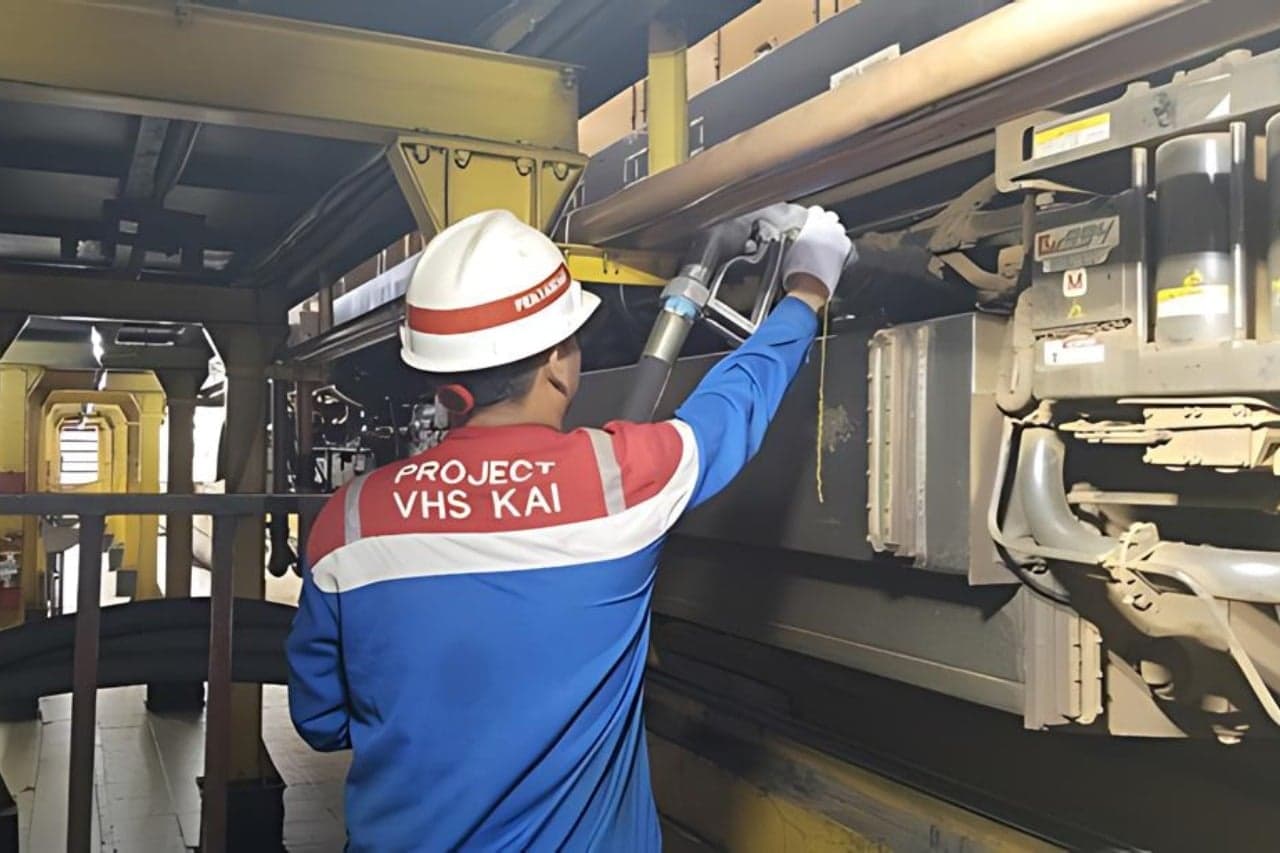
Unlike refueling a motorcycle or car, the refueling process for a locomotive has its own unique characteristics and requires specialized expertise. The process begins by positioning the locomotive precisely on the designated refueling track. Railway personnel secure the locomotive throughout the procedure. They then check the remaining fuel level and determine how much fuel needs to be added.
Refueling is carried out by specially trained personnel using equipment such as a nozzle gun, flow meter, and fuel pump. These personnel possess specialized competencies and have received training from PT Pertamina Patra Niaga. They are responsible for ensuring operational safety, environmental management, fuel availability, and the reliability of the refueling equipment.
Type of Fuel Used
Locomotives generally use High Speed Diesel (HSD). However, KAI has now transitioned to Bio Solar (B35) to support the government's Biofuel (BBN) program. Bio Solar is an alternative fuel made from a blend of fossil diesel and organic materials, such as palm oil or plant-based waste. The use of Bio Solar helps reduce carbon emissions and supports environmental sustainability.
Refueling Locations
Locomotives can only be refueled at locomotive depots, train depots, Railway Rolling Stock Supervisory Units (PUS), Train Supervisory Units (PUK), and overhaul workshops (Balai Yasa) equipped with refueling facilities. Currently, there are 47 locations across KAI's operational network that meet these standards.
Fuel Tank Capacity and Travel Distance
The fuel tank capacity of a locomotive varies depending on its type, but on average ranges from 3,000 to 3,800 liters. The fuel tank is located underneath the center of the locomotive, between the first and second bogies.
Refueling is planned according to the distance the train will travel. The distance a locomotive can cover on a full tank depends on its type, as each locomotive has a different Specific Fuel Consumption (SFC). On average, however, a locomotive carrying approximately 3,000 liters of fuel can travel around 1,034 kilometers. KAI uses SAP Personas to calculate fuel requirements with precision, ensuring that locomotives do not run out of fuel during their journeys.
Under normal operating conditions, locomotives will not run out of fuel en route because train drivers continuously monitor fuel levels through the onboard monitor, smart display, or fire screen. However, if an unexpected issue arises that could cause the locomotive to run out of fuel during the journey, the train driver will coordinate with the relevant operational units to obtain permission for refueling at the nearest facility equipped with refueling infrastructure before the fuel is completely depleted.
That concludes our overview of the locomotive refueling process—hopefully your curiosity has been satisfied!
KAI Vice President of Public Relations Joni Martinus stated that locomotive refueling is a critical process requiring specialized expertise and careful planning to ensure smooth railway operations. A thorough understanding of this process is expected to improve the overall efficiency and safety of train operations.
"By choosing environmentally friendly fuel, implementing safe procedures, and involving well-trained personnel, KAI contributes to global efforts to preserve the environment. Using mass transportation for daily mobility is one of the recommended ways to reduce air pollution. Rail transport is one of the solutions," Joni concluded.