
7.64 Million Boarding and Alighting Activities Recorded at 75 Stations in Sumatra, Not Only in Major Cities
Railway travel in Sumatra forms a mobility network that spreads from provincial centers to cities at the regency level. Throughout the first semester of 2026, a total of 75 KAI stations in Sumatra recorded 7,637,540 passenger boarding and alighting activities.
This number consists of 3,818,770 passenger boarding activities and 3,818,770 passenger alighting activities. On average, these stations served around 42,196 passenger boarding and alighting activities per day from January to June 2026.
Vice President Corporate Communication KAI, Anne Purba, explained that the data reflects the strong function of stations in supporting community travel with diverse needs. Passenger journeys in Sumatra are spread across many stations, with people traveling for work, education, trade, medical treatment, visiting family, and tourism, and each station serves different regional characteristics and community needs.
The five stations with the highest activity during the first semester of 2026 are Medan Station with 997,723 activities, Padang Station with 613,140 activities, Kertapati Station with 587,556 activities, Pariaman Station with 432,449 activities, and Tanjungkarang Station with 390,415 activities.
These five stations collectively recorded 3,021,283 activities, or 39.56 percent of the total passenger activity in Sumatra. Meanwhile, the remaining 4,616,257 activities, or 60.44 percent, took place at 70 other stations.
This composition shows that railway travel in Sumatra is widely distributed. Passenger activity is present at stations in city centers, trade areas, regency towns, industrial zones, educational areas, tourist destinations, and points connected to airports. Anne stated that this data is interesting because most activities are actually spread outside the five highest-volume stations, meaning railway services play a role close to people’s daily lives in many regions.
In the Regional Division I North Sumatra area, 28 stations recorded 2,781,970 passenger boarding and alighting activities, equivalent to 36.42 percent of the total KAI passenger activity in Sumatra. Medan Station recorded the highest activity at 997,723. Passenger activity was then distributed across Kisaran Station with 289,385, Rantau Prapat Station with 258,281, Tanjung Balai Station with 252,216, Tebing Tinggi Station with 205,035, and Siantar Station with 193,654.
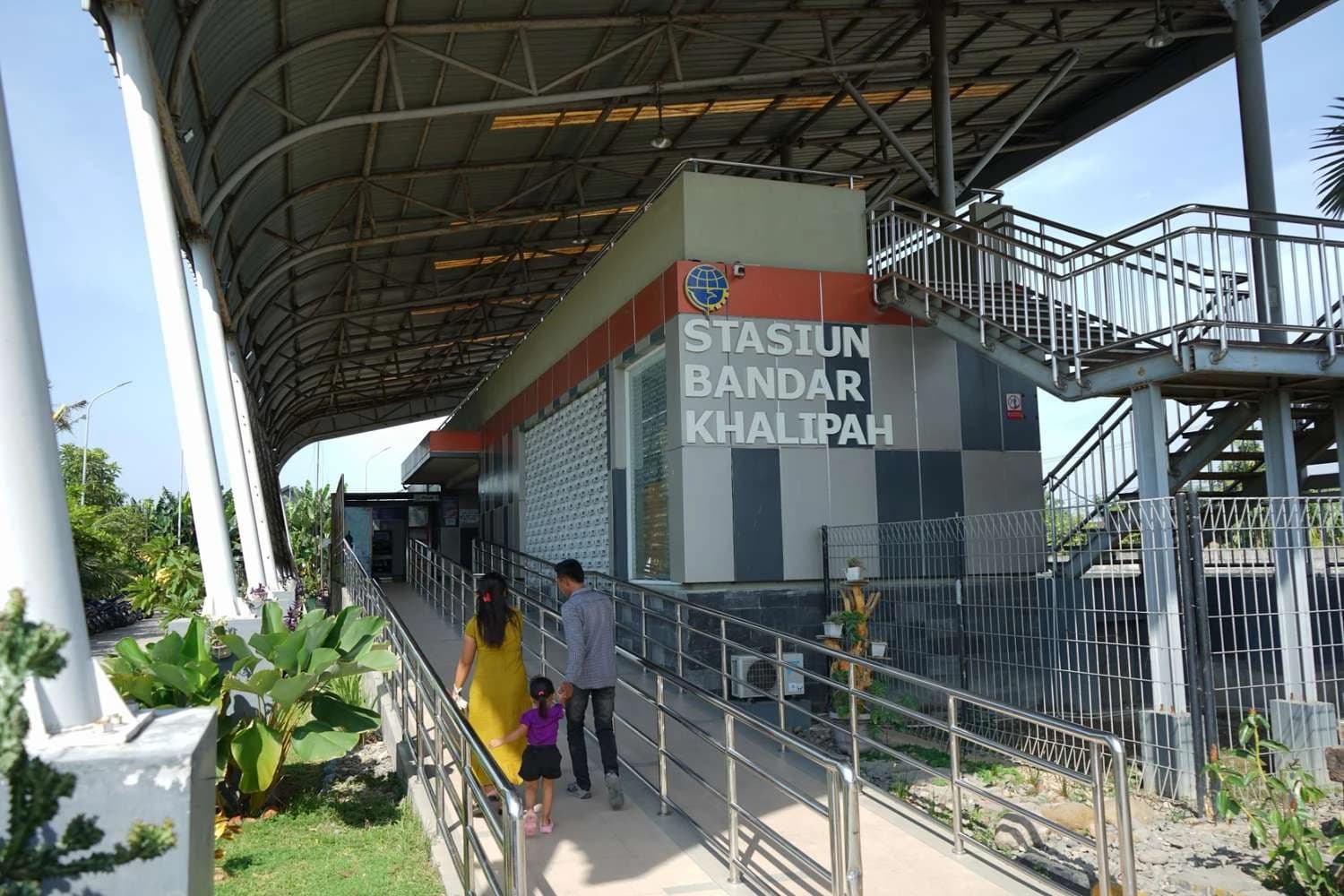
Activity was also recorded at Bandar Kalipah Station with 95,715, Lubukpakam Station with 76,736, Perlanaan Station with 55,073, and Mambang Muda Station with 54,894. This data shows travel connections between Medan city center, plantation areas, trade centers, educational zones, and cities along the east coast of North Sumatra.
In the Regional Division II West Sumatra area, 20 stations recorded 2,284,932 passenger boarding and alighting activities, or 29.92 percent of the total activity in Sumatra. Padang Station served 613,140 activities, followed by Pariaman Station with 432,449, Air Tawar Station with 213,880, Naras Station with 138,383, Lubuk Alung Station with 131,044, and Minangkabau International Airport Station with 110,093 activities.
Passenger activity at Kuraitaji Station reached 98,580, Alai Station 81,830, Pauh Kambar Station 72,766, and Kayutanam Station 65,352. This distribution illustrates the role of railways in connecting Padang city center, educational areas, residential zones, beach destinations, the airport, and regions along the Padang–Pariaman and Padang–Kayutanam routes. Anne stated that the travel characteristics in West Sumatra show a close relationship between daily mobility, education, tourism, and airport access, and stations with different service scales still have important meaning for customers in their areas.
In the Regional Division III Palembang area, nine stations recorded 1,209,971 passenger boarding and alighting activities. Kertapati Station recorded the highest with 587,556 activities, followed by Lubuklinggau Station with 255,237, Lahat Station with 111,345, Prabumulih Station with 99,634, and Muara Enim Station with 93,325 activities. These stations connect government centers, trade areas, educational zones, industrial regions, mining areas, and residential zones in South Sumatra. Passenger travel shows a strong connection between Palembang and cities in the central to western parts of the province.
Meanwhile, 18 stations in the Regional Division IV Tanjungkarang area recorded 1,360,667 passenger boarding and alighting activities. Tanjungkarang Station served 390,415 activities, Kotabumi Station 257,105, Baturaja Station 206,406, Martapura Station 100,186, and Blambangan Umpu Station 99,199 activities. Other activities were recorded at Labuan Ratu Station with 79,454, Waytuba Station with 41,403, Tulung Buyut Station with 26,223, Peninjawan Station with 22,698, and Tegineneng Station with 22,217 activities. This distribution shows the role of railways in supporting travel between Lampung and South Sumatra, including trips to city centers, educational areas, markets, public service centers, and family visits.
Based on monthly data, passenger boarding and alighting activity in Sumatra reached 1,247,838 in January, 1,078,232 in February, 1,343,802 in March, 1,269,520 in April, 1,332,066 in May, and 1,366,082 in June 2026. June became the month with the highest activity during the first semester of 2026, with an average of around 45,536 activities per day, higher than the first semester average of 42,196 activities per day.
According to Anne, passenger boarding and alighting data provides an overview of travel patterns that need to be served in each region. This information can be used to understand peak travel times, station service needs, information delivery, staff readiness, and connectivity with onward transportation. Behind every number are community journeys that must be served safely and comfortably, and station data helps KAI understand how services are used day by day and how customer needs differ in each region.
KAI currently manages operational areas on the islands of Java and Sumatra. Management in Sumatra includes Regional Division I North Sumatra, Regional Division II West Sumatra, Regional Division III Palembang, Regional Division IV Tanjungkarang, and one Aceh Regional Subdivision. Nationally, KAI has 627 stations and 7,765 kilometers of active railway tracks.
The boarding and alighting activity figures in this release represent passenger records at departure and arrival stations. One journey is recorded at these two points, so the figure of 7.64 million reflects station service activity and does not represent the number of unique individuals.
Anne concluded by stating that stations are spaces that connect passenger journeys with regional activities. Through safe, punctual, and comfortable services, the presence of railways provides people with options to reach more cities and regions in Sumatra.