
Revealed! Here's Where the Water in Train Toilets Comes From
For people who frequently travel by train, using the onboard toilet is often a necessity, especially since long-distance journeys can last for several hours or even an entire day. However, many passengers are still unaware of where the water used in train toilets comes from. To ensure a continuous water supply, KAI employs several specialized personnel, including officers responsible for refilling train toilet water tanks. After all, it would not be practical for passengers to get off the train at every station simply to use the restroom.
The process of refilling train toilet water tanks is an important part of ensuring passenger comfort throughout the journey. These procedures are a vital component of railway operations that often go unnoticed by the public. So, how is the water tank actually refilled?
First, the train's toilet water tank is filled at the train's originating station before departure, as well as at designated intermediate stations equipped with water refill facilities. At the originating station, the task is carried out by train cleaning personnel, while at intermediate stations it is handled by specialized toilet water tank refill officers.
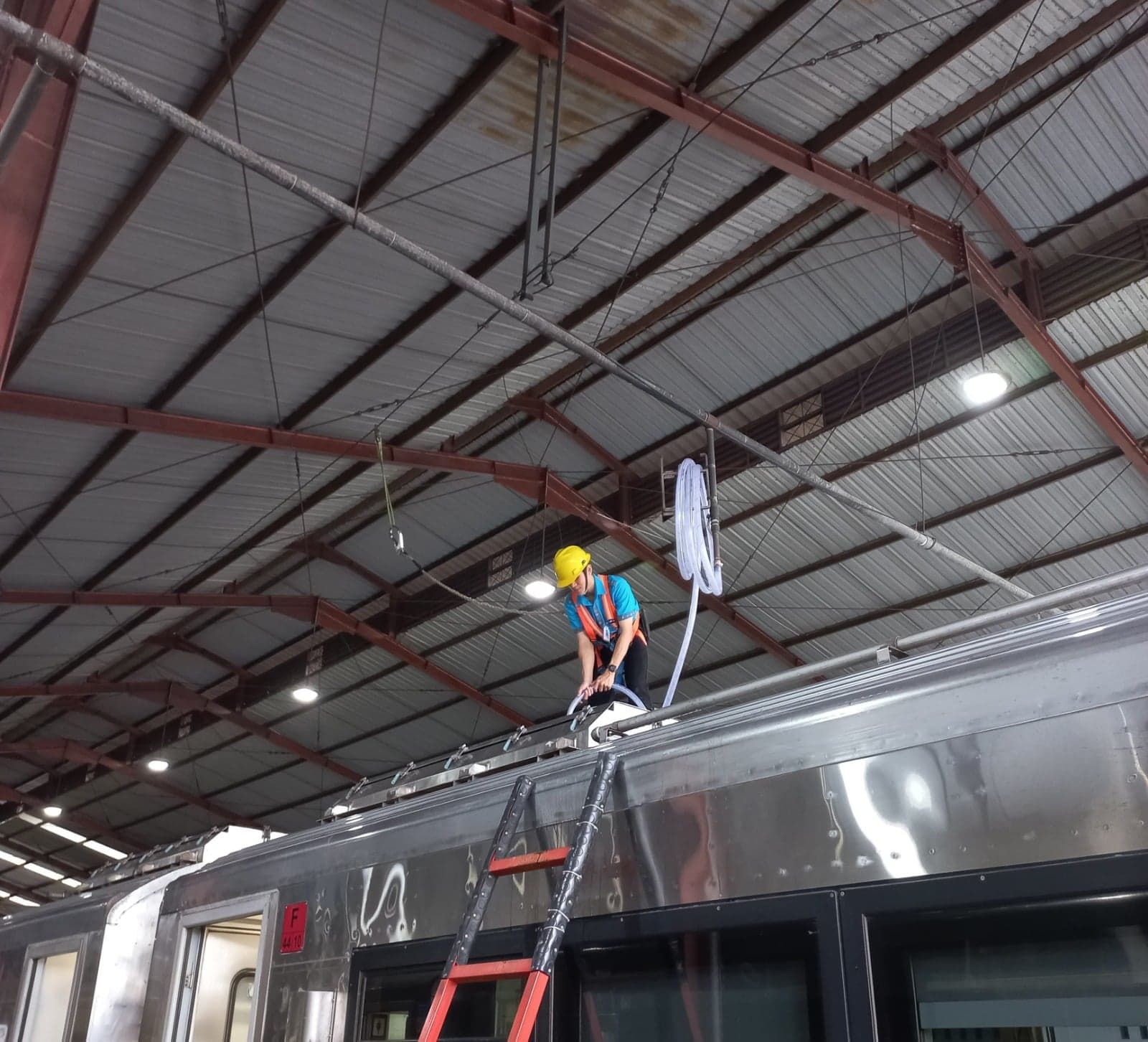
Depending on the type of train, the water tank may be refilled from either the top or the bottom of the carriage. During this work, personnel are required to wear complete safety equipment, including a helmet, safety vest, safety shoes, and a full-body safety harness connected to a fall protection system or lifeline to ensure their safety while working at height.
The time allocated for refilling the water tank at the originating station depends on the train's scheduled stop before departure. At intermediate stations, refilling is carried out according to the train's arrival and departure schedule as specified in the official timetable.
The capacity of train toilet water tanks varies depending on the type of carriage, but generally ranges from 400 to 1,400 liters per coach. The frequency of refilling also depends on the length of the journey. For long-distance train services, the tanks are typically refilled three to four times during a single trip, while medium-distance services usually require two to three refills.
The refilling process begins only after the train has come to a complete stop. Personnel use specialized equipment and strictly follow safety procedures, particularly when the work is performed at night or in the early hours of the morning.
Equipment carried by toilet water tank refill personnel includes water hoses, rubber-protected ladders, lighting equipment, tools such as pliers and screwdrivers, additional support equipment, and complete personal protective equipment (PPE). They are also required to hold basic cleaning certification and possess qualifications for working at height.
The water used to fill the toilet tanks is sourced from bore wells located around the station. Before being used, it undergoes a filtration process to ensure that it meets the applicable hygiene and health standards.

Personnel Refilling Water on Board Trains
Most recently, KAI has introduced an innovation in the water refilling process for its Stainless Steel New Generation train coaches. Instead of filling the tank from the top, water is now added through a filling port located in the center of the coach's exterior. This new design speeds up the refilling process while reducing the risk of workplace accidents.
KAI Vice President of Public Relations Joni Martinus stated that providing well-maintained toilet facilities on board trains is essential to ensuring passenger comfort. Clean, properly maintained, and fully functioning toilets are among the key factors in creating a pleasant travel experience for customers.
"Although the process of refilling train toilet water tanks involves certain risks and challenges, by implementing proper safety protocols, our personnel are able to carry out their duties efficiently, ensuring comfort and safety for all passengers," Joni concluded.