
A Closer Look at the Train Washing Process
Cleanliness is one of the most important factors in ensuring passenger comfort. Just like motorcycles, cars, and buses, trains are routinely washed to keep them clean and comfortable for passengers. However, because trains consist of long sets of coaches, the washing process differs significantly from that of ordinary vehicles.

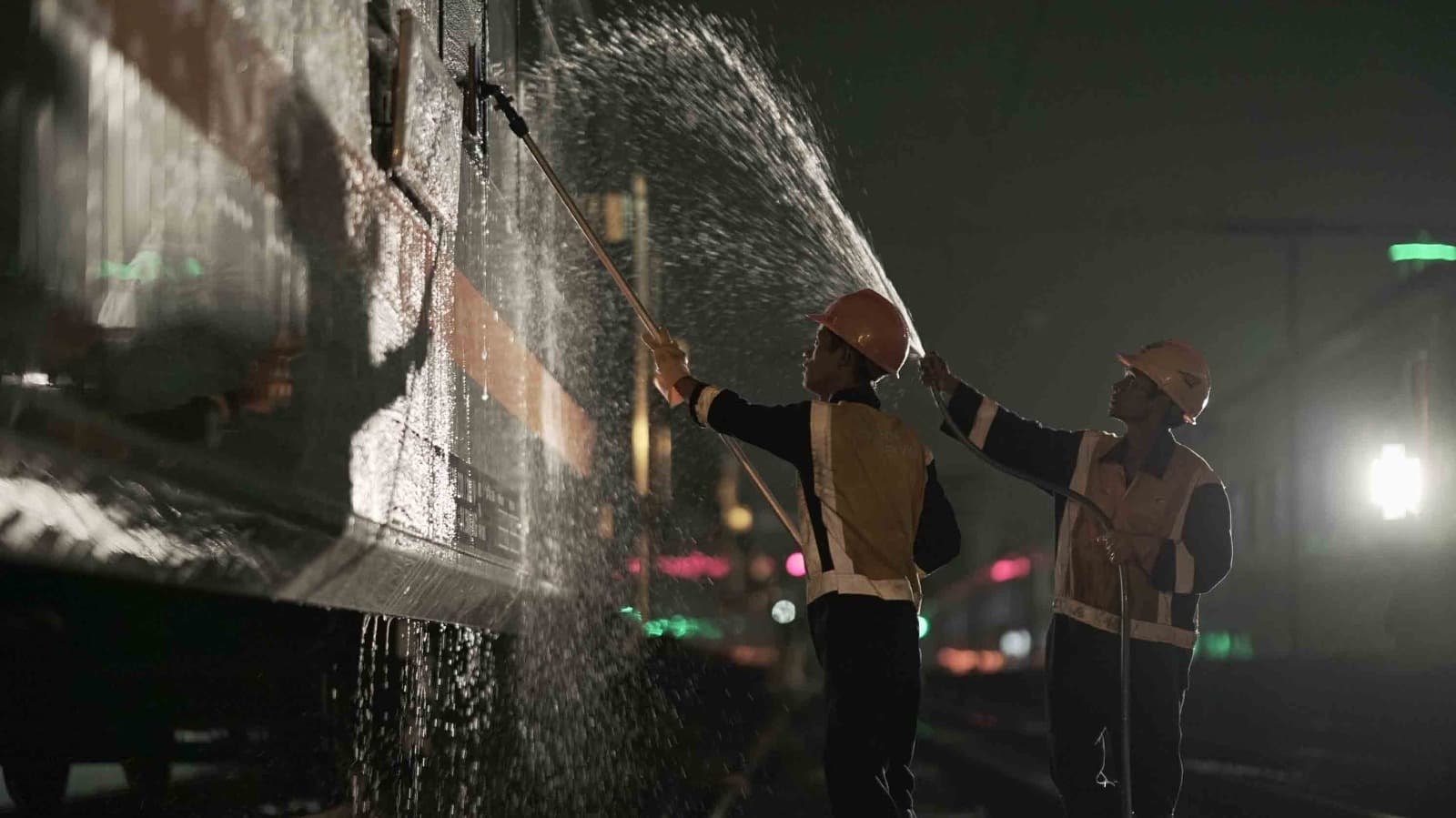
Train Washing Process at Night
Train washing is carried out every day while trains are in the stabling area before entering operational service. Both the interior and exterior of the train are cleaned by a team of 10 to 12 professional personnel, depending on the number of coaches in the trainset. On average, a complete train washing process takes between three and four hours and is performed by train cleaning personnel using specialized equipment, approved cleaning agents, and work procedures that comply with established operational standards.
The types of rolling stock that undergo routine cleaning include long-distance passenger coaches, local train coaches, baggage cars, dining cars, dining cars with generator units, power generator cars, tourist coaches, and special-purpose coaches such as inspection trains, executive special trains, Luxury, Priority, Compartment, Panoramic, Rail Clinic, and Rail Library coaches.
For the exterior, cleaning begins with the roof, followed by the side walls and the lower section of the coach, including the environmentally friendly toilet holding tank. Interior cleaning starts from the ceiling, followed by the walls, accessories, floors, vestibules, and toilets. Cleaning personnel ensure that every coach is free from dust, odors, stains, marks, litter, and rust, and that all surfaces are completely dry before the train is cleared for service.
KAI Vice President of Public Relations Joni Martinus explained that every train in operation undergoes regular cleaning. This includes not only exterior washing but also interior cleaning, covering floors, seats, and other common areas.
"Train washing is carried out at stations within KAI's Operational Areas (Daop) and Regional Divisions (Divre) that are equipped with dedicated train washing facilities. By maintaining train cleanliness, KAI strives to provide a pleasant travel experience for every passenger," he added.
Joni further explained that the water used for train washing is sourced from groundwater extracted through bore wells. Before use, the water undergoes filtration through a Water Treatment Plant (WTP). The water quality is also tested periodically in laboratories to ensure it is clean and hygienic, in accordance with the Indonesian Minister of Health Regulation No. 2 of 2023 concerning Environmental Health.
 Train Washing During the Day
To minimize environmental impact, KAI prioritizes the use of environmentally friendly cleaning materials. All cleaning chemicals are accompanied by Material Safety Data Sheets (MSDS). For both stainless steel and non-stainless steel coaches, interior cleaning uses floor cleaner, glass cleaner, dust cleaner, and multi-purpose cleaner. Exterior cleaning uses a wash shampoo with a pH level between 6 and 8, ensuring that it does not damage the train's surface materials while remaining environmentally friendly. Once the washing process is complete, wastewater is discharged through the drainage system connected to a wastewater treatment plant (WWTP).
After cleaning is completed, every train undergoes a quality and cleanliness inspection before being placed into service. The inspection is conducted by supervisors from the Cleaning and Passenger Service Facilities Unit using standardized company inspection forms and checklists. KAI has also introduced various innovations to improve the efficiency of the train washing process, including the use of high-pressure jet cleaners. In addition, studies are currently underway to develop Automatic Train Wash (ATW) systems at several train washing and stabling facilities.
Joni stated that train washing is more than just a routine task—it is an important effort to maintain high standards of cleanliness and passenger comfort in railway services, especially as KAI continues to introduce newer train fleets that offer an even better travel experience.
"With a strong commitment to cleanliness, the use of modern technology, and continuous attention to environmental sustainability, KAI remains dedicated to ensuring that every train journey is a safe, comfortable, and clean experience for all passengers," he concluded.