
Must Know! These Are 6 Education and Training Centers for KAI Human Resources
Human resource (HR) development at KAI continues to be strengthened to produce outstanding employees who are competent and qualified so that each employee can make an optimal contribution to improving company performance. One of KAI’s steps in HR development is through education and training (Diklat) programs that are structured in tiers and competency-based, ranging from basic competency development to professional development stages.
“HR competency development at KAI through training programs is carried out by the Education and Training Center (Pusdiklat), which is under the Directorate of Human Resources and General Affairs. KAI’s Pusdiklat organizes training programs independently or in collaboration with formal and informal educational institutions of high quality, both domestically and internationally,” said KAI Vice President Public Relations, Joni Martinus.
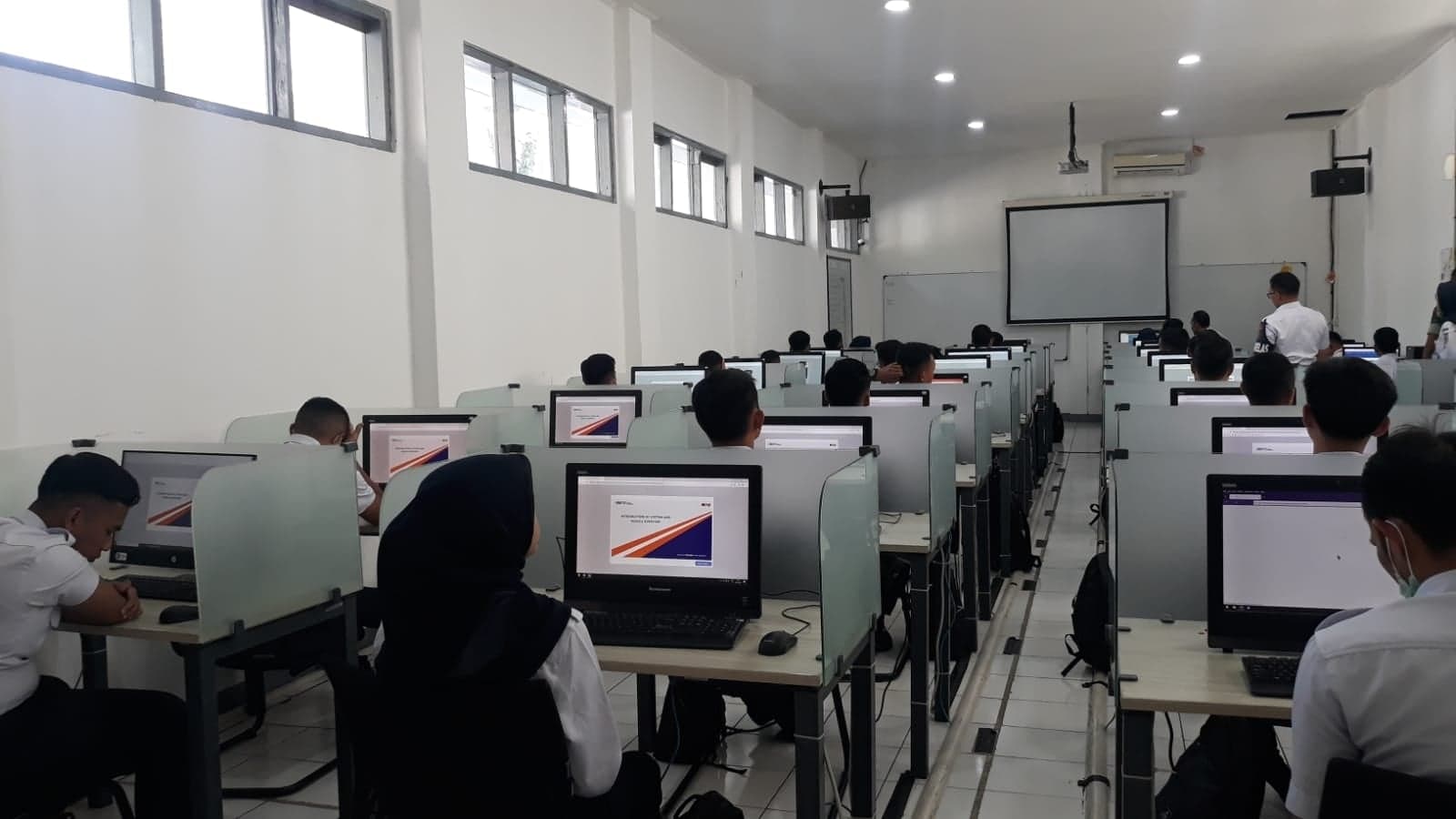
“Utilizing technological developments in the digital era, KAI’s Pusdiklat has also implemented a combination of face-to-face learning and online learning with synchronous and asynchronous learning methods using the EDUKAI learning media, which is an innovation in a mobile learning-based system. KAI’s Pusdiklat also collaborates with EDUKAI and platforms such as Udemy and LinkedIn Learning to broaden employees’ learning experiences,” added Joni.
For those who don’t know, KAI’s Pusdiklat has six education and training centers spread across KAI’s operational regions. At these six locations, KAI employees, including frontliners such as train drivers and conductors, are educated and trained before performing their duties in the field. What are they? Here is the explanation.
1. Ir. H. Djuanda Training Center, Bandung
Located at Jalan Laswi No. 23 Bandung, besides being the main center of KAI’s Pusdiklat, the Ir. H. Djuanda Training Center is also used for non-railways training such as leadership, safety, legal, and other non-technical railway training.
The availability of laboratories, sports center, dormitories, halls, libraries, places of worship, along with a wide and green area, makes this training center a comfortable place for employee development through education and training.
2. Signaling, Telecommunication and Electricity Training Center
The Signaling, Telecommunication and Electricity Training Center, also known as the Sintelis Training Center (BP-STL), is located in the same area as the Ir. H. Djuanda Training Center in Bandung. This center is specifically focused on signaling & telecommunications, information technology, and overhead electrical systems (LAA).
In addition to classrooms, it is equipped with complete practical facilities such as signaling, telecommunication & electricity simulators, an auditorium, distance learning studios, various laboratories, signal training tools, and workshops. The center also provides accommodation for training participants.
3. Railways Engineering Training Center Sofyan Hadi
The Railways Engineering Training Center Sofyan Hadi, also known as the Railway Engineering Training Center (BPTP), is located on Jalan Pusdiklat Raya, Medan Satria, Bekasi. This center focuses on railway training in track and bridge, train operations, overhead electrical systems, and electric traction rolling stock.
It is managed by 13 structural staff and supported by 8 functional experts. The facility includes classrooms, laboratories, dormitories for participants and instructors, and other supporting infrastructure.
4. Operational and Marketing Training Center Agus Suroto
The Operational and Marketing Training Center Agus Suroto (BP Opsar) is located on Jalan Ir. H. Djuanda No. 215 Bandung. This center conducts training in railway operations and marketing, including PPKA skills, train dispatching, operations support, IT for operations, conductors, customer care, housekeeping, and asset management.
Participants come from various operational and commercial units across KAI’s working areas. The facility is equipped with dormitories, laboratories, libraries, dining halls, dorms, and sports fields, providing a comfortable learning environment.
5. Tractive Vehicle Engineering Training Center Darman Prasetyo
Known as the Tractive Vehicle Engineering Training Center (BPTT) Darman Prasetyo, this center is located on Jalan Dr. Wahidin No. 1–2 Yogyakarta and has been operating since 1964. Training includes rolling stock and operational aspects.
It is supported by 18 structural staff and 7 professional trainers. Facilities include classrooms, practical rooms, fields, auditoriums, and accommodation. A locomotive diorama is also displayed in the main lobby.
6. Sriwijaya Training Center Ascep Sunarto
First inaugurated on 28 September 2015, the Sriwijaya Training Center Ascep Sunarto conducts railway training such as non-electric rolling stock operation, rolling stock maintenance, infrastructure maintenance, inspection staff training, and train journey management.
The center has three classrooms—Service, Integrity, and Innovation—and is supported by 11 competent trainers. It also features a locomotive CC 202 simulator that closely resembles real equipment.
That concludes the six education and training centers within KAI. To maintain and improve training quality, the Ir. H. Djuanda Training Center continuously updates its curriculum and syllabus. All instructors and structural staff are also regularly trained and certified to support training implementation.
In addition to ISO 9001:2005 certification, the Ir. H. Djuanda Training Center has also received accreditation from the Ministry of Transportation as an official license for KAI to conduct railway education and training for its human resources.
“This accreditation means that KAI has been trusted by the regulator to contribute to and develop national railway human resources,” said Joni.
KAI provides equal opportunities for all employees who meet the requirements to participate in training programs, both mandatory technical certification programs and other hard and soft skill development programs. Joni further emphasized that human resources are the key factor in company development.
“These HR development efforts are expected to improve the competency of KAI talents so they can contribute more in delivering the best service to the public,” he concluded.

.