
553,000 Passenger Activities Recorded at Ketapang Station, Continuing Its Long Railway Legacy
More than just a place to catch or leave a train, Ketapang Station in Banyuwangi has a long story that has been part of people’s journeys for more than a century. Today, the station at the eastern end of Java is busier than ever, connecting passengers traveling to Banyuwangi and onward to Bali.
From January to August 2026, Ketapang Station recorded 553,202 passenger activities for boarding and alighting, up 8.50% from 509,862 activities during the same period last year.
The growth is also clear when looking at the past five years. Passenger activity rose from 277,928 in January–August 2022 to 388,193 in 2023, 449,867 in 2024, and 509,862 in 2025. By August 2026, the figure had reached 553,202 activities, representing approximately 99.05% growth compared with 2022.
VP of Corporate Communication KAI Anne Purba explained that the growth is part of Ketapang Station’s long journey as it continues to adapt to regional development and changing passenger needs.
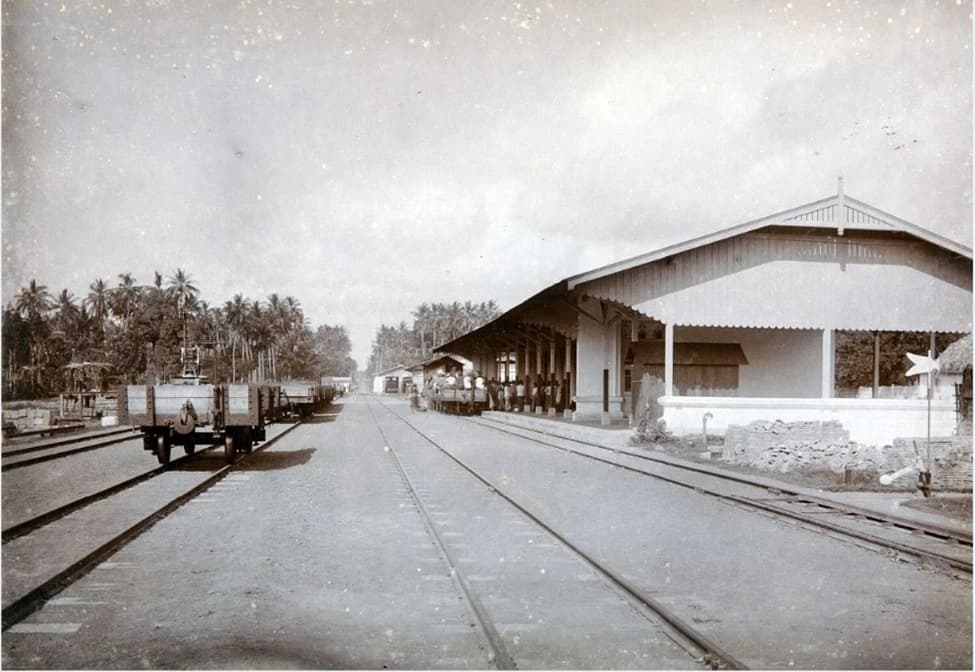
The story of Ketapang Station goes back to the early 1900s. At the time, the railway network to Banyuwangi was developed by Staatsspoorwegen (SS), the state railway company of the Dutch East Indies. The final 58-kilometer Mrawan–Banyuwangi section was completed and opened to the public on February 2, 1903, marking the operation of Banyuwangi Station as the easternmost railway station on Java.
Back then, the station also played a role in supporting local trade. It was connected to Boom Port in the Mandar area, allowing the railway to serve not only passengers but also the movement of goods entering and leaving Banyuwangi by sea.
Railway activity continued to grow. In 1926, 12 train services were recorded stopping at Banyuwangi Station, serving round trips between Kalibaru–Banyuwangi and Kalisat–Banyuwangi.
As the area developed, Banyuwangi’s connectivity center gradually shifted toward Ketapang. Port activities were moved from Boom Port to the Ketapang area on January 1, 1974. A new railway line was subsequently developed to support connectivity with the ferry crossing to Bali.
On September 7, 1985, the Kabat–Banyuwangi Baru line officially opened, along with Banyuwangi Baru Station. Its location closer to Ketapang Port allowed passenger services to gradually shift from Banyuwangi Lama Station.
Banyuwangi Lama Station was officially decommissioned on March 31, 1988, while Banyuwangi Baru Station was eventually renamed Ketapang Station in 2019.
Today, its proximity to Ketapang Port gives the station an important role for passengers continuing their journey to Bali. The nearly twofold increase in passenger activity over the past five years also highlights the station’s growing role in connecting communities at the eastern end of Java.
Anne added that Ketapang Station’s journey shows how a railway station can continue to evolve alongside its surroundings. Once supporting trade activities through Boom Port, Ketapang Station has now become part of the travel network connecting passengers to Banyuwangi and Bali.
More than 120 years after railways first reached Banyuwangi, Ketapang Station remains an important stop for people exploring the eastern end of Java.