
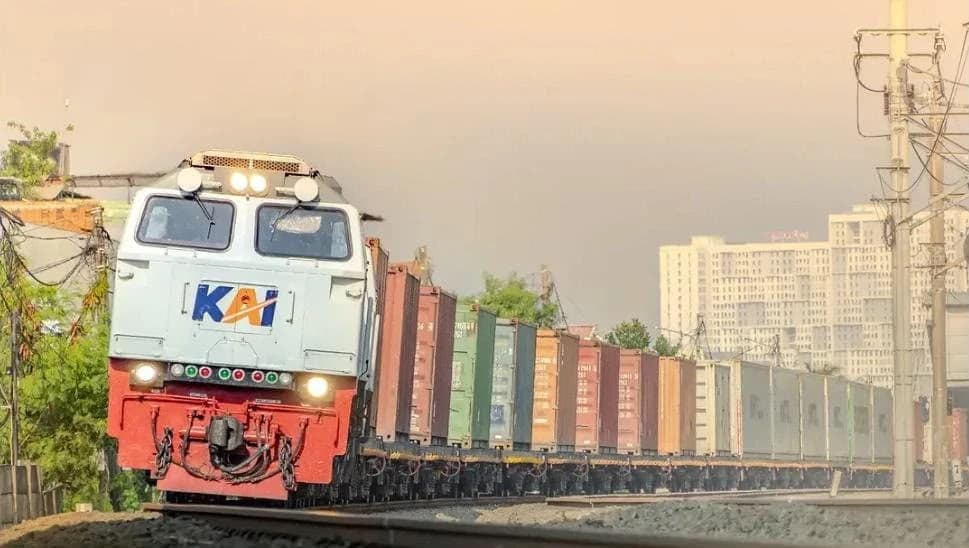
More Goods Move by Rail, as KAI Retail Freight Volume Grows 17 Percent
The distribution of large volumes of goods now has more transportation options. From January to August 2026, retail freight volume reached 169,044 tons, increasing from 163,821 tons during the same period in 2025 and 144,250 tons in 2024. Compared with 2024, the volume grew by 17.2 percent over two years.
Retail freight is one of the Business to Business (B2B) services developed to support the distribution needs of corporate customers. The service utilizes the railway network as part of a rail-based logistics ecosystem with large carrying capacity, scheduled journeys, and connectivity between regions.
The growth in volume shows the increasing use of railways by business customers to distribute various commodities. The characteristics of shipments that require large capacity, regular travel schedules, and medium- to long-distance delivery make railways one of the options for supporting companies’ logistics needs.
Through its B2B retail freight service, KAI helps connect distribution needs between companies within a more integrated supply chain. The development of this service is also part of efforts to expand the contribution of railways to the national logistics system.
From an operational perspective, railways have an advantage in transporting large quantities of goods in a single journey. Lower energy use compared with road transportation for an equivalent carrying capacity also creates opportunities for distribution cost efficiency for business customers throughout the supply chain.
This efficiency is increasingly important because transportation costs are one of the components that make up a product’s logistics costs. More efficient distribution can help businesses maintain their cost structures, improve supply certainty, and support product competitiveness in the market.
According to the 2024 Indonesia Logistics Report from the Ministry of National Development Planning/Bappenas, logistics costs are an important factor in national economic competitiveness. The government is also continuing to promote logistics efficiency by strengthening multimodal connectivity, including optimizing rail-based transportation.
Attention to logistics efficiency is also reflected at the global level. Through the 2023 Logistics Performance Index (LPI), the World Bank ranked Indonesia 61st out of 139 countries. The report highlights transportation infrastructure quality and logistics service efficiency as important factors in improving a country’s trade competitiveness, with improved connectivity identified as one of the key areas for development.
Meanwhile, the Food and Agriculture Organization (FAO), through The State of Food and Agriculture 2024 report, emphasized the importance of efficient distribution systems in maintaining food security and affordability. Costs throughout the supply chain also contribute to the prices ultimately paid by consumers.
In Indonesia, smooth distribution is also closely connected to efforts to maintain price stability. Statistics Indonesia (BPS) regularly records food, beverages, and tobacco as one of the expenditure groups influencing national inflation dynamics. This highlights the importance of an efficient distribution system in maintaining a balance between supply and demand.
Through the development of retail freight, KAI continues to expand rail-based logistics services to support the needs of industry, trade, and the distribution of various commodities. The growth in freight volume serves as an indicator of increasing customer confidence in railways as a safe, scheduled, and efficient mode of freight transportation.
Going forward, freight service development will continue to focus on increasingly integrated logistics solutions. Optimizing rail-based transportation is expected to strengthen connectivity between regions while supporting a more competitive national logistics ecosystem.