
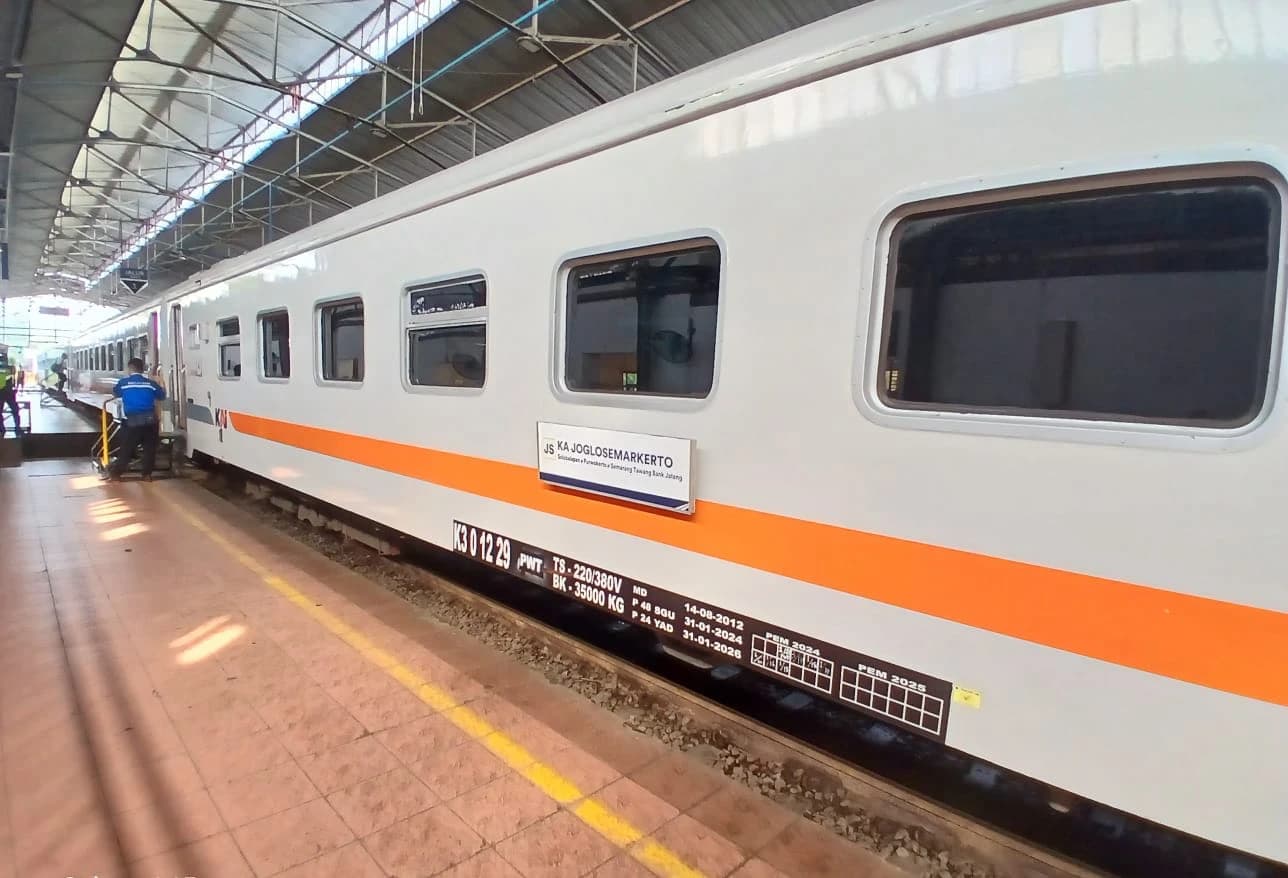
Connecting More Communities: KAI Strengthens Mobility Across Indonesia's Urban Agglomeration Areas
Getting around has become easier than ever as rail connectivity continues to expand across Indonesia. Whether commuting to work, heading to campus, exploring tourist destinations, or catching a flight, more people are benefiting from train services that connect major cities with surrounding areas, educational hubs, industrial zones, commercial centers, and airports.
Through the continuous development of its services across urban agglomeration areas, PT Kereta Api Indonesia (Persero) (KAI) remains committed to providing public transportation that is not only comfortable and reliable but also supports economic activity and the growing mobility needs of communities throughout the country.
Urban agglomeration areas are regions where neighboring cities and regencies are closely connected through daily economic and social activities. Many people live in one area while working, studying, or running businesses in another, commuting back and forth within the same day. In this setting, rail transportation plays a vital role by providing scheduled, affordable, and high-capacity mobility across regional boundaries.
KAI Vice President of Corporate Communication Anne Purba said that the development of rail services is always tailored to the travel patterns and mobility needs of each region.
Administrative boundaries are no longer the boundaries of people's daily activities. Commuting for work, education, business, tourism, and access to public services increasingly connects cities and regencies. KAI continues to develop services that meet the unique mobility needs of each region.
Bandung Metropolitan Area: Mobility Continues to Grow
In West Java, the Bandung Raya Commuter Line has become one of the primary transportation options supporting daily mobility across Bandung and its surrounding areas. During the first semester of 2026, KAI Commuter services in the Bandung region served 10,106,912 customers, an increase of 9.17% compared with 9,258,327 customers during the same period in 2025.
This positive trend has continued over the past three years. Annual ridership grew from 14,720,252 customers in 2023 to 16,159,458 in 2024, before reaching 18,727,224 customers in 2025. Overall, customer volume in 2025 increased by 27.22% compared with 2023.
The service connects Bandung with Cimahi, Padalarang, Cicalengka, Rancaekek, as well as areas across Bandung Regency, West Bandung Regency, Purwakarta, and Garut. It provides convenient transportation for workers, students, university students, traders, and tourists traveling throughout the Greater Bandung area.
Yogyakarta–Solo: Everyday Travel Made Easier
Mobility across the Yogyakarta–Solo corridor also continued to grow throughout the first half of 2026. The Yogyakarta–Palur Commuter Line served 4,719,593 customers, representing a 6.93% increase compared with 4,413,690 customers during the same period in 2025.
The service connects key activity centers across Yogyakarta, Klaten, Solo, and Palur, supporting daily travel for education, employment, commerce, and tourism.
On the western side of Yogyakarta, the Prameks Commuter Line operating between Yogyakarta and Kutoarjo also recorded steady growth. During the first semester of 2026, the service carried 582,541 customers, up 6.41% from 547,449 customers in the corresponding period last year.
Combined, the Yogyakarta–Palur and Prameks services served 5,302,134 customers during the first semester of 2026, an increase of 6.87% compared with 4,961,139 customers in the same period of 2025. Together, these services form an integrated rail network stretching from Kutoarjo in the west to Palur in the east, with Yogyakarta and Solo serving as the region's primary activity centers.
Better Airport Connectivity
Rail connectivity within the Solo metropolitan area has also been strengthened through the Adi Soemarmo International Airport Rail Service (BIAS).
During the first semester of 2026, the service carried 461,482 customers, marking a 24.73% increase compared with 369,996 customers during the same period in 2025.
BIAS offers a convenient travel option between the Solo metropolitan area and Adi Soemarmo International Airport while also serving communities located along its route. The service complements the region's rail-based transportation network, making airport access easier, faster, and more convenient.
Joglosemarkerto: Connecting Central Java's Major Cities
To further strengthen regional connectivity across Central Java and the Special Region of Yogyakarta, KAI also operates the Joglosemarkerto Train.
This regional service links major cities including Semarang, Solo, Yogyakarta, Purwokerto, Tegal, Pekalongan, and the communities between them.
During the first semester of 2026, the Joglosemarkerto Train served 730,576 customers, an increase of 10.29% compared with 662,409 customers during the same period in 2025.
The service provides seamless connections between government centers, educational institutions, business districts, and tourist destinations across Central Java and Yogyakarta.
East Java: A Growing Commuter Rail Network
In East Java, KAI Commuter services continue to play an increasingly important role in supporting everyday travel.
Throughout the first semester of 2026, the commuter rail network served 8,528,571 customers, up 8.23% from 7,879,862 customers during the same period in 2025.
Growth has remained consistent over the past three years, with customer numbers increasing from 13,360,638 in 2023 to 14,731,053 in 2024, before reaching 16,016,534 customers in 2025.
The network includes the Dhoho, Penataran, Supas, Jenggala, Blorasura, and Tumapel Commuter Lines, connecting Surabaya with Sidoarjo, Gresik, Lamongan, Mojokerto, Jombang, Malang, Blitar, and many other cities across East Java.
East Java's rail network demonstrates that people's mobility is no longer centered on a single city. Rail transportation connects government centers, educational institutions, industrial zones, commercial areas, and tourism destinations spread across multiple cities and regencies.