
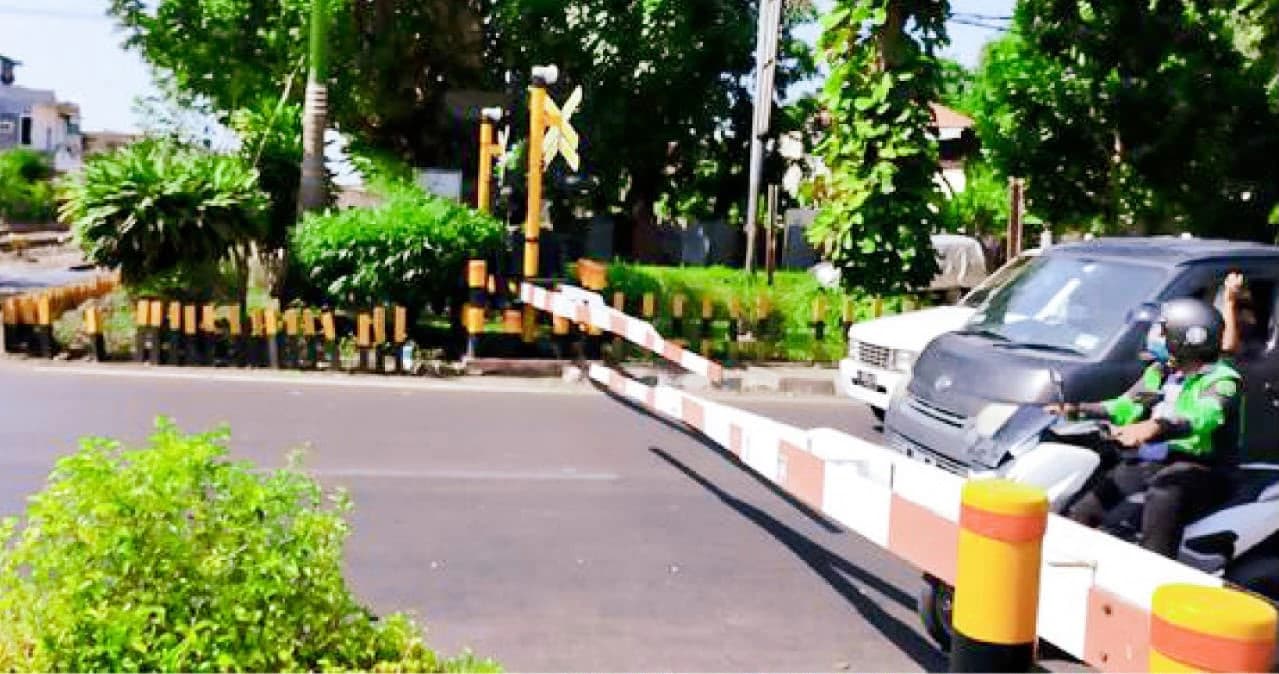
KAI Strengthens Level Crossing Safety, 748 Crossing Guards Certified
Level crossings are among the points that require particular attention in railway operations. In various areas, railway tracks intersect directly with community activities, making continuous safety management important for both train journeys and people living and carrying out activities around the railway.
To strengthen safety at these locations, KAI continues to take various measures, from improving staff competency and providing safety facilities to managing level crossings through collaboration with relevant stakeholders.
Vice President of Corporate Communication KAI Anne Purba explained that safety at level crossings requires cooperation between railway operators, regulators, local governments, and the community. As a railway operator, KAI carries out its role through staff readiness, safety facilities, and coordination with relevant parties.
One of the measures is improving the competency of level crossing guards (PJL). In 2026, 748 PJL officers participated in a certification program through six competency testing centers across 13 areas.
The certification provides the officers with recognized competencies based on the standards required to carry out safety and security functions at level crossings. With their competencies assessed against established standards, staff readiness becomes an important part of supporting safe railway operations.
Safety facilities at priority locations are also being improved. Based on updated data as of September 8, 2026, the construction of Juru Periksa Lintasan (JPL) guard posts had reached 166 out of 190 priority locations, representing 87.37% progress.
The JPL guard posts support crossing guards in carrying out safety duties for railway operations at locations designated as priorities.
Level crossing management is also being carried out through collaboration with relevant stakeholders. From 2021 through April 2026, KAI had closed 1,329 unauthorized level crossings across its operational areas.
The management of these crossings is carried out gradually, taking into account field conditions, safety needs, and coordination between relevant institutions. This means that improving level crossing safety involves a combination of staff competency, safety facilities, and the management of crossing locations.
Anne said KAI continues to strengthen railway safety through measures that are part of the company’s role. Collaboration with various stakeholders also remains an important part of maintaining safe railway operations.
Through competent personnel, strengthened safety facilities, and coordinated level crossing management, KAI continues to play its role in maintaining railway safety while supporting community activities around railway tracks.