
From Railway Restaurants to Train Attendants, the Long Journey of Customer Service
There is a story that has taken place inside trains since decades ago. When intercity journeys took hours, passengers needed food and drinks during the trip. From those simple needs, onboard service evolved, passing through various generations of facilities and staff to arrive at the form known to passengers today.
KAI Services' official historical records state that railway restaurants began to be established in the 1930s, when the need arose during the Dutch East Indies Government to provide food and beverage services for passengers during their journey. These traces became the initial part of the long journey of consumption services aboard Indonesian trains.
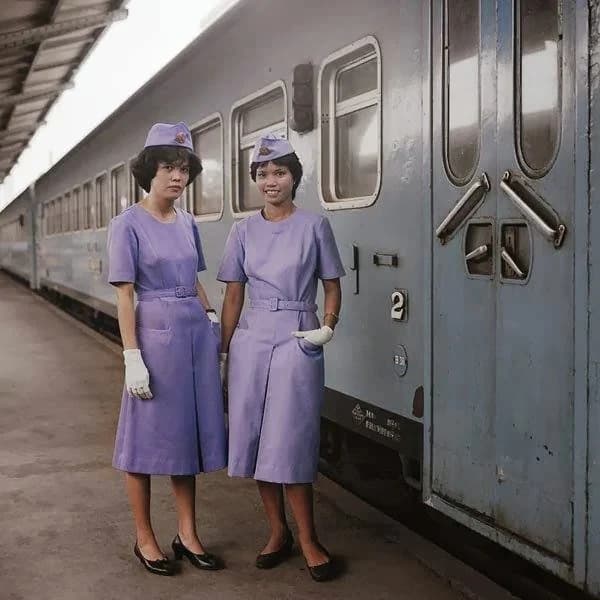
In the early days, service activities centered on the restaurant car or dining car. Staff known as restaurant attendants were tasked with serving passengers' consumption needs. As train travel developed, service grew closer to passengers throughout the train formation. From this long journey, the profession of train stewards and stewardesses—now known as prama and prami—developed.
KAI Vice President of Corporate Communication Anne Purba stated that these changes progressed alongside the development of railways and public needs.
"Onboard service has a long historical journey. Stemming from the need to provide food and drinks during the trip, the form of service continues to evolve alongside changes in facilities and passenger needs. Dining cars and the staff serving passengers have become part of the travel experience from generation to generation," Anne said.
RESTORKA and the Evolution of Onboard Service
The management of restaurant services became increasingly structured entering the era of the Railway Public Corporation, or PJKA.
KAI recorded the institutional change of Indonesian railways from the National Railway Corporation (PNKA) in 1963 to PJKA in 1971.
During this period, RESTORKA was recorded as part of the PJKA environment, with its office at Jalan Stasiun Timur No. 6, Bandung. KAI Services historical records also note that one of the well-known drinks in the early days of RESTORKA was Es Siripit.
Organizational development took place a year later. Based on PJKA Board of Directors Decree Number 4805/SK/72 dated December 5, 1972, RESTORKA was positioned as a special unit within the PJKA organizational structure. With this position, the operation and management of railway restaurants obtained a dedicated institutional framework.
This period also left behind culinary stories that endure in the memory of train travel. One of them is Nasi Goreng Parahyangan, which is recorded in the history of RESTORKA and later became known as one of the legendary railway menus.
"When we look at that journey, food turns out to have a special place in railway history. There are passengers who remember a journey through its train, the scenery passed, and the food enjoyed while on the train. Experiences like these help shape the memory of travel from era to era," Anne said.
From Restaurant Attendants to Prama-Prami
Changes in service are also visible in the staff working on board the train.
While early services centered on the restaurant car, staff later came closer to passengers. Stewards and stewardesses subsequently became part of train travel services before the terms prama and prami became widely known as they are today.
Staff appearance also changed following the development of corporate identity and service standards. Railway travel documentation shows uniform changes from era to era, in line with transitions from PJKA, Perumka, PT Kereta Api, to KAI.
KAI does not designate the chronology of colors and designs for each uniform generation as part of currently published historical records. However, in the modern era, uniforms serve as one of the identities of prama and prami when interacting directly with passengers.
Elements of Indonesian culture are also present on special occasions. During the commemoration of National Batik Day 2025, for instance, KAI Services prama and prami wore batik designed by Anne Avantie with the Sawunggaling and Truntum motifs. Sawunggaling carries the meaning of strength and steadfastness, while Truntum represents sincere and consistent love.
Uniform changes run parallel to changes in the space and manner in which they work. Prama and prami now serve passenger needs throughout the train formation while supporting food and beverage services during the journey.
Dining Cars Have Also Changed
Nearly a century after railway restaurants first gained recognition in the 1930s, dining cars remain a part of long-distance train journeys.
However, the dining cars encountered by passengers today come from various generations of facilities. KAI still operates existing dining cars, upgrades dining cars through modification programs, and gradually receives new dining cars as part of facility regeneration programs.
Functionally, dining cars are equipped with kitchens and serving areas to support the provision of food and beverages during the trip. In a number of dining cars, seating is also available to allow passengers to enjoy food and drinks while the journey is underway.
Modernization has been carried out, among other ways, through KAI's internal capabilities at the Tegal Workshop.
Throughout 2024–2025, as many as 17 M1 Dining Cars were successfully modified, consisting of four units in 2024 and 13 units in 2025. All of them were then put back into operation to support several long-distance train journeys.
The program continued in 2026 with 10 M1 Dining Cars entering the modification program.
The work touches on various parts of the facilities, ranging from underframe inspections, wheel systems, braking, and electrical systems to improvements in lighting, spatial layout, and facilities for passengers. Each facility then undergoes quality inspections and functional testing before being put back into service.
The modified facilities have even served journeys outside of Java. One of them is used on the Sindang Marga train on the Kertapati–Lubuklinggau round-trip route in South Sumatra.
"Modernization does not always mean replacing old facilities with new ones. KAI also upgrades facilities that are still serviceable through modification programs. Thus, service quality improvement can be achieved through the regeneration of new facilities alongside the optimization of existing rolling stock," Anne said.
New Dining Cars Arrive Gradually
At the same time, regeneration is taking place through the procurement of new trains produced by PT INKA.
In the 612-train procurement contract for the 2023–2027 period, the composition includes 297 executive coaches, 199 economy coaches, 57 dining cars, 57 power cars, and two baggage cars.
The figure of 57 dining cars represents the quantity within the procurement contract and does not reflect KAI's total number of dining cars or the total number of new dining cars currently in operation. The production, handover, and operation processes take place gradually.
New dining cars have begun to appear on a number of Stainless Steel New Generation trainsets. Their presence complements previous generations of dining cars as well as modified dining cars still in operation.
Consequently, passengers may encounter different characters of dining cars depending on the trainset being used.
"Every generation of facilities has its own journey. Currently, reliable older dining cars, modified cars, and new cars can exist in the same operational ecosystem. We carry out regeneration gradually while paying attention to safety, reliability, and passenger comfort," Anne said.
What Can Be Enjoyed in the Dining Car Today?
Changes are also felt in the food and beverages available.
Consumption services are currently managed by KAI Services through Kuliner Kereta, with a menu selection that evolves to meet passenger needs. Some well-known menu items during the journey include Nasi Goreng Parahyangan Legend, Nasi Sei Sapi, and Nasi Sapi Lada Hitam, accompanied by various choices of snacks and drinks.
On certain occasions, food options also adapt to travel needs. During Ramadan 2026, for example, choices such as Buko Pandan, green bean porridge, banana kolak, dates, and fried snacks were made available.
Passengers do not always have to visit the dining car to obtain food and beverages. Service is carried out by prama and prami throughout the train formation so that consumption needs can be met during the trip.
This is where historical travel meets present-day conditions.
If in the early days passengers visited the restaurant car to obtain food and drinks, service can now be delivered directly near the passenger's seat. Meanwhile, the dining car remains a space to prepare, serve, and enjoy food and beverages during the trip.
The Dining Car as a Space for Interaction
The function of the dining car has even evolved into a space for interaction during the journey.
On various occasions, the space can become a place for passengers to chat and enjoy the trip in an atmosphere different from their seats. Themed activations have also been presented by KAI Services on trains, including adjustments to decorations and staff attire during specific momentum.
These changes demonstrate the long distance traveled from the railway restaurant service of the 1930s.
From restaurant attendants to prama-prami, from RESTORKA to KAI Services, from older generations of dining cars to modified M1s and new dining cars, and from simple consumption choices to the variety of Kuliner Kereta, onboard service continues to move with the times.
"Much has changed. Facilities are increasingly modern, staff uniforms have evolved, food choices are more diverse, and the way passengers obtain service is increasingly easy. However, there is one thread that has remained the same for decades, which is delivering service while passengers travel by train," Anne said.
According to Anne, this service story becomes an interesting part of Indonesian railway history because it highlights the human side behind the development of technology and facilities.
"When discussing railway history, we often remember the locomotives, stations, or tracks. Yet, inside every trainset, there are also people who have served passenger journeys for decades. From past restaurant attendants to today's prama and prami, they are part of the long story of Indonesian railway service," Anne concluded.