
Towards Lower-Emission Rail Transport, B50 Implementation Strengthens More Sustainable Railway Services
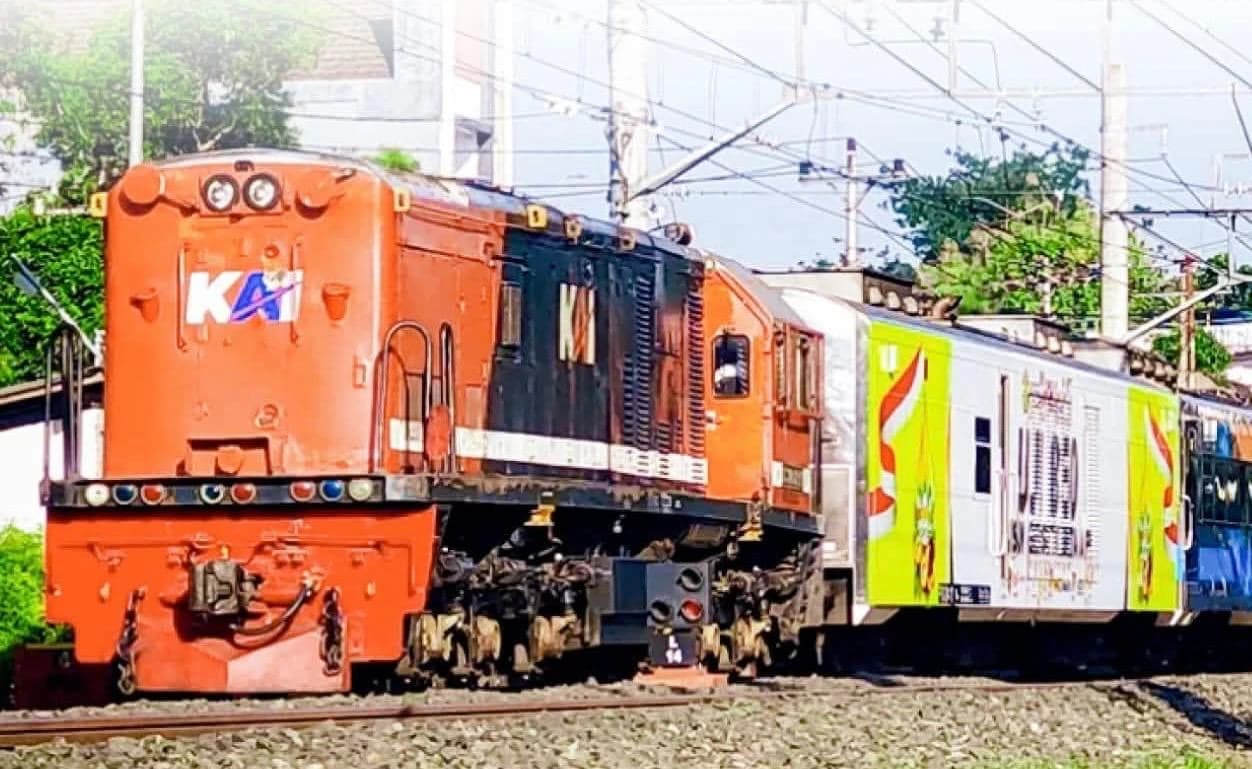
The journey toward greener rail transportation continues as the gradual implementation of B50 biodiesel officially began on 1 July 2026. Applied to diesel-powered rolling stock, including locomotives and power generator cars, the initiative marks another important step in supporting Indonesia's energy transition while delivering more sustainable railway services for customers.
The rollout follows a comprehensive series of technical assessments, component monitoring, and operational safety evaluations to ensure that the transition maintains the highest standards of safety, reliability, and service quality. The initiative also reflects KAI's commitment to supporting the government's policy of expanding the use of renewable energy derived from domestic resources.
Vice President of Corporate Communication KAI Anne Purba explained that the implementation of B50 has been carried out gradually since 1 July 2026, following extensive technical preparation and operational evaluation. Every stage has been carefully designed to ensure that the adoption of the new fuel supports Indonesia's energy transition without compromising railway safety, operational reliability, or passenger service quality.
B50 consists of a blend of 50 percent plant-based biodiesel and 50 percent conventional diesel fuel. Increasing the biodiesel blend helps maximize the use of renewable domestic resources, reduce dependence on fossil fuels, and strengthen Indonesia's long-term energy security.
Beyond enhancing energy resilience, B50 also contributes to environmental sustainability. According to projections from Indonesia's Ministry of Energy and Mineral Resources, nationwide implementation of B50 has the potential to reduce carbon dioxide emissions by 44.46 million tons, exceeding the estimated 39.66 million tons achieved through the previous B40 program. This represents another meaningful contribution toward Indonesia's low-carbon development goals.
To ensure operational readiness, KAI conducted extensive testing on both locomotives and power generator cars. The evaluations covered engine performance, fuel consumption, combustion stability, emissions, filter conditions, lubricants, and fuel system components. Testing on power generator cars focused on maintaining a stable electricity supply throughout the journey, while locomotive testing assessed engine performance under varying operating conditions and workloads.
Anne added that continuous monitoring remains an essential part of the implementation process. Fuel quality, engine conditions, filtration systems, and maintenance procedures will continue to be evaluated regularly to ensure that B50 consistently supports safe, reliable, efficient, and sustainable railway operations.
KAI's experience with previous biodiesel programs, including B35 and B40, has also provided valuable operational insights for the transition to B50. Each increase in biodiesel content has been accompanied by adjustments to inspection procedures, maintenance standards, fuel management practices, and workforce competency development to ensure a smooth and effective implementation.
Alongside the adoption of cleaner energy for railway operations, KAI continues to strengthen its contribution to Indonesia's national energy distribution through rail-based logistics services. From January to June 2026, KAI transported 1,338,180 tons of fuel products, representing a 4.66 percent increase compared with 1,278,621 tons during the same period in 2025. The shipments included various types of fuel that support communities as well as strategic industries across the country.
One of the key logistics services includes the transportation of aviation fuel (avtur) from Cilacap Station to Rewulu Station, where it is further distributed to support flight operations at Yogyakarta International Airport (YIA). This service demonstrates the railway's strategic role within Indonesia's energy supply chain by providing large-capacity, scheduled, and reliable fuel transportation while helping reduce dependence on road-based distribution.
Anne explained that KAI plays a dual role in supporting the nation's energy sector. On one hand, the company is implementing B50 as part of the transition toward cleaner railway operations. On the other, it continues to ensure the smooth distribution of fuel products, including aviation fuel that supports air transportation and strengthens multimodal connectivity across Indonesia.
The implementation of B50, combined with the continued growth of rail-based fuel logistics, highlights the close relationship between transportation, energy, and economic development. Reliable diesel-powered railway operations help maintain dependable passenger services, while efficient fuel distribution ensures a stable energy supply for communities, industries, and other strategic sectors nationwide.
Looking ahead, KAI will continue enhancing fleet readiness, maintenance quality, workforce capabilities, and collaboration with stakeholders to support Indonesia's energy policies. Through these ongoing efforts, the company aims to ensure that every step toward cleaner energy is accompanied by high standards of operational safety, service reliability, and customer satisfaction—creating railway journeys that are not only safer and more dependable but also increasingly sustainable for the future.