
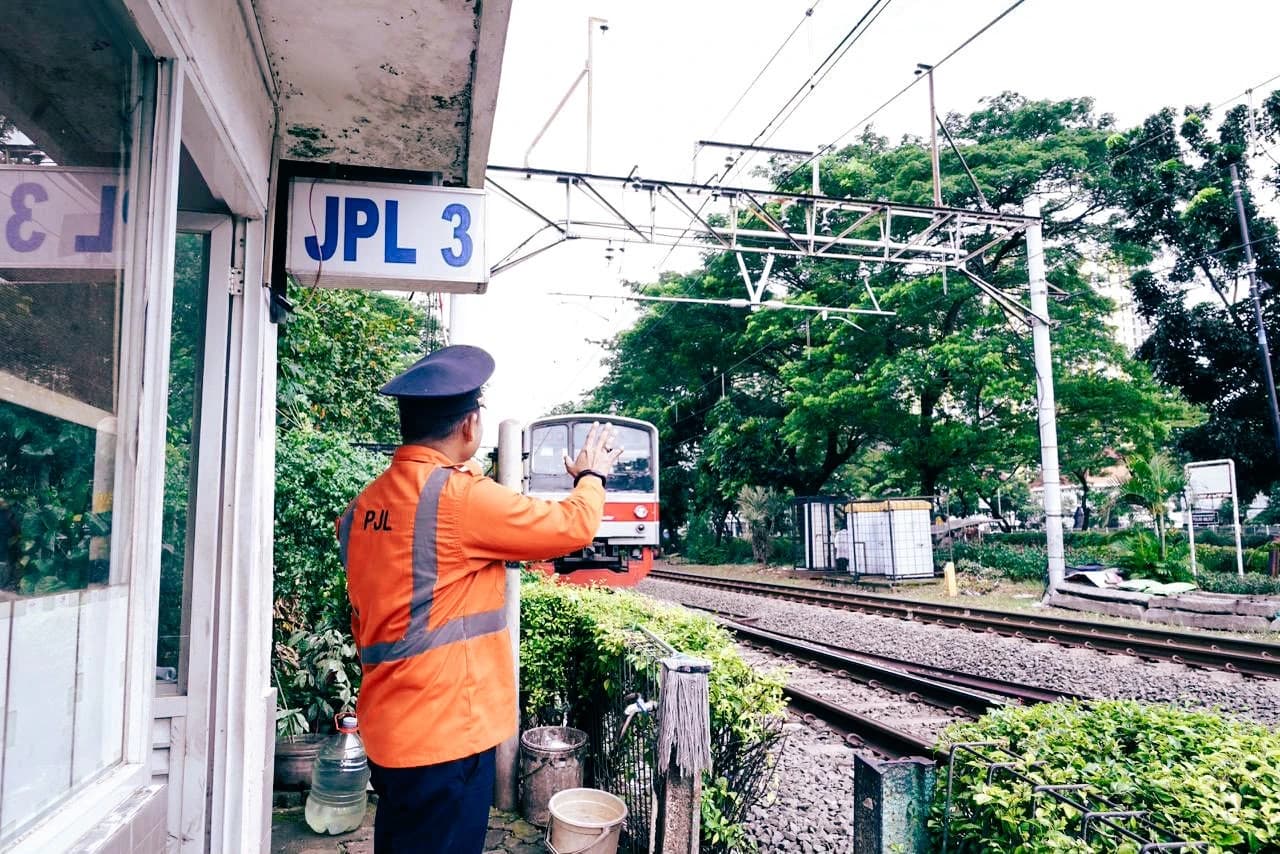
12,957 People Vie for KAI Level Crossing Guard Positions; 748 Roles Opened to Bolster Crossing Safety
The opportunity to work while also contributing to railway travel safety has attracted thousands of people. A total of 12,957 people have joined the first stage of the Penjaga Jalan Lintasan (PJL) recruitment, which was opened to fill 748 positions across various operational areas.
The number of applicants shows strong public interest in jobs that have a direct role in public transportation services. However, the selection process is still ongoing, so the figure does not yet represent the number of applicants who will ultimately be declared successful.
PJL candidates who successfully pass all stages of the selection process will join the 2,126 officers currently working in the field. Their presence is expected to strengthen monitoring at level crossings, particularly at locations with relatively high levels of community activity.
Staffing requirements also cannot be calculated solely based on the number of crossings. The shift system means that a single location may require several PJL officers so that monitoring can continue throughout service hours. These requirements are adjusted to the conditions and operational characteristics of each crossing.
There are currently 3,888 level crossings in KAI’s operational areas. Of these, 2,112 locations, or around 54 percent, are guarded, while the remaining 1,776 locations, or approximately 46 percent, are not guarded. A total of 2,799 locations are official crossings, while another 1,089 are categorized as unauthorized crossings.
Efforts to improve safety do not stop at adding personnel. Access arrangements, improvements to safety facilities, and the closure of high-risk crossings are also part of the measures carried out based on the conditions of each location.
A total of 172 priority crossings targeted for closure have been addressed. After the target was achieved, closures continued at other locations that, based on evaluations, were considered to pose safety risks and have safer alternative access.
The measure has become increasingly relevant in light of accident records through July 31, 2026. A total of 151 accidents occurred at level crossings, down 11 percent from 170 incidents during the 2025 comparison period. The number of affected vehicles also fell from 176 to 152 units, while the number of victims decreased from 178 to 131 people.
Although the overall number has declined, road user behavior remains the biggest concern. A total of 132 incidents, or 87 percent of accidents, were caused by people attempting to cross despite warnings. The remainder consisted of 12 incidents involving stalled vehicles and seven incidents caused by crossing gates that were delayed or failed to close.
Of the total incidents, 84 accidents occurred at ungated crossings and 67 at gated crossings. The affected vehicles consisted of 90 motorcycles and 62 cars, while the 131 victims included 59 fatalities, 33 people seriously injured, and 39 people sustaining minor injuries.
The data shows that the presence of personnel and safety facilities still needs to be accompanied by disciplined road-user behavior. Under railway and traffic regulations, road users are required to stop when warnings are given or crossing gates begin to close and must give priority to train movements.
Ahead of the weekend, the public is encouraged to slow down when approaching crossings, follow signs and officers’ instructions, look both ways, and ensure that the track is completely safe before crossing. Safety at level crossings is ultimately a shared responsibility between operators, the government, personnel, and road users.