
Building Smarter Railways, KAI and BRIN Strengthen Automatic Train Protection Technology Development
Railway transportation in Indonesia is moving toward a smarter and more modern era. Beyond providing more comfortable services, the railway industry continues to adapt to technological advancements to deliver safer, more reliable, and more efficient journeys.
As part of this transformation, PT Kereta Api Indonesia (Persero), or KAI, and the National Research and Innovation Agency (BRIN) have strengthened their collaboration in railway technology development. The partnership focuses on research, exploration, and adoption of innovative railway technologies, including Automatic Train Protection (ATP), a key technology designed to enhance railway safety.
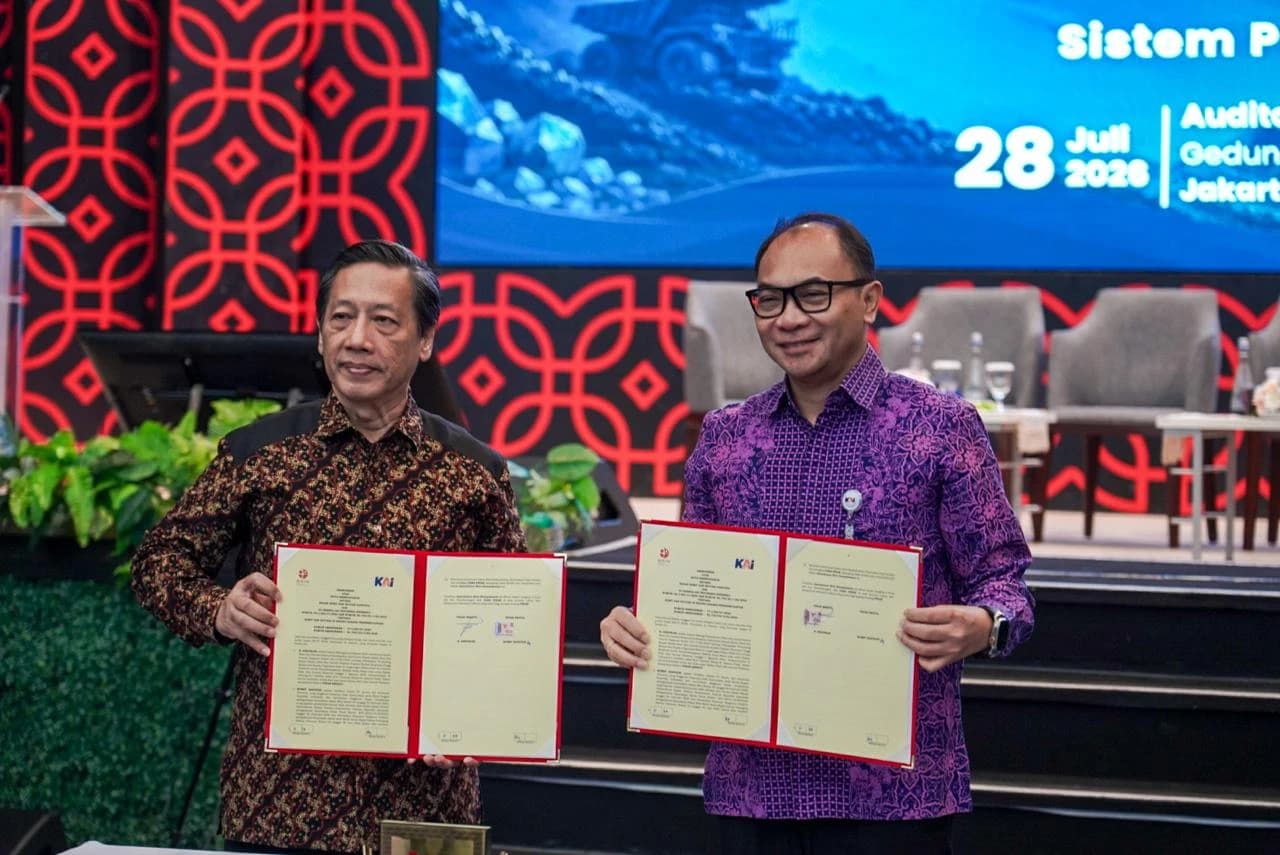
The collaboration was marked by the signing of a Memorandum of Understanding during the BRIN Goes to Industry 5 event held at the Soemitro Djojohadikusumo Auditorium, Jakarta, on Tuesday (28/7). This partnership represents a strategic step to accelerate the utilization of research outcomes in supporting railway technology development that meets Indonesia’s operational needs.
Deputy Minister of Energy and Mineral Resources of the Republic of Indonesia Ir. Yuliot Tanjung, M.M. stated that the advancement of Indonesia’s industrial sector requires stronger synergy between the government, research institutions, universities, and businesses.
According to Yuliot, strengthening research and innovation plays an important role in supporting national industrialization, improving competitiveness, accelerating downstream development, and creating technologies that can address industrial challenges.
Industrial transformation requires strong collaboration from all stakeholders. The government plays an important role in building an ecosystem that supports technological development while strengthening the national industrial structure.
Entering the Industry 5.0 era, the utilization of digital technology and artificial intelligence has become a crucial element in shaping the future of industries. However, technological advancement must go hand in hand with human resource development, social considerations, and sustainability principles.
Through stronger collaboration between research institutions and industries, innovations are expected to create real impacts, support operational efficiency, and address the evolving challenges of the national industrial sector.
The Memorandum of Understanding on behalf of KAI was signed by KAI’s Director of Portfolio Management and Information Technology, I Gede Darmayusa. The signing was part of BRIN’s broader collaboration program with various industries to accelerate the implementation of research and innovation outcomes across sectors.
Deputy for Research and Innovation Utilization at BRIN, Dr. R. Hendrian, M.Sc., explained that BRIN Goes to Industry 5 serves as a platform to strengthen connections between research institutions and industries.
The event featured various activities, including technical discussions, business matching sessions, research showcases, and direct meetings between researchers and industry players, involving approximately 135 industries.
Head of BRIN Prof. Dr. Arif Satria, S.P., M.Si. emphasized the importance of ensuring that research outcomes can deliver real benefits and move beyond the research stage into practical applications.
According to him, innovations developed through research should generate economic, social, and environmental impacts while encouraging productivity growth and creating new opportunities for national industries.