
One Ecosystem, Five Railway Technologies: How KAI Group Keeps Indonesia Moving
Every train journey is powered by a different technology behind the scenes. From daily commuting and family vacations to freight transportation and high-speed rail travel, each service is designed to meet specific mobility needs while delivering safe, reliable, and seamless journeys across Indonesia.
Through its integrated ecosystem, KAI Group now manages five railway technologies: diesel locomotives, Electric Multiple Units (Commuter Rail), Diesel-Electric Railcars (KRDE/I), fully automated Light Rail Transit (LRT), and the Whoosh High-Speed Railway operating at speeds of up to 350 km/h.
These diverse technologies supported 258,993,359 passenger journeys during the first half of 2026, an increase of 7.55% compared to the same period last year. During the same period, railway freight services transported 32,498,043 tons of cargo, including 26,534,095 tons of coal and 5,963,948 tons of non-coal commodities, supporting Indonesia's industrial and logistics sectors.
As of June 2026, KAI operated 551 locomotives, 1,064 commuter train cars, 2,238 passenger coaches, 8,907 freight wagons, and 96 KRDE/I trainsets. The company also operates LRT Jabodebek, while Whoosh High-Speed Railway is operated by PT Kereta Cepat Indonesia China as part of the broader KAI Group ecosystem.
Each railway technology has its own operational characteristics, power source, control system, and maintenance requirements. Despite these differences, all services are managed under the same commitment to safety, reliability, operational excellence, and customer comfort.
Diesel locomotives continue to serve as the backbone of Indonesia's intercity passenger and freight operations. During the first half of 2026, Long-Distance and Local Train services carried 29,858,267 passengers, while freight operations transported 32.50 million tons of commodities, including coal, containers, fuel, cement, plantation products, and other industrial goods.
Tourism services also continued to grow, with KAI Wisata serving 164,743 passengers, a remarkable 64.45% increase from the previous year. Premium travel options such as Panoramic Coaches, Luxury Trains, Exclusive Charter Coaches, and other tourism experiences continue to attract more travelers.
Urban mobility remains one of KAI Group's strongest services. KAI Commuter recorded 204,151,200 passenger trips during the first half of 2026, growing 6.58% year-on-year. Commuter services remain the largest contributor to KAI Group's passenger volume across Greater Jakarta, Bandung, Yogyakarta–Solo, Surabaya, Merak–Rangkasbitung, and several other metropolitan areas.
KRDE/I technology also plays an important role in regional connectivity and airport rail services. Airport Rail Link services carried 3,482,897 passengers, while the Makassar–Parepare Railway welcomed 172,011 passengers, representing a 15.42% increase from the previous year.
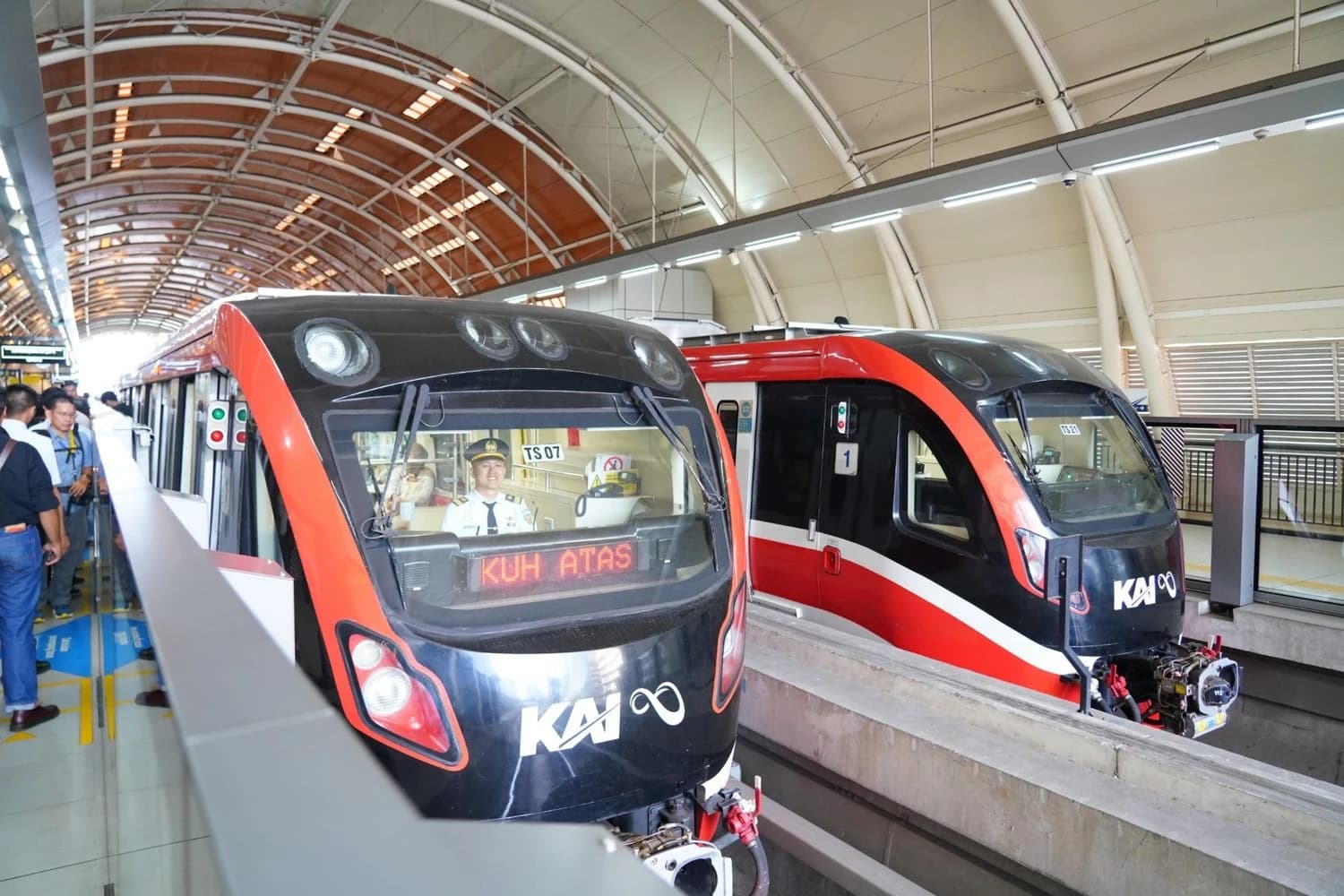
For modern urban transit, LRT Jabodebek operates using Communication-Based Train Control (CBTC) technology with Grade of Automation 3 (GoA3), allowing train speed, spacing, and stopping operations to be automatically managed through a centralized control center. The system served 16,018,911 passengers during the first half of 2026, an increase of 22.84%, while LRT South Sumatra carried 2,206,496 passengers.
At the highest end of railway technology, Whoosh High-Speed Railway delivers journeys at operational speeds of up to 350 km/h. During the first half of 2026, the service welcomed 2,938,834 passengers, offering one of the fastest travel experiences in Southeast Asia.
Behind every journey is a comprehensive maintenance ecosystem. Six major rolling stock maintenance centers located in Manggarai, Tegal, Yogyakarta, Gubeng, Pulubrayan, and Lahat perform heavy maintenance, overhauls, inspections, and reliability improvements for various railway assets.
Infrastructure reliability is further supported by the Cirebon Prujakan Mechanical Maintenance Center, responsible for maintaining track maintenance machinery, and the historic Kiaracondong Bridge Workshop, operating since 1921 to manufacture and maintain steel railway bridges and infrastructure equipment.
As railway technology continues to evolve, so does workforce capability. The number of certified railway professionals increased from 14,150 in 2022 to 19,167 in 2025. Throughout 2026, certification programs cover 18,297 competency requirements across operational roles, including train crews, dispatchers, maintenance personnel, infrastructure technicians, and level crossing attendants.
Continuous development programs, including technical training, operational simulations, workshops, refresher courses, and emergency response exercises, ensure that employees remain ready to operate increasingly advanced railway systems. KAI also utilizes the Safety Railway Information (SRI) application to enable faster hazard reporting and proactive risk mitigation across its operations.
By integrating five different railway technologies within a single ecosystem, KAI Group continues to strengthen Indonesia's railway network, delivering safer, smarter, and more connected transportation solutions while supporting the country's growing mobility needs for the future.