
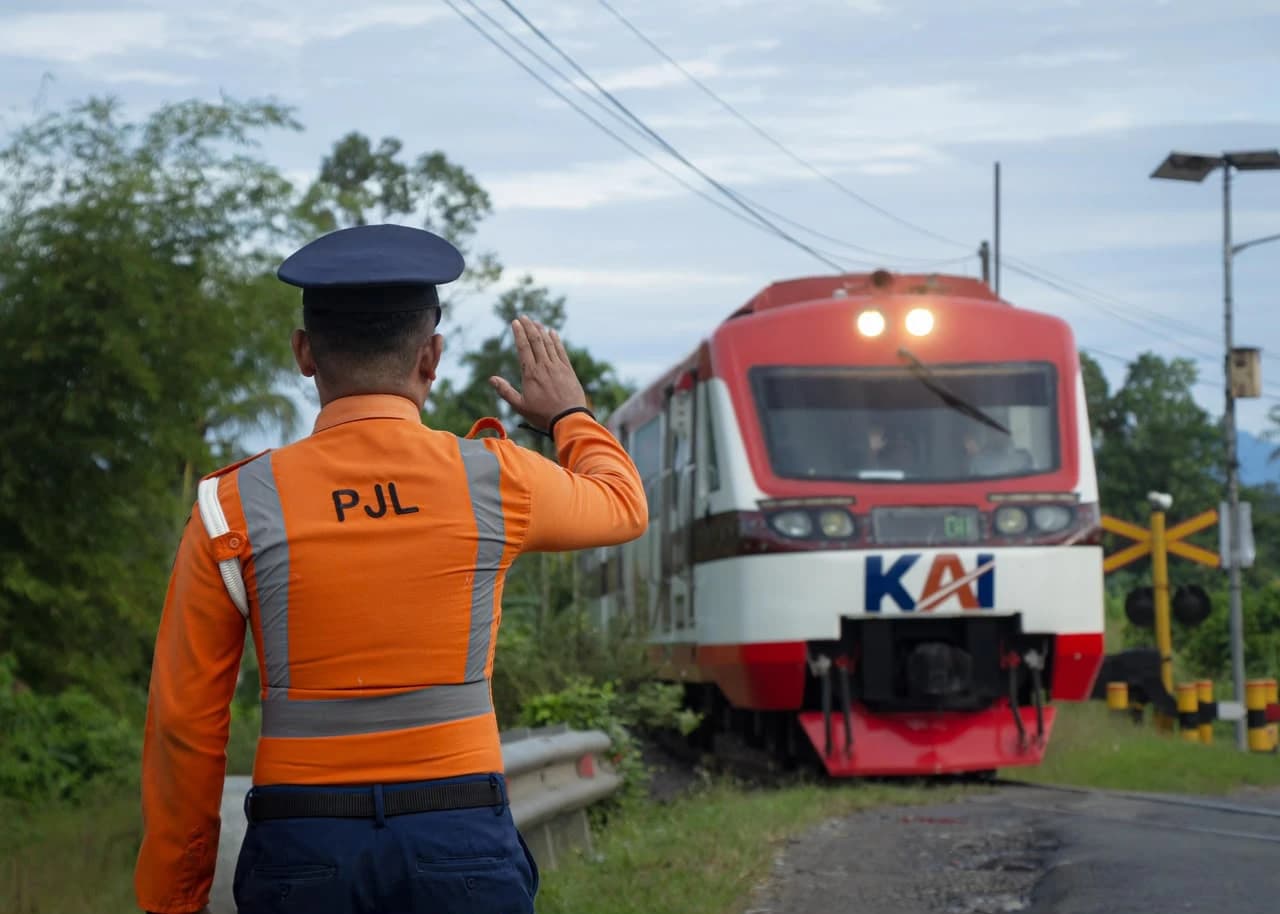
Safety Strengthened, 320 Railway Crossings Improved During the First Half of 2026
Creating safer railway journeys goes beyond improving train services—it also means strengthening safety at every level crossing. From January to 7 July 2026, a total of 320 railway crossings were improved as part of ongoing efforts to reduce accident risks while protecting both road users and railway operations across Indonesia.
The improvements included the closure of 225 unauthorized or illegal crossings, the closure of 29 registered but high-risk unattended crossings, the narrowing of access at 65 locations, and the normalization of one registered crossing. Each action was carefully planned based on field assessments, risk levels, train frequency, and community activities surrounding the railway corridor.
Vice President of Corporate Communication KAI Anne Purba explained that every improvement shares the same objective: creating safer crossings for both the public and railway operations. According to her, the closure, access restriction, and normalization of crossings are aimed at reducing traffic violations while minimizing the potential for accidents at locations requiring greater safety attention.
The importance of public discipline at railway crossings was highlighted once again following an assault on a level crossing officer at JPL 227 Leuwigoong, Garut Regency, on Sunday (12 July). At the time of the incident, the officer had properly closed the crossing barriers to secure the passage of Serayu Train. After receiving a warning for attempting to cross despite the closed barrier, a motorcyclist later returned with several individuals and assaulted the officer.
The incident left the officer with facial bruises and injuries to the hand. KAI immediately coordinated with the police, provided assistance to the victim, and supported the legal process in accordance with applicable regulations. Anne emphasized that violence against railway personnel performing safety procedures is unacceptable. Crossing barriers are closed solely to protect road users from potential accidents, and every instruction given by railway staff is intended to safeguard lives.
The incident also drew attention from West Java Governor Dedi Mulyadi, who stated through his social media account that individuals who attack railway crossing officers must be held accountable through the legal process.
Anne further explained that railway crossing officers work in rotating 24-hour shifts, maintaining full concentration throughout their duty. They are responsible for monitoring train movements, operating crossing barriers, and ensuring that road users stop at a safe distance before trains pass. Every decision made by these officers directly impacts public safety and railway operations, making it essential for them to receive respect, protection, and full support while carrying out their responsibilities.
She also reminded the public that trains operate differently from road vehicles, as they require significantly longer braking distances and cannot stop suddenly. For this reason, motorists must always give priority to trains and stop immediately whenever warning sirens sound, signal lights flash, crossing barriers begin to close, or railway officers give instructions.
Waiting for a few moments at a railway crossing is always far safer than attempting to force a way through. A simple decision to stop can protect motorists, passengers, railway personnel, train crews, and customers travelling on board. Safety begins with respecting traffic signs, following crossing procedures, and complying with officers' directions.
Beyond encouraging discipline at railway crossings, KAI also reminds the public not to walk, gather, play, take photographs or videos, or carry out any other activities along railway tracks. Railway corridors are restricted operational areas designed exclusively for train movements and are not intended for public activities.
As part of its commitment to strengthening railway safety culture, KAI encourages road users to stop before crossing barriers, avoid driving against traffic, never cross even when a train is not yet visible, and always follow instructions from crossing officers. The company also calls on the public to respect railway personnel and refrain from intimidation, threats, or any form of violence while they are performing their duties.
Looking ahead, KAI will continue enhancing railway crossing safety through continuous evaluations, improvements at high-risk locations, and public education campaigns. By fostering greater awareness and cooperation from all stakeholders, every railway journey can become even safer, more reliable, and more comfortable for both road users and train passengers.