
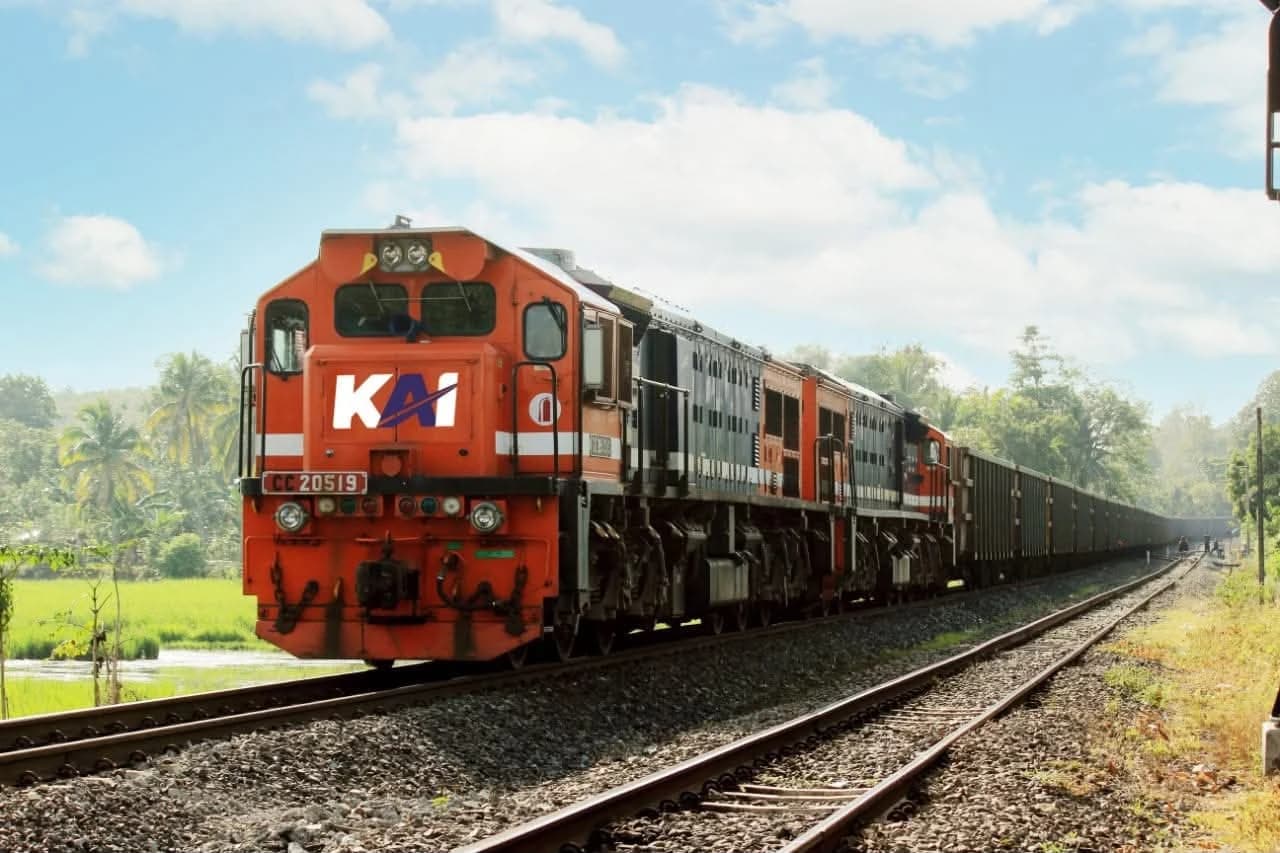
KAI Accelerates National Logistics, Successfully Transporting 32.50 Million Tons of Freight
Amid growing demand for freight distribution across Indonesia, KAI continues to strengthen its rail-based logistics services. Expanding transportation capacity, improving connectivity with ports and industrial estates, and integrating rail services with other transportation modes are strategic steps to create a more efficient and competitive supply chain ecosystem.
During the first half of 2026, KAI successfully transported 32,498,043 tons of freight. The total consisted of 26,534,095 tons of coal, representing 81.65%, and 5,963,948 tons of non-coal commodities, accounting for 18.35%.
The non-coal commodities transported by KAI include containers, fuel, cement and clinker, plantation products, retail goods, fertilizers, steel, as well as various industrial and consumer goods. This achievement further highlights the important role of railways in supporting the distribution of energy resources, industrial materials, manufactured products, and essential goods across regions.
KAI Vice President of Corporate Communication Anne Purba said that strengthening the logistics ecosystem requires stronger connectivity between production centers, industrial areas, freight terminals, ports, warehouses, and final distribution points.
Railways offer large transportation capacity, well-planned schedules, and consistent interregional freight services. Therefore, KAI continues to expand rail-based logistics connectivity with ports, industrial estates, dry ports, and first- and last-mile delivery services.
To strengthen coal transportation services in Southern Sumatra, KAI continues implementing strategic improvements, including additional rolling stock, railway capacity upgrades, electric signaling development, and optimization of loading and unloading facilities.
One of the long-term strategic projects is the development of Tarahan II Terminal, which is designed to provide additional handling capacity of up to 20 million tons per year. This initiative is part of KAI’s effort to strengthen the national energy supply chain through high-capacity and scheduled rail transportation.
The development of Tarahan II Terminal is being carried out in collaboration with PT Bukit Asam Tbk. (PTBA). Under this partnership, PTBA focuses on developing loading terminals, unloading terminals, and supporting infrastructure, while KAI prepares operational assets and electric signaling systems.
The project is planned to be supported by 22 locomotives and 1,200 freight wagons to strengthen coal transportation capacity in Southern Sumatra.
Beyond that, KAI continues preparing coal freight capacity improvements through railway infrastructure strengthening, additional rolling stock, and enhanced unloading facilities, including capacity development related to Tarahan Kramasan Terminal and private partner terminals.
By the first half of 2026, these capacity strengthening efforts had been supported by the arrival of 1,080 flat wagons. These assets are prepared to increase freight transportation capability in Sumatra and support large-scale commodity distribution more efficiently.
Freight transportation investment must be developed as an integrated ecosystem. Additional locomotives and wagons need to be supported by railway readiness, signaling systems, terminals, maintenance facilities, and committed freight volumes from partners to ensure available capacity can be utilized optimally.
In addition to strengthening coal transportation, KAI continues expanding its non-coal freight contribution through the development of regular non-dedicated container train services across Java.
Through this service model, customers can adjust their shipments based on available capacity slots. This flexibility improves wagon utilization, increases operational productivity, and provides businesses with easier freight management solutions.
During the first half of 2026, KAI’s container freight volume reached approximately 2.62 million tons.
KAI also operates the Brumbung Cargo Train, which has a capacity of up to 800 tons per trainset. This service provides businesses in Java with an additional reliable and efficient rail-based freight transportation option.
Going forward, KAI continues expanding logistics connectivity through plans to connect Cilacap Container Terminal with the national railway network, particularly Semarang Container Terminal.
This development is expected to expand port service coverage, strengthen domestic and international freight distribution, and encourage a shift of cargo transportation from highways to railways.
The integration of Cilacap Port with the railway network is also expected to support industrial commodity distribution in Central Java and surrounding regions. Under KAI’s 2026–2030 Corporate Long-Term Plan (RJPP), the initial investment requirement for this connectivity development is estimated at approximately Rp3.6 billion, with implementation depending on feasibility studies, partner readiness, and project development stages.
KAI is also preparing rail-based logistics connectivity between Krakatau Steel production facilities and industrial areas in East Java. This service is designed as a pilot project for steel distribution while supporting the implementation of the Zero Over Dimension Over Load (Zero ODOL) policy.
With the ability to transport large quantities of heavy commodities under more standardized loading conditions, rail transportation can help reduce pressure from heavy vehicles on highways, improve distribution safety, and provide more reliable delivery schedules for industries.
Based on KAI’s RJPP, the estimated investment requirement for this connectivity development is around Rp22 billion. The value remains subject to technical studies, infrastructure readiness, volume commitments, licensing processes, and agreements with partners.
KAI is also conducting studies for the development of a dry port at the Batang Integrated Industrial Estate as part of its strategy to create a more connected national logistics ecosystem.
The study covers freight potential, railway connectivity requirements, terminal readiness, operational schemes, financing, and integration with port networks.
The estimated investment requirement for accelerating and revitalizing rail logistics services is around Rp2.5 trillion. This figure remains an initial estimate that requires further studies with ministries, institutions, industrial estate managers, business partners, and potential funding providers.
In the plantation sector, KAI continues expanding opportunities for Crude Palm Oil (CPO) transportation. The available service capacity has reached more than 1.1 million tons annually, with opportunities for increased utilization through stronger partnerships, multimodal integration, and optimization of existing assets.
Responding to growing demand for sustainable logistics solutions, KAI is also developing green freight services. This initiative focuses on emissions measurement, operational efficiency, lower-emission energy utilization, and verified and certified green transportation solutions.
National logistics integration must provide real benefits for industries and communities. More efficient distribution can help maintain supply availability, improve delivery reliability, expand market reach, and strengthen the competitiveness of Indonesian products.
KAI will implement all developments gradually while considering business feasibility, infrastructure readiness, safety, operational reliability, freight volume certainty, regulations, and sustainable financing schemes.
Through collaboration with the government, Danantara, port operators, industrial estates, cargo owners, and logistics companies, KAI aims to expand the contribution of railways within the national supply chain. The ultimate goal is to create a logistics system that is more integrated, high-capacity, scheduled, efficient, and low-emission.