
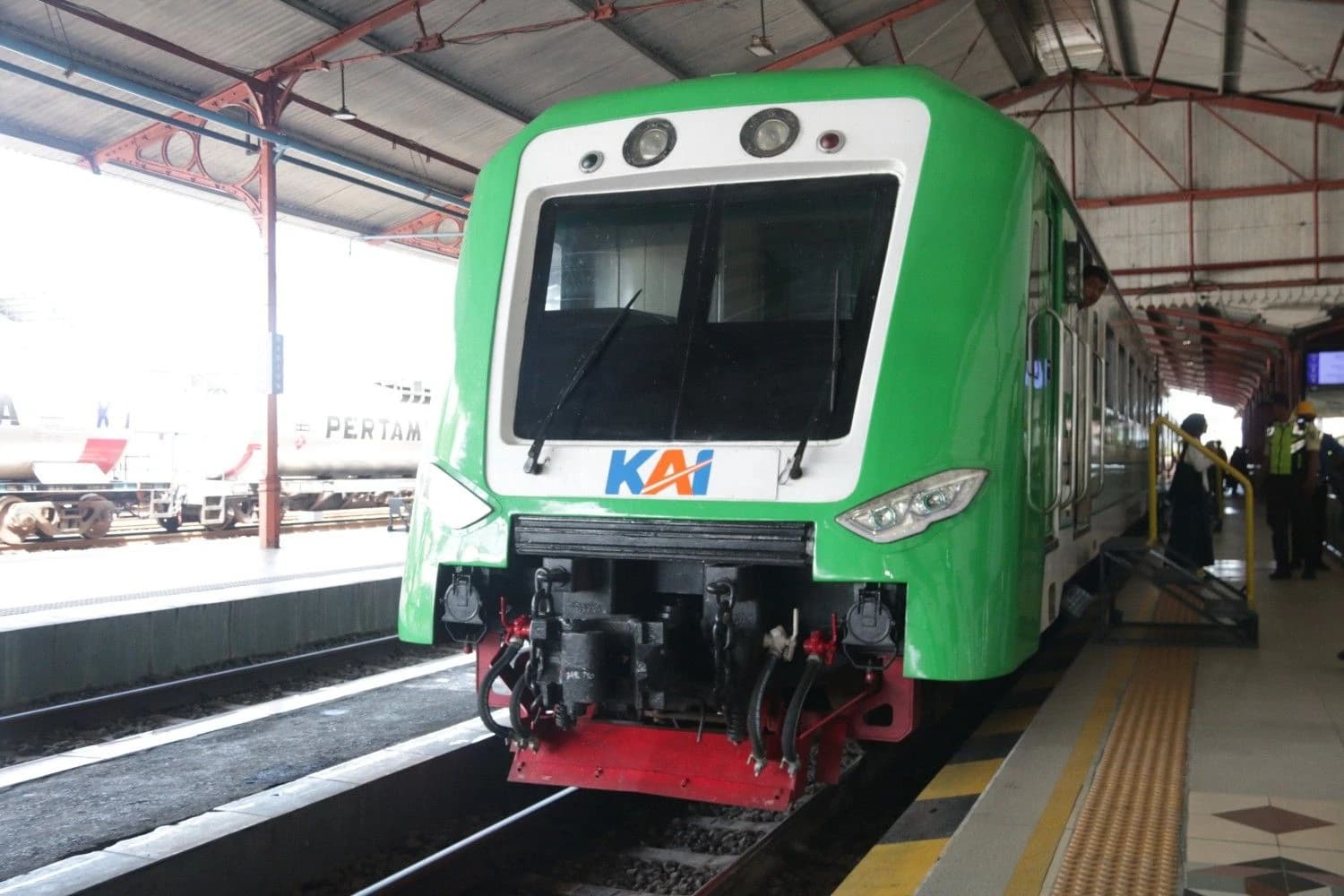
KA BIAS Gains Popularity, Serves 375 Thousand Passengers from January–May 2026
The Adi Soemarmo Airport Rail Link, known as KA BIAS, recorded significant growth during the first five months of 2026. PT Kereta Api Indonesia (Persero) reported that this service has served 375,032 passengers from January to May 2026, an increase of 24.90 percent compared to the same period in 2025, which recorded 300,271 passengers.
This increase indicates that KA BIAS is increasingly needed as a connecting train service in the Daop 6 Yogyakarta and Daop 7 Madiun regions. Initially introduced to facilitate access to and from Adi Soemarmo Airport, the service has now also become a preferred mode of transportation for people traveling across Solo, Sragen, Ngawi, Magetan, and Madiun.
Vice President of Corporate Communication KAI, Anne Purba, explained that the growth in KA BIAS passengers reflects the public’s need for comfortable, fast, and reliable short-distance intercity transportation. According to her, KA BIAS now serves a broader function in supporting intercity mobility. Originally designed as an airport access service, it has evolved into a connector for daily activities in Solo, Sragen, Ngawi, Magetan, and Madiun. The 24.90 percent increase in passengers indicates that trains are increasingly essential for daily travel, family trips, education, work, and local economic activities.
The number of KA BIAS passengers increased by 74,761 people during the January–May 2026 period. On average, this service serves around 2,483 passengers per day over the first five months of 2026. This figure shows that KA BIAS is gaining a growing base of regular passengers, especially along routes that have long served as key mobility corridors in eastern Central Java and western East Java.
KA BIAS serves several important points, including Adi Soemarmo Airport, Kadipiro, Solo Balapan, Solo Jebres, Palur, Sragen, Walikukun, Ngawi, Magetan, and Madiun, according to the applicable schedule. The connectivity between these points provides more practical travel options for people traveling from city centers, residential areas, educational hubs, economic zones, and airport access points.
Anne added that intercity connector services like KA BIAS have strategic value as they bridge the need for short- and medium-distance travel. With more predictable travel times, passengers can plan their journeys better without relying on road traffic conditions. Mobility in the Solo–Madiun corridor requires services that are flexible, affordable, and easily accessible, and KA BIAS meets this need through scheduled trips connected to various key stations along its route.
KAI also views KA BIAS as a service that supports the equal distribution of public transportation access. For people in Sragen, Ngawi, Magetan, and Madiun, KA BIAS provides additional options to travel to Solo, the airport area, and surrounding cities. Conversely, for passengers from Solo, this service offers easier access to the Madiun region.
With affordable fares for each travel destination, KA BIAS can be an option for students, workers, small business owners, families, and people who require regular travel. Passengers can book tickets through official KAI channels and ticketing partners cooperating with KAI.
KAI will continue to maintain the quality of KA BIAS services to make them increasingly accessible for the public. This passenger growth serves as motivation for KAI to strengthen intercity services that are safe, comfortable, and aligned with the travel needs of the community.