
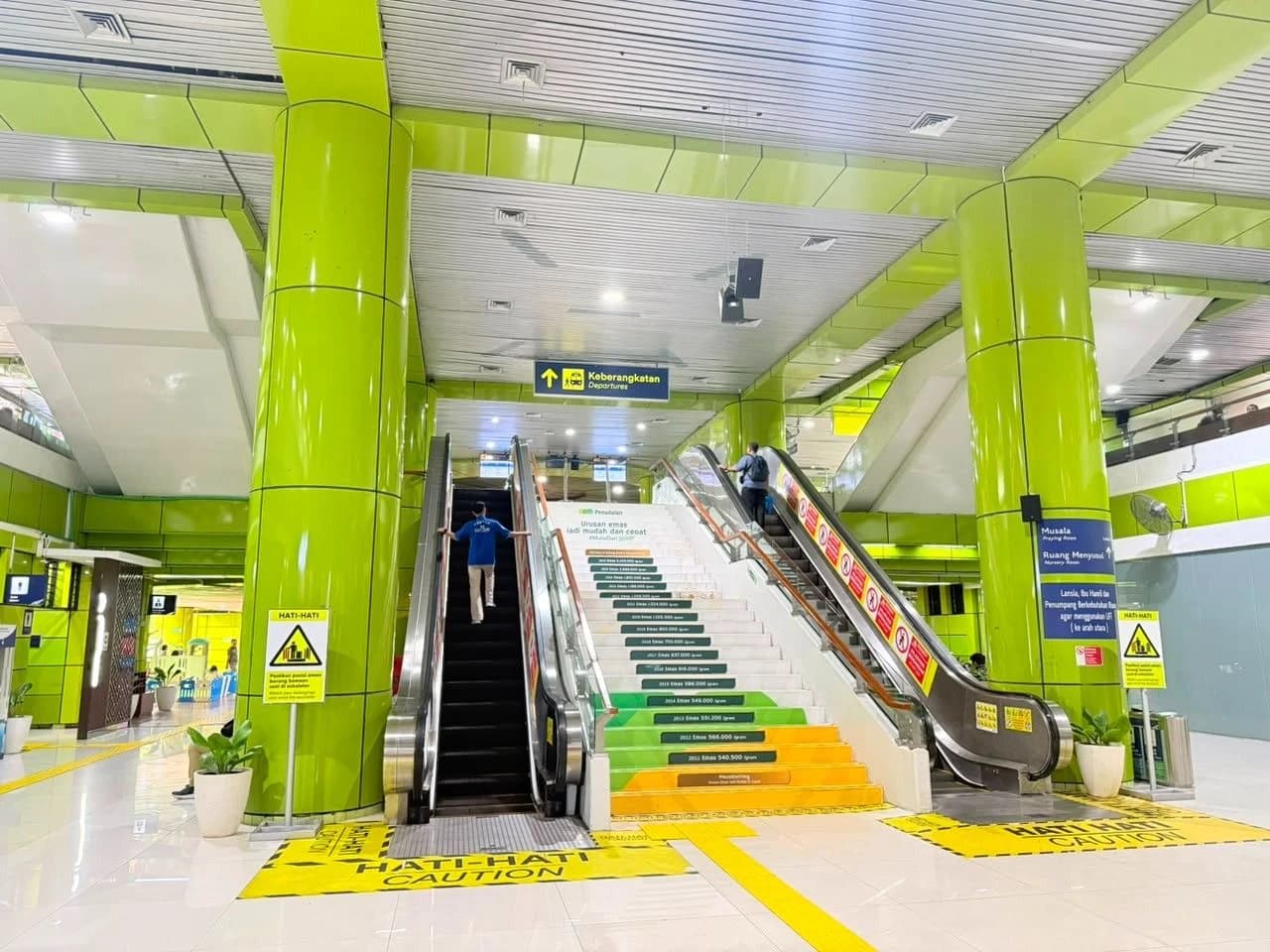
Easier Access to Central Jakarta: KAI Prepares Gambir as an Integrated Transport Hub
The transformation of Gambir Station continues with a stronger focus on connectivity, creating a travel hub that is more accessible, convenient, and seamlessly connected to Jakarta's urban lifestyle. Following its earlier vision as a hospitality and leisure destination, the next phase of development is centered on improving integration, making it easier for passengers to connect with various modes of transportation across the capital.
Known as the main gateway for long-distance train travel from central Jakarta, Gambir Station occupies one of the city's most strategic locations. Situated near the National Monument (Monas), government offices, business districts, hotels, public spaces, and other transport networks, the station plays a vital role in supporting urban mobility. The ongoing development aims to deliver a more complete travel experience—from arriving at the station and waiting for departure to transferring between transport modes and continuing activities throughout the city.
As urban mobility continues to evolve, the role of city-center railway stations has expanded beyond transportation. Today, stations serve as vibrant spaces where travel, public services, commercial activities, dining, retail, culture, and community life come together. While maintaining its primary role as a long-distance railway station, Gambir is being developed into a more comprehensive travel destination that offers easier access, clearer passenger flow, comfortable waiting areas, a wider range of dining and retail options, and stronger connectivity with surrounding destinations.
Currently, Gambir Station serves 34 regular long-distance train services daily, with approximately 78 arrivals and departures for long-distance passengers. At the same time, its elevated railway corridor accommodates 326 Bogor Line Commuter Line services every day on the Jakarta Kota–Bogor and Jakarta Kota–Nambo routes.
At this stage, Commuter Line trains passing through Gambir do not yet accommodate passenger boarding and alighting. Therefore, plans to integrate commuter services at Gambir are being developed gradually, taking into account infrastructure readiness, operational arrangements, safety requirements, network capacity, and close coordination with transportation authorities.
Through this phased approach, KAI is preparing a future where transfers between long-distance trains and commuter services can be carried out more seamlessly once all technical requirements are fulfilled. Passenger convenience, operational reliability, and safety remain the key priorities throughout every stage of development.
The need for greater integration has become increasingly relevant as commuter mobility across Greater Jakarta continues to grow. Commuter Line ridership increased from 217.9 million passenger journeys in 2022 to 344.6 million in 2025, representing an increase of more than 58% within just three years.
Among all Commuter Line routes, Bogor Line remains the busiest. Passenger numbers grew from 102 million in 2022 to 133 million in 2023, 145.9 million in 2024, and 155 million throughout 2025. During the first half of 2026 alone, the line served 78.08 million passengers.
These figures highlight the importance of daily travel from Bogor, Depok, Cibinong, Nambo, and surrounding areas into Jakarta. Once Gambir is technically ready to accommodate commuter passengers, the station will provide more direct access to the Monas area, government offices, hotels, public spaces, business centers, and long-distance train services. The integration will also offer long-distance rail passengers more convenient onward travel options, creating a smoother and more efficient journey from arrival to final destination.
The development of Gambir is progressing alongside the continued enhancement of Manggarai Station, with both stations serving complementary roles within Greater Jakarta's railway network. Manggarai remains the region's central interchange station, while Gambir is being strengthened as the city's primary gateway for long-distance rail services, a direct access point to the Monas area, a customer service hub, and a future integration point for the Commuter Line.
This complementary approach is expected to create a more organized and efficient public transportation system, with Manggarai managing large-scale passenger transfers and Gambir providing easier access to central Jakarta while delivering an enhanced customer experience.
According to the Gambir Station Business Optimization and Visioning Study, the station is envisioned as a Modern Station & Lifestyle Hub built around three key pillars: mobility, culture, and lifestyle. The concept combines transportation functions with cultural spaces, customer services, commercial facilities, and public areas that seamlessly connect with the Medan Merdeka precinct.
With this vision, Gambir is expected to become an urban destination where passengers can easily transfer between transport modes, enjoy a variety of dining experiences, access travel services, relax before departure, and connect directly to Monas and other major attractions in central Jakarta.
The master plan also includes future connections with TransJakarta, the MRT, pedestrian corridors, the Monas public area, retail outlets, restaurants, lounges, hotels, rooftop parks, meeting facilities, and additional public spaces. The design further incorporates dedicated Commuter Line platforms, a commuter concourse, an intermodal hub on the lower ground level, and improved passenger circulation for long-distance train arrivals and departures.
Passenger experience remains at the heart of the development. Wider pedestrian areas, more intuitive departure and arrival zones, better vehicle circulation through the lower ground level, and more pedestrian-friendly public spaces are all designed to create a smoother and more comfortable station environment. The result will be a station where passengers can navigate with ease, transfer between transport modes effortlessly, and access the services they need without unnecessary complexity.
Gambir's commercial ecosystem has also continued to grow. Based on 2026 tenant data, the station currently features 132 leased commercial spaces, comprising 67 indoor units and 65 open-space locations. These include restaurants, cafés, convenience stores, retail outlets, souvenir shops, bookstores, lounges, lockers, transit hotels, sleeping pods, ATMs, vending machines, parking facilities, outdoor media, and various travel support services.
The presence of these businesses reflects Gambir's growing role as more than just a transportation hub. As intermodal connections, pedestrian facilities, waiting areas, and commercial spaces continue to improve, the benefits are expected to extend beyond passengers to local businesses, workers, suppliers, service providers, and the surrounding community.
According to the development study, the new retail area is expected to provide approximately 15,479 square meters of leasable commercial space, while hotel and meeting facilities will cover around 3,756 square meters. Once fully developed, the project has the potential to accommodate 220–310 small and medium-sized businesses and create approximately 500–1,000 direct and supporting jobs, depending on the final design, tenant mix, development phases, and operational model.
Through this phased transformation, Gambir is being prepared to meet the evolving needs of modern travelers. While continuing to serve as Jakarta's primary gateway for long-distance rail travel, the station is also set to become a more connected urban hub that seamlessly links intercity journeys, daily commuting, public transportation, retail, dining, culture, and city life—delivering a more integrated and enjoyable travel experience for everyone.