
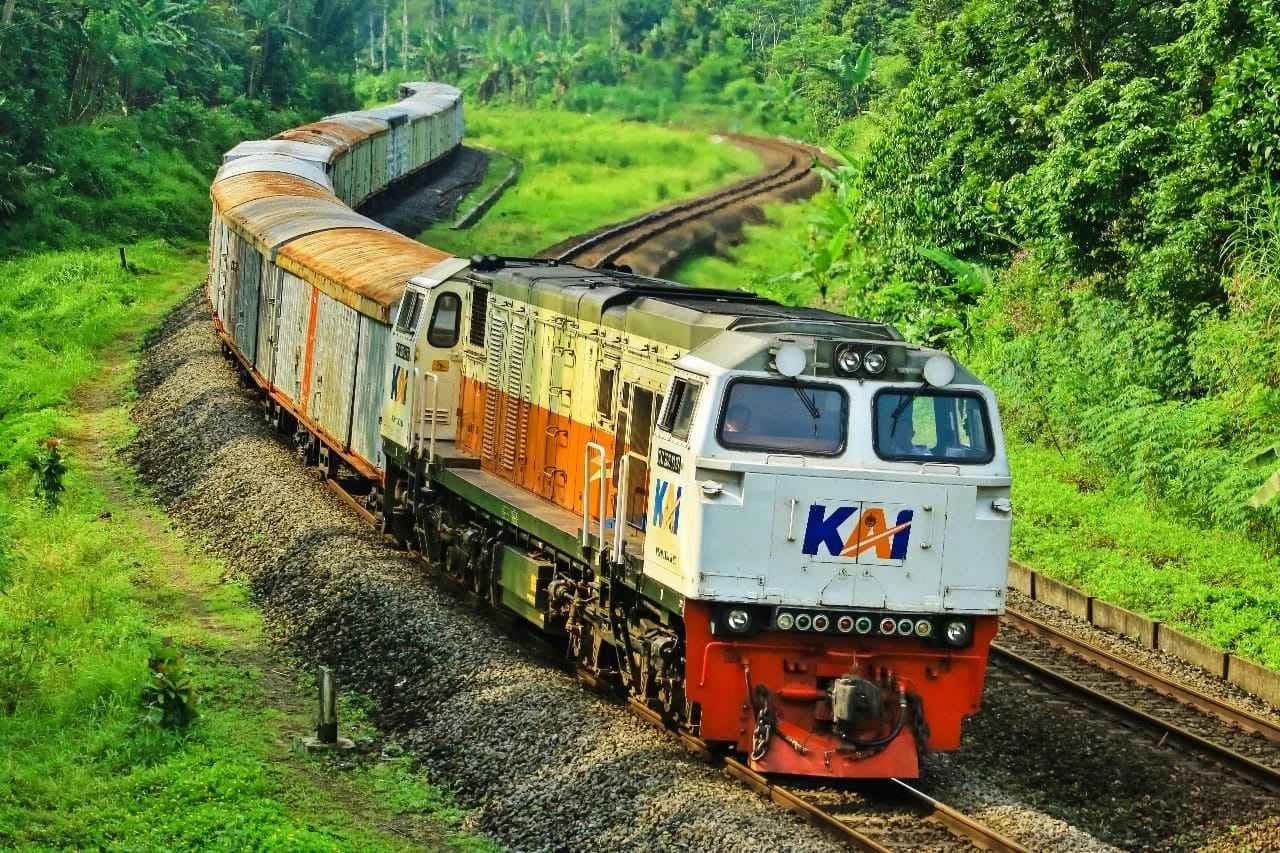
Supporting Food Security, KAI Transported 10,050 Tons of Fertilizer Across Indonesia in the First Half of 2026
A reliable and timely fertilizer distribution system plays a vital role in maintaining agricultural productivity and strengthening Indonesia’s food security. Ensuring fertilizers move efficiently from production facilities to destination areas requires a transportation network that is dependable, well-scheduled, and capable of carrying large volumes. Supporting this effort, PT Kereta Api Indonesia (Persero) (KAI) continues to strengthen its role through rail-based logistics services that help distribute fertilizer across various regions of the country.
Throughout the first half of 2026 (January–June), KAI transported 10,050 tons of fertilizer, reinforcing its contribution to Indonesia’s agricultural supply chain. This follows previous achievements of transporting 24,180 tons in 2024 and 21,060 tons throughout 2025, demonstrating that rail freight has become an increasingly reliable option for supporting fertilizer distribution nationwide.
KAI Vice President of Corporate Communication Anne Purba explained that rail transportation offers the capacity to move large volumes of goods with consistent and reliable schedules. As part of an integrated logistics network, rail freight complements other transportation modes, enabling fertilizer deliveries to be adjusted according to customer requirements and the receiving capacity of each destination.
Rail-based logistics has become even more important amid changes in the global fertilizer market. The Food and Agriculture Organization (FAO) reported that global fertilizer trade volume between January and April 2026 declined by approximately 20–25 percent compared with the same period last year. Meanwhile, the World Bank projects that average global fertilizer prices will increase by around 31 percent in 2026. These developments highlight the importance of strong collaboration among stakeholders to ensure the smooth distribution of fertilizer across Indonesia and maintain supply for the agricultural sector.
At the national level, Indonesia’s Ministry of Agriculture reported that, as of June 25, 2026, subsidized fertilizer distribution had reached 54.28 percent of the national allocation of 9.55 million tons. The scale of this distribution underscores the need for close coordination among government agencies, fertilizer producers, logistics providers, warehouse operators, distributors, and transportation companies to ensure fertilizer reaches farmers efficiently and on time.
Within this logistics ecosystem, railways serve as a key link for long-distance transportation between regions, offering high carrying capacity and dependable operations. Once shipments arrive at freight terminals, deliveries can continue via road transport to warehouses and final destinations. This multimodal logistics approach provides greater flexibility while improving the overall efficiency of Indonesia’s supply chain.
Fertilizer transportation is part of KAI’s growing non-coal freight business. During the first half of 2026, KAI transported 5,963,948 tons of non-coal cargo, including containers, fuel, cement and clinker, plantation products, retail goods, fertilizer, and various other commodities. This diverse freight portfolio demonstrates KAI’s ability to support the logistics needs of multiple industries and contribute to Indonesia’s economic development.
KAI’s freight capacity also creates broader opportunities for collaboration with the Ministry of Agriculture, fertilizer manufacturers, regional governments, logistics companies, and other stakeholders. Rail services can be tailored to production locations, railway networks, freight terminals, storage facilities, and the distribution needs of each region, providing flexible and efficient logistics solutions.
Anne added that successful fertilizer distribution requires careful planning and coordination, including shipment volumes, transportation schedules, loading locations, terminal readiness, and receiving arrangements at destination points. With proper planning, each mode of transportation can perform its role effectively, resulting in a more reliable and efficient logistics system.
Through safe, reliable, and high-capacity freight services, KAI remains committed to strengthening Indonesia’s national supply chain. Beyond supporting fertilizer distribution, the company’s rail logistics services help enhance the agricultural sector by providing a transportation system that is increasingly efficient, dependable, and well integrated.
Looking ahead, KAI will continue improving the quality of its freight services while expanding collaboration with various stakeholders to ensure the smooth distribution of strategic commodities, including fertilizer. By continuously strengthening connectivity across the country, KAI aims to deliver logistics solutions that support agricultural productivity, reinforce national food security, and create lasting benefits for communities throughout Indonesia.