
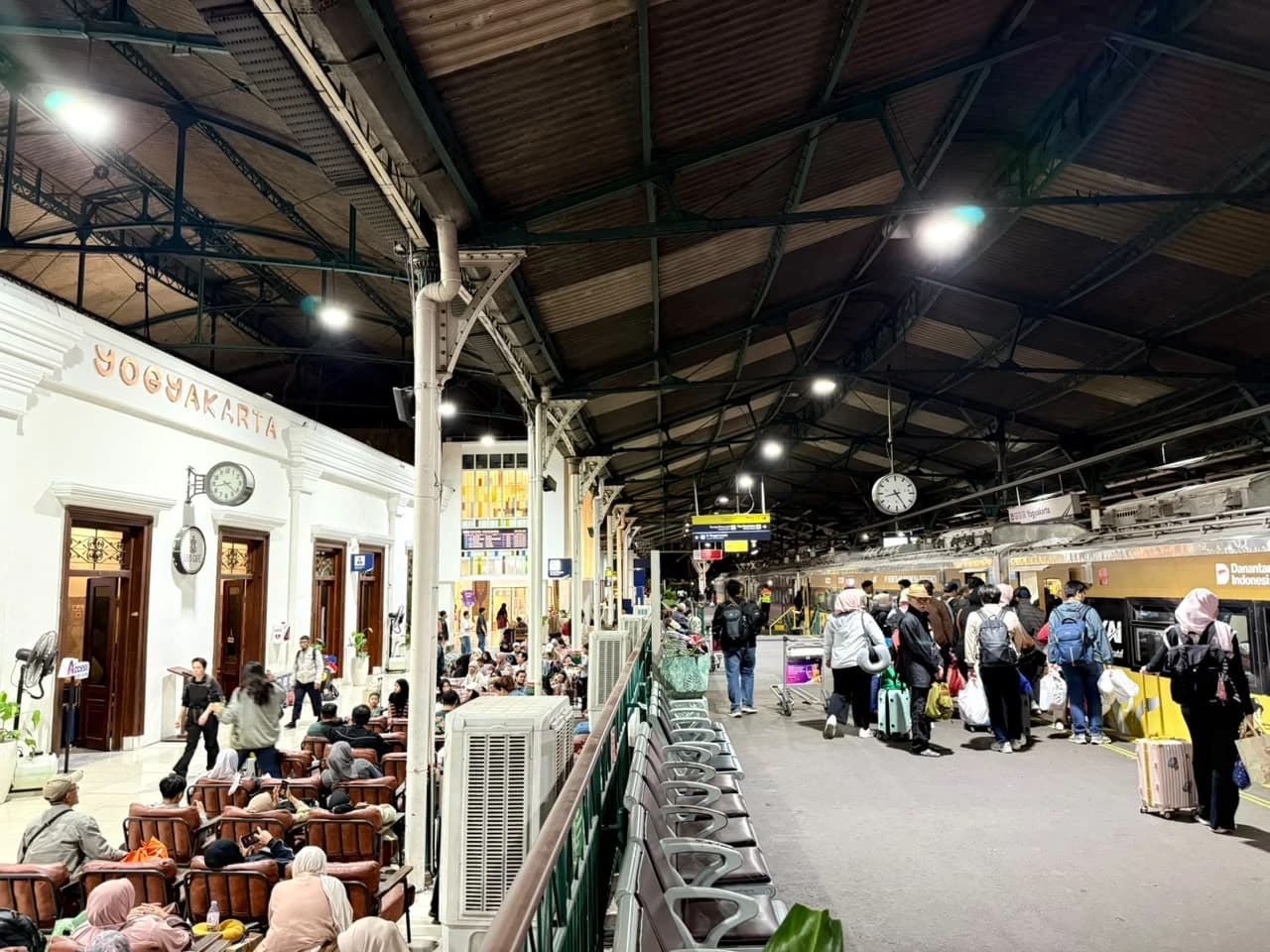
From Departure to Return, Trains Accompany Millions of Journeys
Every journey has a story, and there is always a journey back. Some people take the train to work, attend university, visit family, attend events, or simply enjoy a change of scenery. Once their plans are complete, the journey continues in the opposite direction, whether it is heading home, returning to daily routines, or moving on to the next destination.
This two-way travel activity is reflected in data from PT Kereta Api Indonesia for January–September 2026. Several intercity corridors recorded strong passenger movements in both directions, highlighting how train services support a wide range of travel needs across Indonesia.
The Gambir–Yogyakarta corridor was among those with the highest passenger volumes. During this period, 536,573 passengers traveled from Gambir to Yogyakarta, while 500,528 traveled in the opposite direction. Combined, the two directions accounted for more than 1.03 million passenger journeys in the first nine months of 2026 alone.
Similar patterns were recorded on other corridors. The Gambir–Semarang Tawang route and its return direction recorded a combined 775,855 passenger journeys. The Pasarsenen–Lempuyangan corridor and its return direction reached 694,510 journeys, followed by Yogyakarta–Surabaya Gubeng and its return direction with 569,938 passenger journeys.
Interestingly, the Gambir–Bandung corridor recorded an almost perfectly balanced flow of passengers in both directions. A total of 277,526 passengers traveled from Gambir to Bandung, while 277,448 traveled from Bandung to Gambir. The difference was just 78 passengers, out of a combined 554,974 journeys.
KAI Vice President of Corporate Communication Anne Purba explained that these figures reflect active connections between cities, supported by the diverse travel needs of the public. Passengers travel for many reasons, including work, education, family visits, tourism, and other activities. Strong passenger flows in both directions also indicate that intercity mobility remains dynamic throughout the year.
Each corridor also offers its own travel experience. The Jakarta–Yogyakarta connection links a major national activity hub with a city known for its education, culture, culinary scene, and tourism. The Jakarta–Semarang corridor connects destinations with diverse business, government, trade, and tourism activities. Meanwhile, the Jakarta–Bandung route serves a variety of travel purposes, from work and family visits to culinary adventures, creative activities, and short getaways.
The strong passenger flows in both directions show that travel does not simply move from one major center to a single destination. Cities remain connected through a variety of needs and activities, creating a continuous exchange of people and journeys every day.
Anne added that behind these passenger figures are everyday stories of people and places staying connected. Some passengers set out to achieve their goals and return with new experiences, while other cities become both destinations and starting points for the next journey. Through this movement, train services help maintain intercity connectivity and make it easier for people to travel between destinations.
Whether it is a trip for work or a family getaway, every journey has its own purpose and story. By connecting cities across Indonesia, KAI continues to be part of people's journeys, from the moment they set off to the time they make their way back.