
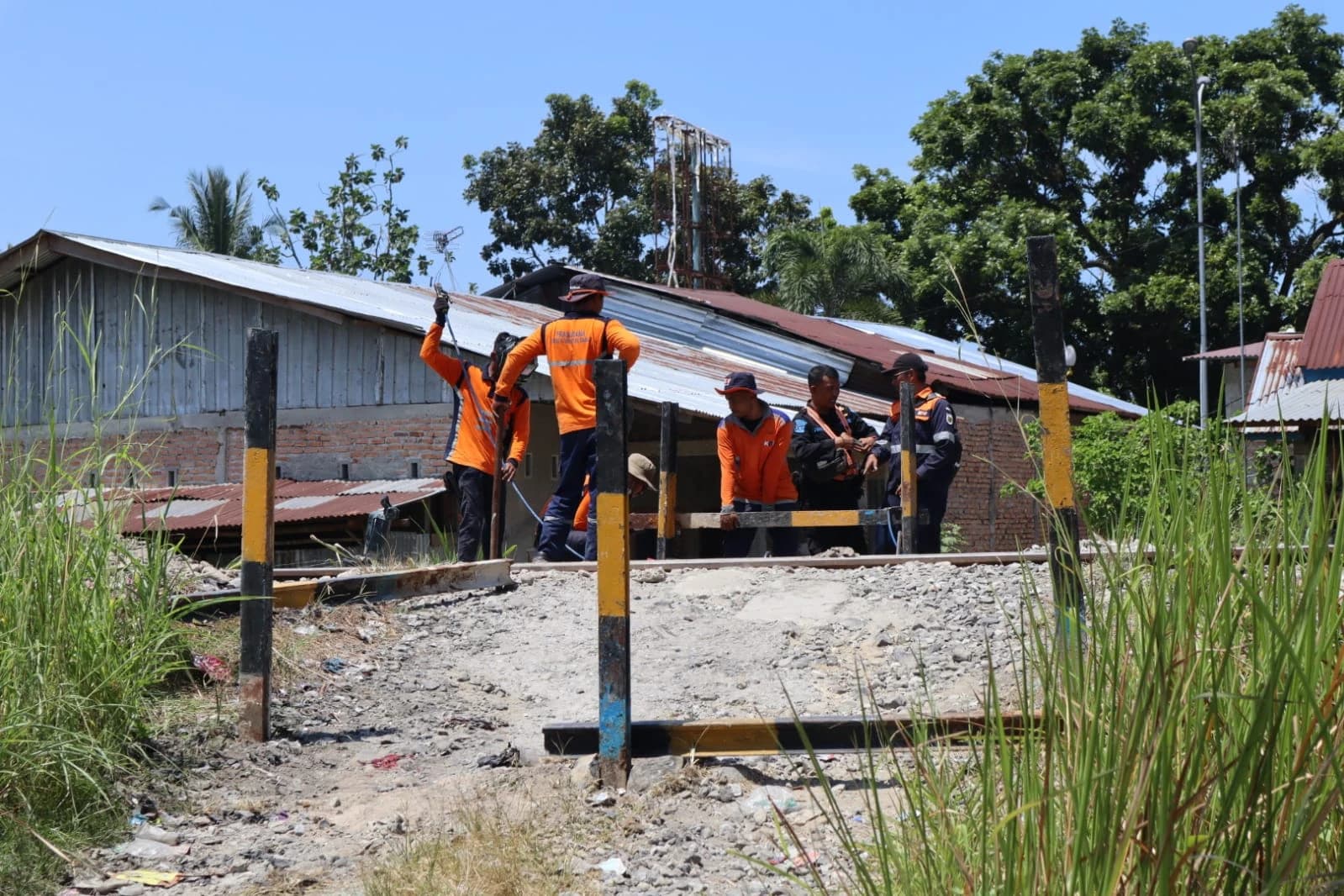
Most Level Crossing Accidents Occur at Unguarded Crossings, KAI Reminds Road Users to Give Trains Priority
Safety at level crossings depends not only on safety infrastructure but also on road users’ compliance. KAI data covering 2023 through August 11, 2026, shows that 67% of level crossing accidents occurred at unguarded crossings, while the remaining 33% occurred at guarded crossings. The period recorded 747 incidents at unguarded crossings and 368 at guarded crossings.
KAI’s Vice President of Corporate Communication, Anne Purba, explained that these figures highlight the importance of improving safety infrastructure alongside strengthening road users’ compliance. She emphasized that barriers, warning signs, and crossing guards play important roles in maintaining safety, but road users’ decisions to stop and give trains priority remain crucial.
Indonesia has 3,674 level crossings nationwide. From 2021 through April 2026, KAI and relevant stakeholders closed 1,329 unauthorized level crossings, including 44 locations between January and April 2026.
Safety improvements in 2026 also cover 190 level crossing locations requiring 748 level crossing guards (PJL) across KAI’s regional operating areas (Daop and Divre). The program includes constructing guard posts, preparing personnel, certifying crossing guards, and providing supporting safety equipment.
According to progress data as of September 28, 2026, civil works had been carried out at 183 of the 190 locations. Meanwhile, the installation of modular equipment, warning signs, barriers, and communication devices is being carried out in stages to prepare the safety facilities for operation.
Level crossing management is also part of the national safety agenda. In April 2026, the Ministry of Transportation announced efforts to accelerate the inventory of crossing status, road authority, guarding conditions, and priority locations for joint action with KAI. These measures are intended to ensure that improvements reflect the conditions and risk levels at each location.
Road users’ obligations when crossing railway tracks are stipulated in Article 114 of Law No. 22 of 2009. Drivers must stop when warning signals sound, barriers begin to close, or other warnings are given; give priority to trains; and yield to vehicles that have already entered the crossing.
Anne reminded road users that crossing barriers are safety devices designed to protect train operations. Road users must therefore make sure conditions are safe before entering a level crossing and avoid attempting to cross when it is unsafe. This is particularly important because trains require different braking distances from road vehicles.
KAI continues to work with the central and regional governments, police, communities, and the public to improve physical safety measures and promote safety awareness across various regions. Priorities include high-risk locations, unauthorized crossings, crossing guard readiness, and greater compliance among road users.
Anne emphasized that the safest action when approaching a level crossing remains the same: stop, check the surrounding conditions, and give trains priority.