
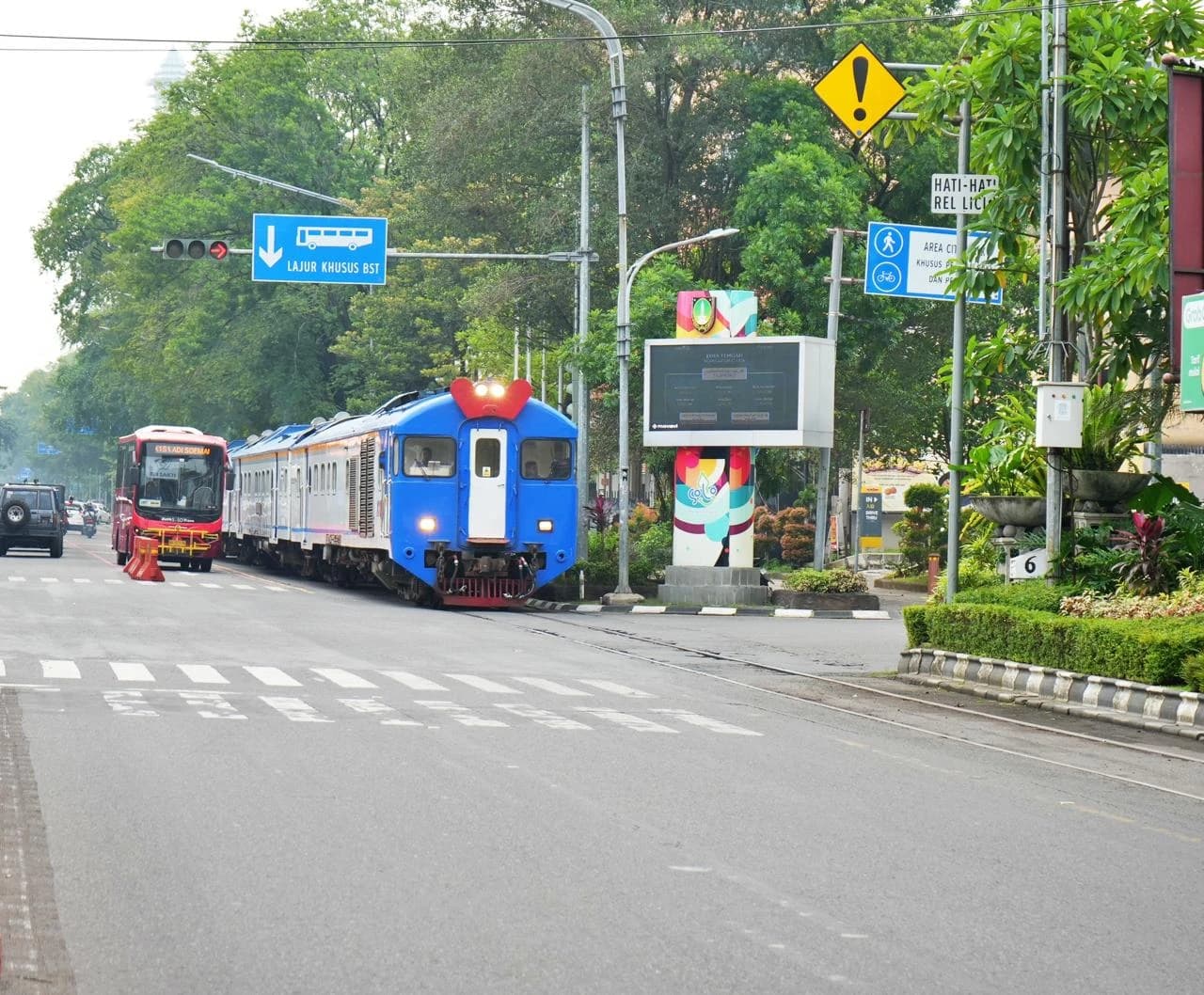
Eight Regional Train Services Carry 5.57 Million Passengers, Intercity Travel Grows 9.69%
Regional trains offer people a convenient way to travel between cities, whether visiting family or exploring local food, cultural attractions, and tourist destinations. From January to September 2026, eight regional train services connecting various areas across Indonesia recorded growth in passenger numbers.
PT Kereta Api Indonesia (Persero), or KAI, recorded 5,574,503 passengers across the eight regional train services during January–September 2026. This represented a 9.69% increase from 5,081,978 passengers in the same period in 2025, an addition of 492,525 passengers.
The eight services comprised KA Pangrango, with 888,414 passengers; KA Siliwangi, with 1,187,931; KA Pangandaran, with 298,425; KA Lembah Anai, with 261,927; KA BIAS, with 681,301; KA Pariaman Ekspres, with 1,282,230; KA Batara Kresna, with 127,025; and KA Pandanwangi, with 847,250 passengers.
KAI Vice President of Corporate Communication Anne Purba explained that regional trains offer a wide range of intercity travel options without requiring every journey to begin or end in a metropolitan area. Passengers can travel from Bogor to Sukabumi, from Sukabumi to Cianjur, explore the Priangan Timur region, travel across Solo Raya to Madiun and Wonogiri, connect between Banyuwangi and Jember, or take trains around Padang and Pariaman. These varied routes allow people to plan weekend trips based on the characteristics and needs of each region.
Among the eight services, KA Lembah Anai recorded the highest passenger growth, at 254.93%. The service carried 261,927 passengers from January to September 2026, up from 73,796 in the same period in 2025.
KA BIAS carried 681,301 passengers, an increase of 23.85% from 550,081 passengers. KA Pangrango recorded 888,414 passengers, up 7.04%, while KA Siliwangi carried 1,187,931 passengers, an increase of 6.32%.
In West Sumatra, KA Pariaman Ekspres recorded the highest passenger volume among the eight services, with 1,282,230 passengers. This represented a 5.52% increase from 1,215,135 passengers in the same period last year. Its route serves coastal areas with strong demand for local travel, culinary experiences, recreation, and family visits.
In eastern Java, KA Pandanwangi carried 847,250 passengers during the first nine months of 2026. Operating in the Jember–Banyuwangi region, the service provides an intercity travel option with access to various tourist destinations at the eastern end of Java.
Meanwhile, in Central Java, KA Batara Kresna connects the Solo Raya area with Wonogiri. The service offers a travel option along a route with characteristics distinct from those of long-distance intercity train journeys.
Growth in regional train services comes amid strong national tourism activity. Statistics Indonesia (BPS) recorded 104.30 million domestic tourist trips in August 2026, an increase of 11.47% from August 2025. In the same month, Indonesia welcomed 1.60 million international tourist arrivals, up 6.27% year-on-year.
Anne explained that regional train passenger numbers cannot all be classified as tourist trips, as people also use these services for various other purposes. Nevertheless, the regional railway network provides transportation options to areas offering a mix of tourism, culinary experiences, education, trade, and family visits.
According to Anne, exploring a region does not always require travelling hundreds of kilometres. Experiences can be found in neighbouring cities, coastal areas, mountain foothills, and towns connected by regional rail services. Passenger data for the first nine months of 2026 highlights the substantial scale of interregional travel that these services can accommodate.