
KAI Transports 2.04 Million Tons of Fuel by September 2026 as Rail-Based Energy Distribution Grows
Fuel distribution plays an important role in supporting daily activities and economic growth. As energy demand continues, railways remain one of the transportation options used to move large volumes of fuel across various regions of Java and Sumatra.
PT Kereta Api Indonesia (Persero), or KAI, recorded 2,036,049 tons of fuel transported from January to September 2026. This represents a 3.92 percent increase compared with the same period in 2025, when the volume reached approximately 1,959,161 tons. In total, an additional 76,888 tons of fuel were transported by rail.
Over the nine-month period, KAI transported an average of approximately 7,458 tons of fuel per day. This accounted for around 22.3 percent of the company’s total non-coal freight volume, which reached 9,148,571 tons from January to September 2026. Overall, non-coal freight grew by 2.6 percent compared with 8,912,566 tons recorded during the same period last year.
KAI Vice President of Corporate Communication Anne Purba explained that fuel transportation plays an important role in meeting energy needs across communities, businesses, agriculture, transportation, and public services. Thousands of tons of fuel are transported by rail every day to support distribution from supply points to consumption areas.
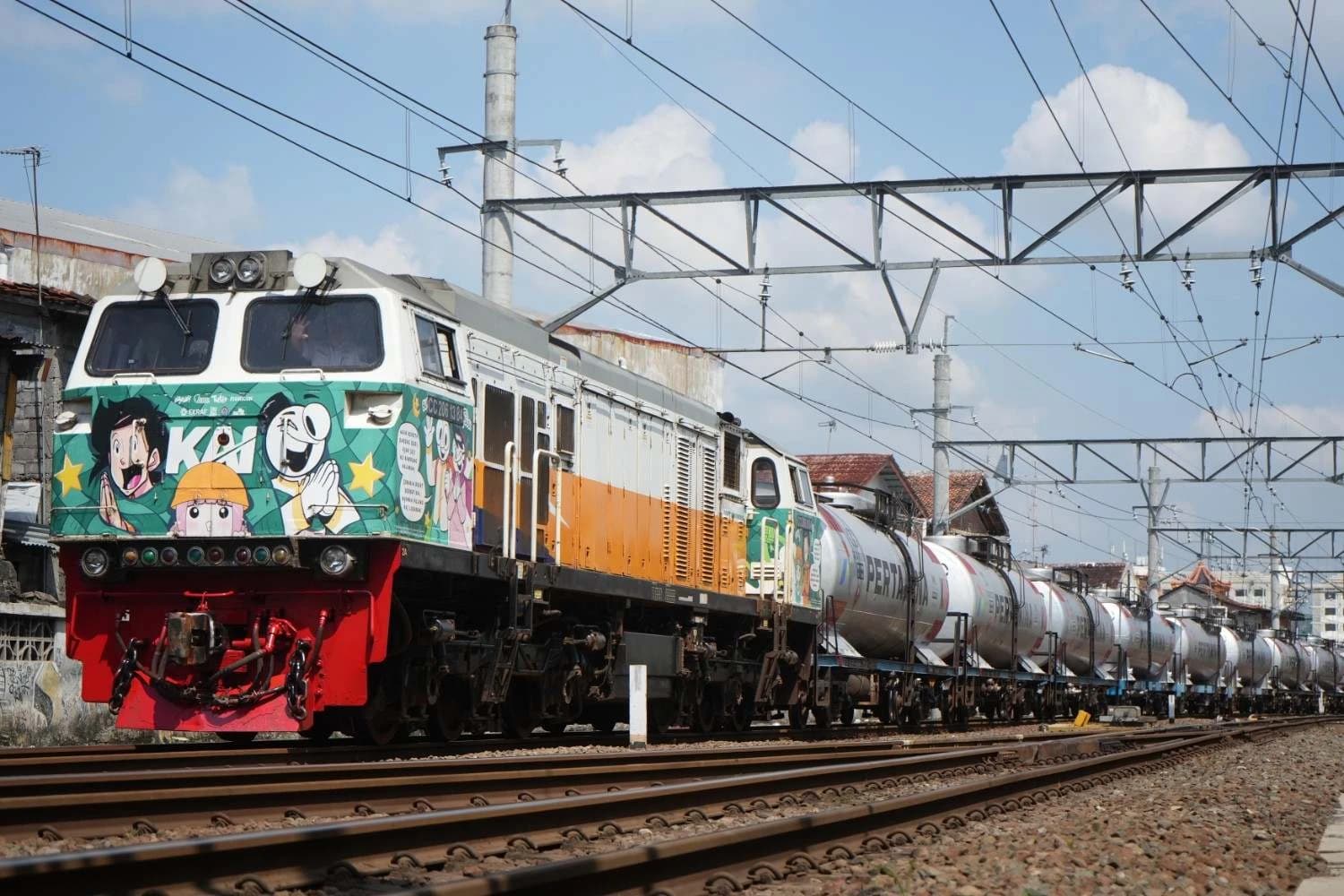
Fuel is transported using tank wagons through KAI’s partnership with Pertamina Group. These services connect supply points and fuel terminals with distribution areas across Java and Sumatra. The products transported include Pertalite, Pertamax, and Bio Solar.
According to Anne, the large carrying capacity of freight trains allows substantial volumes of fuel to be transported in a single journey. Regularly scheduled operations also support recurring deliveries based on customer demand while potentially reducing the need for heavy-duty vehicles on public roads.
KAI’s role in the energy supply chain is also developing alongside changes in fuel use across the transportation sector. On July 1, 2026, the Indonesian government began implementing the mandatory B50 biodiesel program. At the same time, KAI started gradually using B50 in diesel-powered equipment, including locomotives and generator cars.
Anne explained that KAI contributes to the national energy transition in two ways: supporting fuel distribution across various regions while adapting the fuel used in its own diesel-powered operations. Both developments reflect ongoing changes in Indonesia’s energy supply chain and fuel consumption.
The implementation of B50 at KAI involves technical testing, component monitoring, engine performance evaluations, and fuel quality control. Safety and equipment reliability remain key priorities throughout the process. The government has also established a three-month transition period starting in July 2026 to allow adjustments to fuel stocks and implementation across the sector.
In terms of target achievement, KAI’s fuel freight volume reached 2,036,049 tons by September 2026, slightly exceeding the cumulative target of 2,035,840 tons for the same period.
Anne noted that energy distribution will remain necessary even as the composition of fuels changes. Rail transportation therefore continues to play an important role in Indonesia’s energy supply chain through high-capacity, scheduled freight services that prioritize safety.