
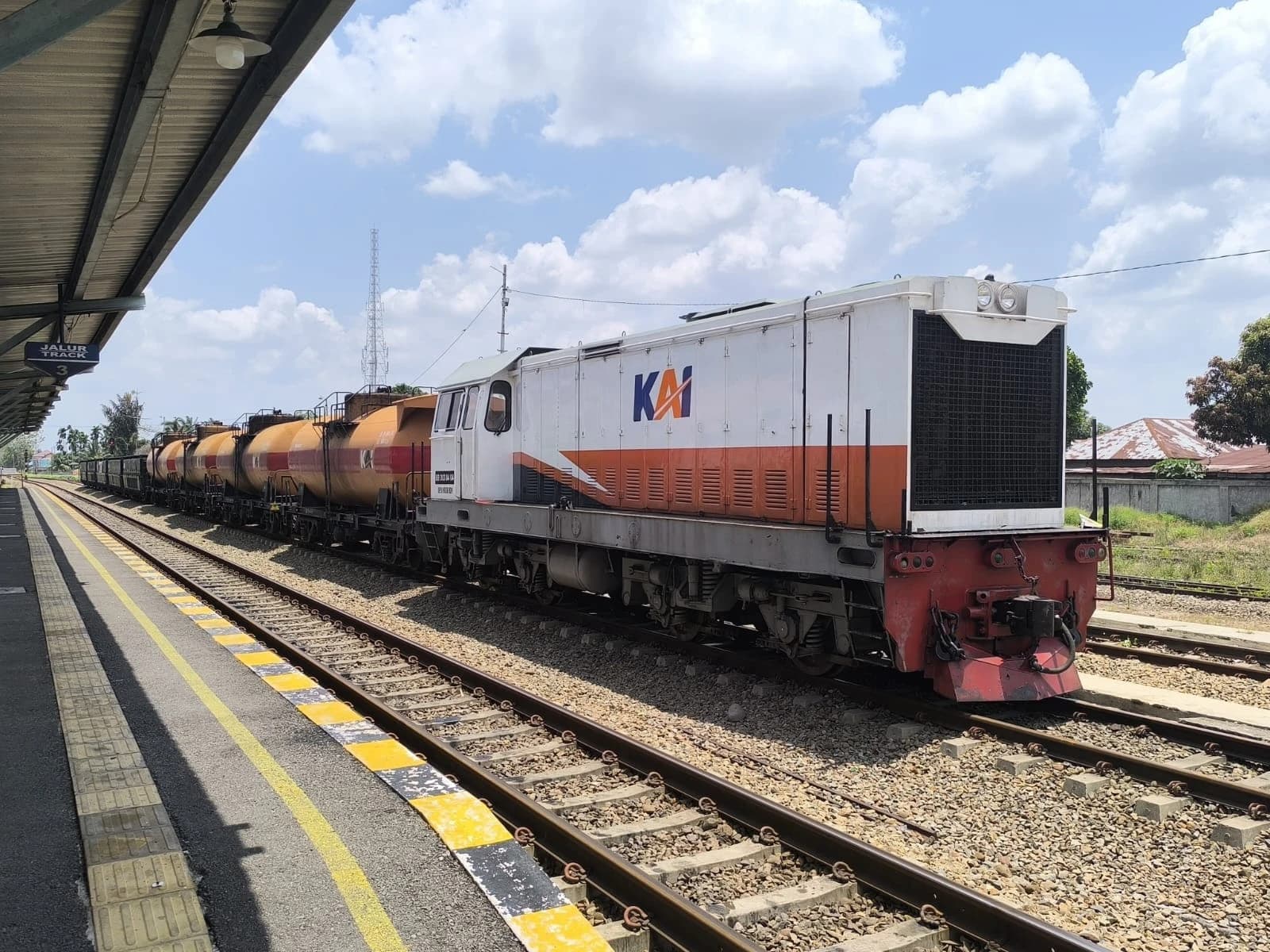
KAI’s Plantation Commodity Freight Gains Traction, Shipment Volume Grows 16.48%
Rail freight for plantation commodities continued to grow in the first nine months of 2026. From January to September, PT Kereta Api Indonesia (Persero) transported 480,121 tons of plantation commodities, up 16.48% from approximately 412,198 tons during the same period in 2025. This represents an additional 67,923 tons of commodities transported across the railway network.
The growth in plantation commodity freight also contributed to the development of KAI’s non-coal freight business. As of September 2026, non-coal freight volume reached 9,148,571 tons, up 2.6% from 8,912,566 tons recorded from January to September 2025. This portfolio includes containers, fertilizer, cement, fuel, pulp, plantation commodities, and retail goods. Plantation commodity freight is one of KAI’s freight services, alongside bulk commodities and general cargo.
KAI’s Vice President of Corporate Communication, Anne Purba, explained that the 16.48% increase signals growing opportunities for rail transport to play a greater role in plantation commodity distribution. According to her, rail freight has further potential to support supply chains, particularly for large-volume goods transported on consistent shipping schedules.
This opportunity coincides with positive developments in Indonesia’s agricultural sector. Statistics Indonesia (BPS) reported that the Agriculture, Forestry, and Fishing sector grew 12.26% quarter on quarter in the second quarter of 2026, the highest growth among business sectors during that period. Meanwhile, Indonesia’s economy grew 5.29% year on year in the second quarter of 2026.
Trade activity also showed positive momentum. From January to August 2026, Indonesia’s exports reached USD 193.64 billion, up 4.74% from the same period last year. Non-oil and gas exports rose 5.48% to USD 185.63 billion. These production and trade activities require distribution networks that connect production centers with processing facilities, warehouses, ports, and destination markets.
Rail offers a form of mass transportation suited to large-volume commodities and recurring shipments. Along suitable corridors, rail can handle the main leg of a shipment, while road transport covers the first and last stages of distribution. This gives businesses more options for organizing their supply chains according to cargo volume, distance, and delivery time requirements.
To expand freight utilization, KAI continues to map regional commodity potential, production patterns, shipment origins and destinations, and terminal readiness. These efforts aim to optimize the use of railway network capacity, particularly for commodity flows with consistent demand and shipment volumes suited to rail freight.
Anne emphasized that freight growth should translate into tangible benefits for businesses. For KAI, the increase is expected to provide more distribution options for businesses while strengthening connections between production centers and markets.