
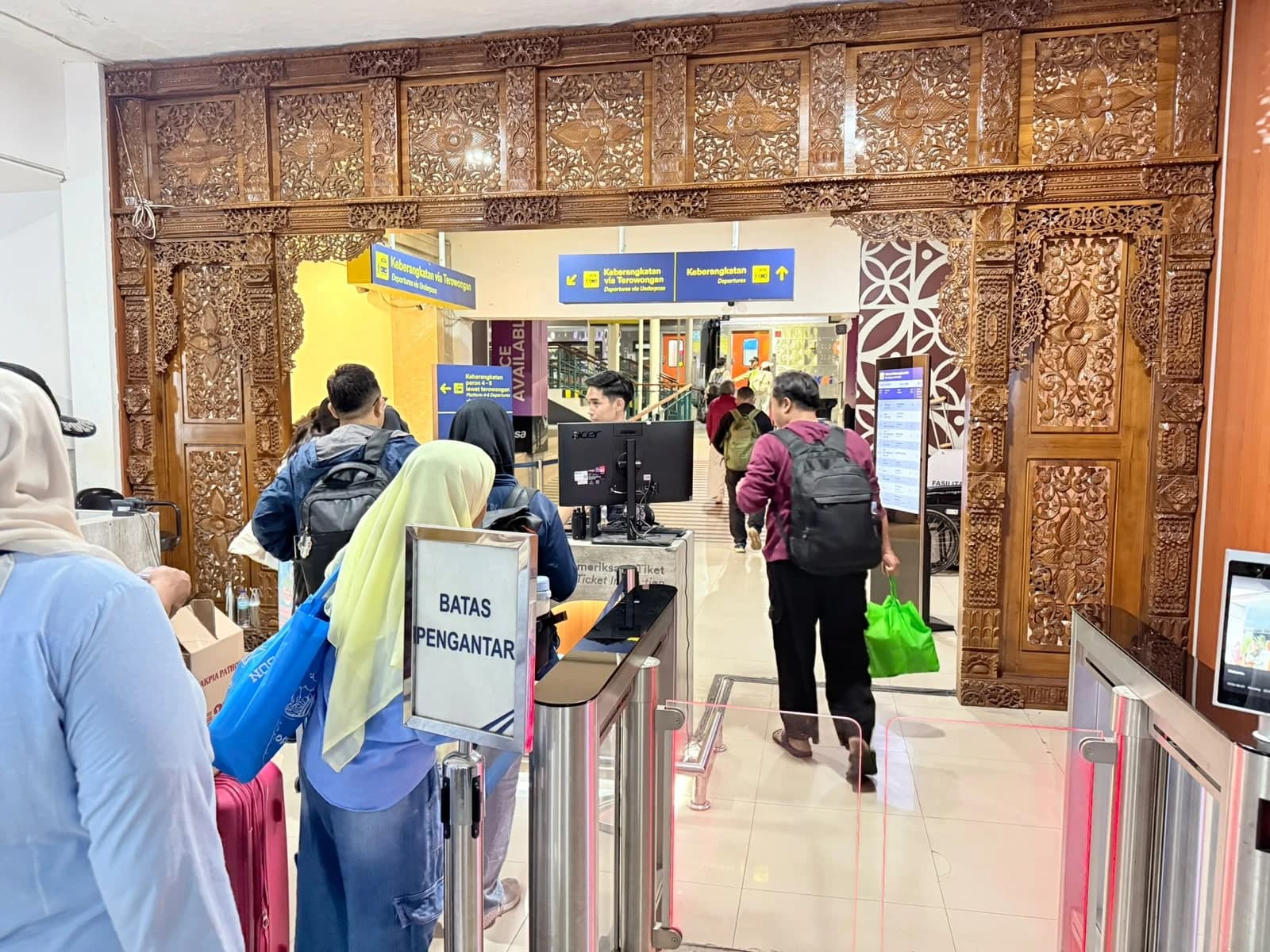
Not Just Transportation, Trains Are Now Part of the Travel Experience
Rail-based transportation services connecting cities across Java, Sumatra, and South Sulawesi continue to be strengthened to support the development of national tourism. This connectivity makes it easier for people to reach tourist destinations, cultural areas, culinary centers, creative economy hubs, as well as various national and regional events that drive the tourism sector.
This role is becoming increasingly relevant as tourism travel activity in Indonesia continues to rise. Data from the Central Statistics Agency (BPS) shows that the number of domestic tourist trips in May 2026 reached 106.16 million trips, an increase of 8.69 percent compared to May 2025. In the same period, international tourist visits reached 1.38 million, up 5.83 percent, while the occupancy rate of star-rated hotels reached 50.76 percent. These developments indicate that national tourism activity remains strong and provides room for strengthening interregional connectivity.
Globally, UN Tourism also recorded that international tourism continued to grow in the first quarter of 2026 despite global economic dynamics. Travel trends are increasingly shifting toward experience-based tourism, which emphasizes experiences, local culture, natural beauty, and ease of mobility between destinations. This condition aligns with the characteristics of railway services that connect centers of community activity with various tourist destinations.
Vice President Corporate Communication of KAI, Anne Purba, explained that transportation is a crucial element in the travel chain as it determines ease of access to destinations. Trains have become part of the tourism journey, with services connecting passengers to various destination cities in Java, Sumatra, and South Sulawesi, making travel to tourist areas, cultural centers, culinary spots, and creative economy hubs easier, more comfortable, and more efficient.
Throughout the first semester of 2026, KAI Group served 258,993,359 passengers, an increase of 7.55 percent compared to the same period in 2025, which recorded 240,805,920 passengers. These services include Public Service Obligation (PSO), Pioneer Trains, government assignments, and commercial services.
Based on passenger volume grouping across entities and services that also carry out PSO, Pioneer Trains, or government assignments, a total of 235,137,908 passengers were recorded in the first semester of 2026. This figure represents approximately 90.79 percent of the total KAI Group passengers, reflecting the significant role of railway transportation in supporting public mobility, which is one of the key drivers of national tourism activities.
For long-distance and local train services operated by KAI, 29,858,267 passengers were recorded, an increase of 8.72 percent compared to the first semester of 2025, which recorded 27,463,555 passengers. These services connect various tourism destination cities such as Jakarta, Bandung, Cirebon, Semarang, Yogyakarta, Solo, Surabaya, Malang, Banyuwangi, Garut, Purwokerto, Kutoarjo, as well as several cities in Sumatra served by the railway network.
Urban rail services also contribute significantly to tourist mobility. Throughout the first semester of 2026, KAI Commuter served 204,151,200 passengers, an increase of 6.58 percent compared to the same period the previous year. In the Greater Jakarta area, Commuter Line services make it easier for tourists to reach areas such as Kota Tua Jakarta, the National Monument, Taman Mini Indonesia Indah, Gelora Bung Karno, shopping centers, and various culinary and cultural areas integrated with public transportation networks. The Jabodebek LRT further strengthens connectivity to business centers, sports complexes, entertainment destinations, and integrated transport networks by serving 16,018,911 passengers, an increase of 22.84 percent compared to the first semester of 2025.
In Sumatra, rail services support community mobility to various cities across North Sumatra, West Sumatra, South Sumatra, Lampung, and Aceh. These services strengthen access to cultural areas, natural destinations, culinary centers, airports, and regional economic hubs that are part of the tourism ecosystem.
Meanwhile, in South Sulawesi, the Makassar–Parepare railway served 172,015 passengers during the first semester of 2026, an increase of 15.44 percent compared to the same period last year. This service enhances regional connectivity while supporting tourism and economic development along its operational corridor.
As experience-based tourism continues to grow, more people are also utilizing premium tourism services managed by KAI Wisata. From January to June 2026, various tourist trains recorded 6,312 trips with a total of 163,255 passengers.
The Panoramic Train recorded the highest interest with 2,708 trips serving 98,415 passengers. This service allows passengers to enjoy scenic views throughout the journey through its signature wide-dimension windows.
Meanwhile, the Priority Train served 57,259 passengers through 2,200 trips, and the Imperial Train served 6,471 passengers through 468 trips. KAI Wisata also operates various other thematic services, including the Luxury Train with 285 passengers, KAIS 4 with 279 passengers, Toraja Train with 173 passengers, Sumatra Train with 183 passengers, Bali Train with 163 passengers, KAIS 3 with 70 passengers, and Nusantara Train with 38 passengers during the first semester of 2026.
According to Anne, the growing variety of services indicates that people increasingly view train travel as part of the tourism experience. A journey begins from the moment passengers depart from the station, and KAI will continue to provide services that are safe, comfortable, punctual, and diverse, ensuring that the journey to destinations becomes an enjoyable experience while also supporting regional economic growth.