
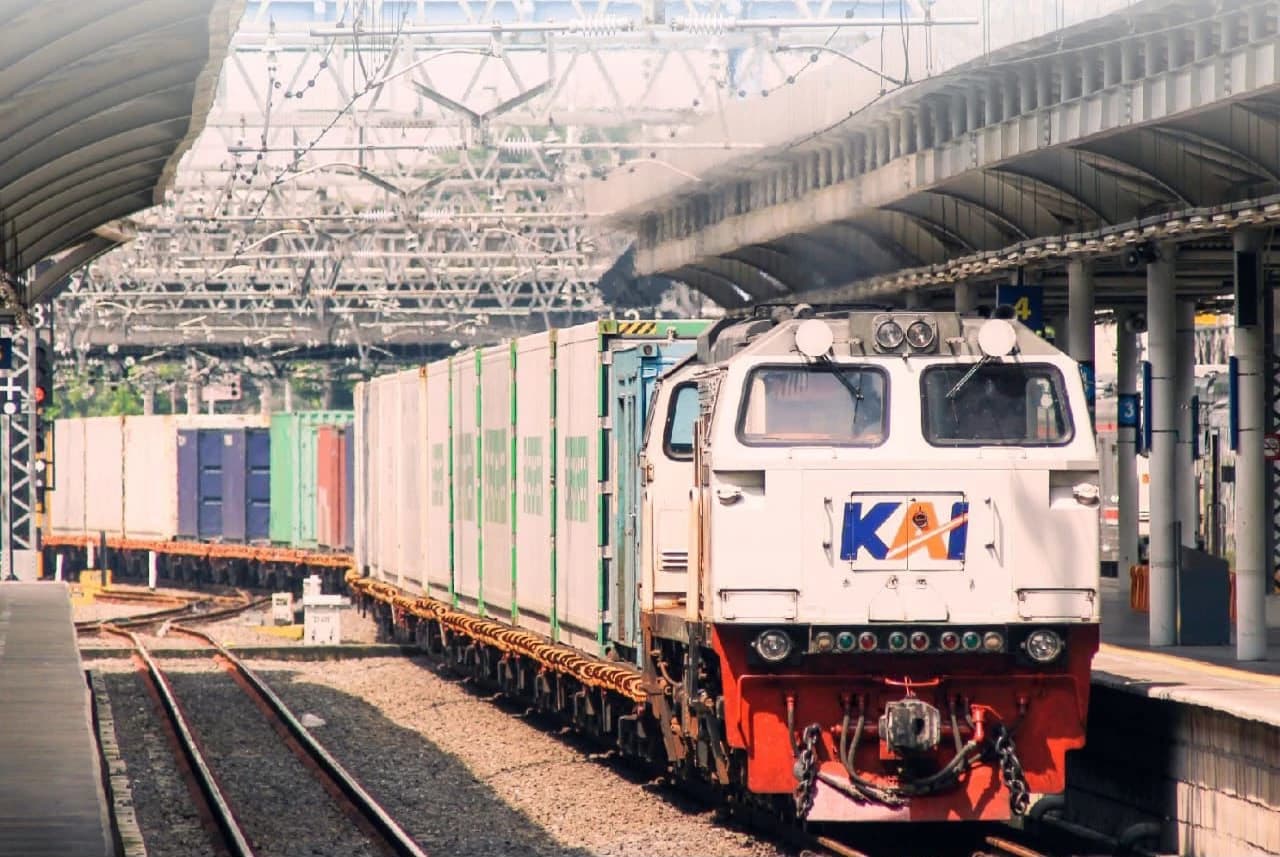
Container Transport Grows 20.28 Percent; Strengthening Rail-Port Connectivity for National Logistics
More than 3.4 million tons of containerized cargo were transported between January and July 2026, reinforcing rail–port connectivity to support smoother goods distribution, industrial growth, and more balanced economic development across Indonesia.
Container freight transported by rail continued to record strong growth throughout the first seven months of 2026. From January to July, 3,437,795 tons of containerized cargo were handled, representing a 20.28 percent increase compared to the same period last year, when 2,858,244 tons were transported.
The positive performance reflects growing confidence among businesses in rail freight as an efficient, reliable, and scheduled logistics solution. As demand for cargo transportation continues to increase, railways have become a strategic mode of transport connecting industrial estates, container terminals, warehouses, and seaports.
The momentum was also evident in the monthly performance. In July 2026 alone, container freight volume reached 521,892 tons, up 22.80 percent compared to July 2025. The steady growth highlights the increasing role of rail transport in supporting Indonesia's expanding industrial and trade activities.
KAI continues to strengthen its freight services by improving connectivity between industrial areas, container terminals, warehouses, and ports. This integrated logistics network is designed to create a more efficient supply chain, enabling goods to move faster, more reliably, and on schedule across the country.
KAI Vice President of Corporate Communication Anne Purba said the increase in container freight volume demonstrates that more businesses are relying on rail transport as part of their supply chain strategy.
"The growth in container freight volume shows that more businesses are utilizing railways as part of their supply chains. KAI continues to strengthen connectivity between industrial estates, container terminals, and ports to ensure the distribution of manufactured products becomes more efficient, scheduled, and reliable," Anne said.
With its large carrying capacity and dependable timetable, rail freight has become an increasingly attractive logistics option for industries that require consistent movement of raw materials and finished products. Reliable transportation helps manufacturers maintain production schedules while improving overall supply chain efficiency.
Rail–port integration also plays a vital role in supporting Indonesia's national logistics ecosystem. Goods produced in industrial areas can be transported directly by rail to container terminals and seaports before being shipped to destinations across the archipelago. Likewise, imported raw materials arriving at ports can be delivered efficiently to industrial zones and distribution centers via railway.
This seamless intermodal connectivity not only accelerates cargo movement but also helps reduce long-distance truck traffic, ease road congestion, and support a more sustainable logistics system. As a result, businesses benefit from lower distribution costs while communities enjoy a more efficient flow of goods.
Beyond serving large industries, container freight services also create broader opportunities for local products to reach wider markets. Agricultural commodities, fisheries, plantation products, and MSME products can be distributed more efficiently through an increasingly connected rail logistics network.
Optimizing two-way cargo movement is another important step toward improving logistics efficiency. Instead of returning with empty containers, freight services are expected to maximize backhaul cargo, helping reduce transportation costs while creating new market opportunities for regional products.
Looking ahead, KAI will continue to expand its container freight capacity by enhancing freight terminals, accelerating digitalization, and strengthening collaboration with port operators, shipping companies, industrial estates, and logistics partners. These initiatives are expected to create a more integrated and competitive logistics ecosystem.
By continuously strengthening rail–port connectivity, KAI aims to make goods distribution faster, more efficient, and more accessible across Indonesia. Ultimately, the benefits extend beyond businesses, supporting local industries, expanding market opportunities for regional products, and contributing to stronger and more inclusive economic growth nationwide.