
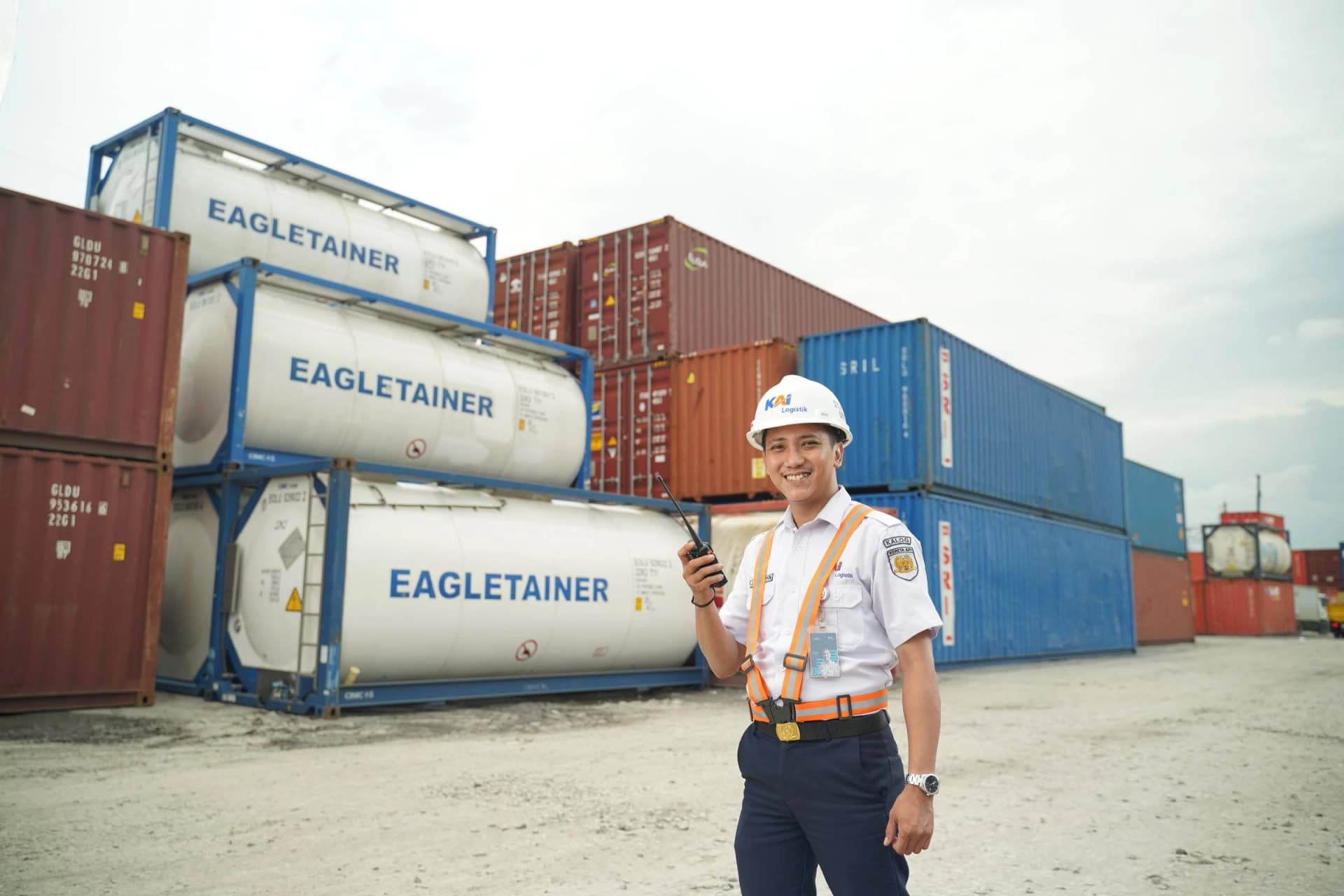
KAI’s Container Freight Gains Traction, Strengthening Logistics Connectivity
The demand for efficient goods distribution continues to grow, and rail is playing an increasingly important role in supporting logistics across Indonesia. From January to August 2026, KAI's container freight volume grew by 19.24% compared with the same period last year.
KAI recorded 3,928,221 tonnes of container freight during the first eight months of 2026, up from 3,294,255 tonnes in the same period in 2025. This represents an additional 633,966 tonnes of freight transported by rail.
The growth highlights the expanding role of rail-based transportation in supporting large-scale goods distribution. With scheduled journeys and a network connecting different regions, rail offers industries another option for managing their logistics needs.
KAI Vice President of Corporate Communication Anne Purba said the growth in container freight reflects rising demand for efficient logistics services. KAI continues to develop freight transportation services that connect production areas, distribution centres, and key trade hubs through its railway network.
For industries, reliable distribution is an important part of maintaining an efficient supply chain. With high carrying capacity and regular schedules, rail freight can provide companies with a more structured option for moving large volumes of goods.
The growth of KAI's container freight also goes hand in hand with the development of new industrial and logistics hubs across Indonesia. One example is the Batang Integrated Industrial Estate (KITB), which is being developed as an integrated logistics ecosystem connecting dry ports, seaports, railways, warehouses, trucking, container yards, and hinterland distribution networks.
As part of KITB's connectivity development, rail is being studied as one of the transportation modes to support freight movement to major logistics hubs, including Tanjung Priok, Kalimas/Tanjung Perak in Surabaya, and Patimban. The study considers factors such as distance, freight volume, origin and destination, commodity characteristics, and multimodal logistics costs.
The KITB dry port is designed as part of an integrated logistics system connecting industrial activities, storage, distribution, and multimodal transportation. Based on its development roadmap, the dry port is targeted to begin initial operations around 2028, offering container handling, rail services, trucking, warehousing, and empty depot facilities.
Anne added that KAI will continue strengthening its freight services by optimizing train operations, expanding partnerships with industrial customers, and integrating services with various stakeholders across the logistics sector.
With continued development of its network and operational capacity, KAI aims to make its container freight services even more responsive to industry needs. With volume growth reaching 19.24% through August 2026, KAI continues to strengthen rail as an efficient logistics solution while supporting industrial growth, trade, and connectivity across Indonesia.