
Greater Comfort! Trains Now Use Environmentally Friendly Toilets
Toilets may not always be the most attention-grabbing topic when it comes to transportation, but on trains, they play a significant role in enhancing passenger comfort and protecting the environment. Recognizing the importance of balancing quality service with environmental sustainability, KAI has introduced an innovation in the form of environmentally friendly toilets.

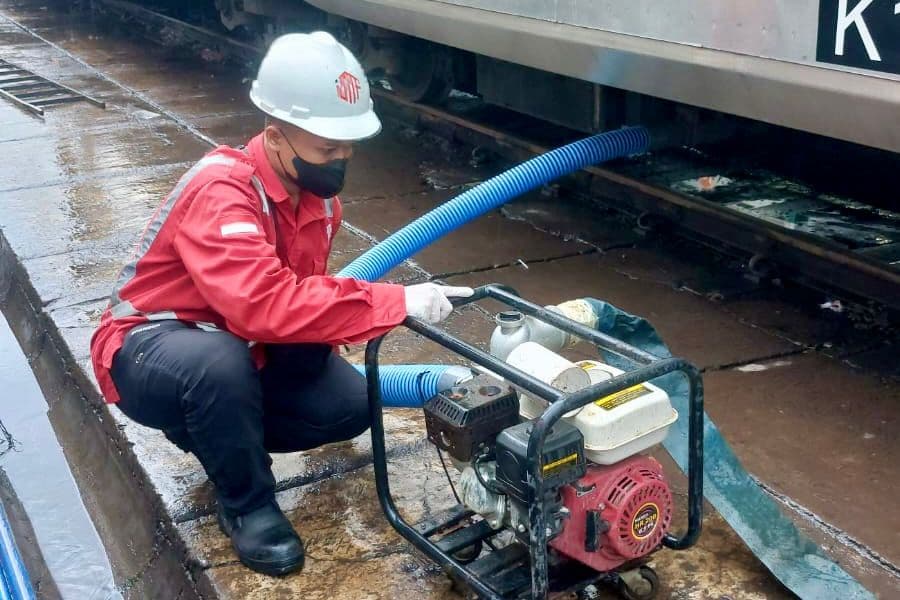
KAI Personnel Conducting Occupational Health and Safety Procedures
Since September 12, 2010, KAI has replaced conventional train toilets with environmentally friendly toilets, with the Argo Lawu Train being the first to use this facility. From 2013 onward, environmentally friendly toilets have been installed on all types of passenger trains, including long-distance, medium-distance, short-distance, and local train services.
KAI Vice President of Public Relations Joni Martinus stated that the introduction of environmentally friendly toilets is a tangible step taken by KAI to improve service quality not only for passengers but also for the environment by providing significant added value to environmental conservation.
It is important to understand that conventional toilets and environmentally friendly toilets operate in very different ways. In conventional train toilets, when the toilet is used, waste is discharged directly onto the railway tracks. In contrast, environmentally friendly toilets collect waste in a holding tank equipped with bio-bacteria that break down the waste.
The holding tank uses two stages of treatment. The first stage involves the decomposition of waste by bacteria in the primary filter, while the second stage purifies the water through an advanced filtration system. In the primary filter compartment, zeolite serves as a habitat for microorganisms responsible for breaking down waste before it flows into the secondary filter. The advanced filter consists of seven filtration columns containing materials such as fine zeolite, sand, activated carbon, and other combinations of filtering media.
"Zeolite, activated carbon, sand, and microbial bio-bacteria are used to break down solid waste into gas and liquid. The resulting gas and liquid waste are environmentally friendly and odorless," explained Joni.
To ensure that the environmentally friendly toilet holding tanks continue to function optimally, regular maintenance is carried out by KAI personnel. Every three months, the tanks are emptied and replenished with waste-decomposing bio-bacteria. The processed waste is then disposed of into septic tanks located in the train washing and stabling areas to ensure environmental safety.
Environmentally friendly toilets are therefore more than just an innovation—they represent an important step toward providing a better travel experience for passengers while supporting environmental conservation efforts. Through this initiative, trains are expected to continue serving as an environmentally friendly and sustainable mode of transportation for the people of Indonesia.
"Environmentally friendly toilets are a smart solution for maintaining environmental cleanliness and public health, particularly in public transportation such as railways. KAI's initiative demonstrates the right direction in advancing sustainable transportation. By continuing to encourage innovation and environmental awareness, we can all play an active role in creating a greener and cleaner future," Joni concluded.