
The Meaning of the Youth Pledge: KAI Engages Young Generation to Improve Safety at Railway Level Crossings
The Sumpah Pemuda Day, commemorated every October 28, holds an important meaning in Indonesia’s history of independence. This commemoration highlights the vital role of the youth generation in the struggle for independence.
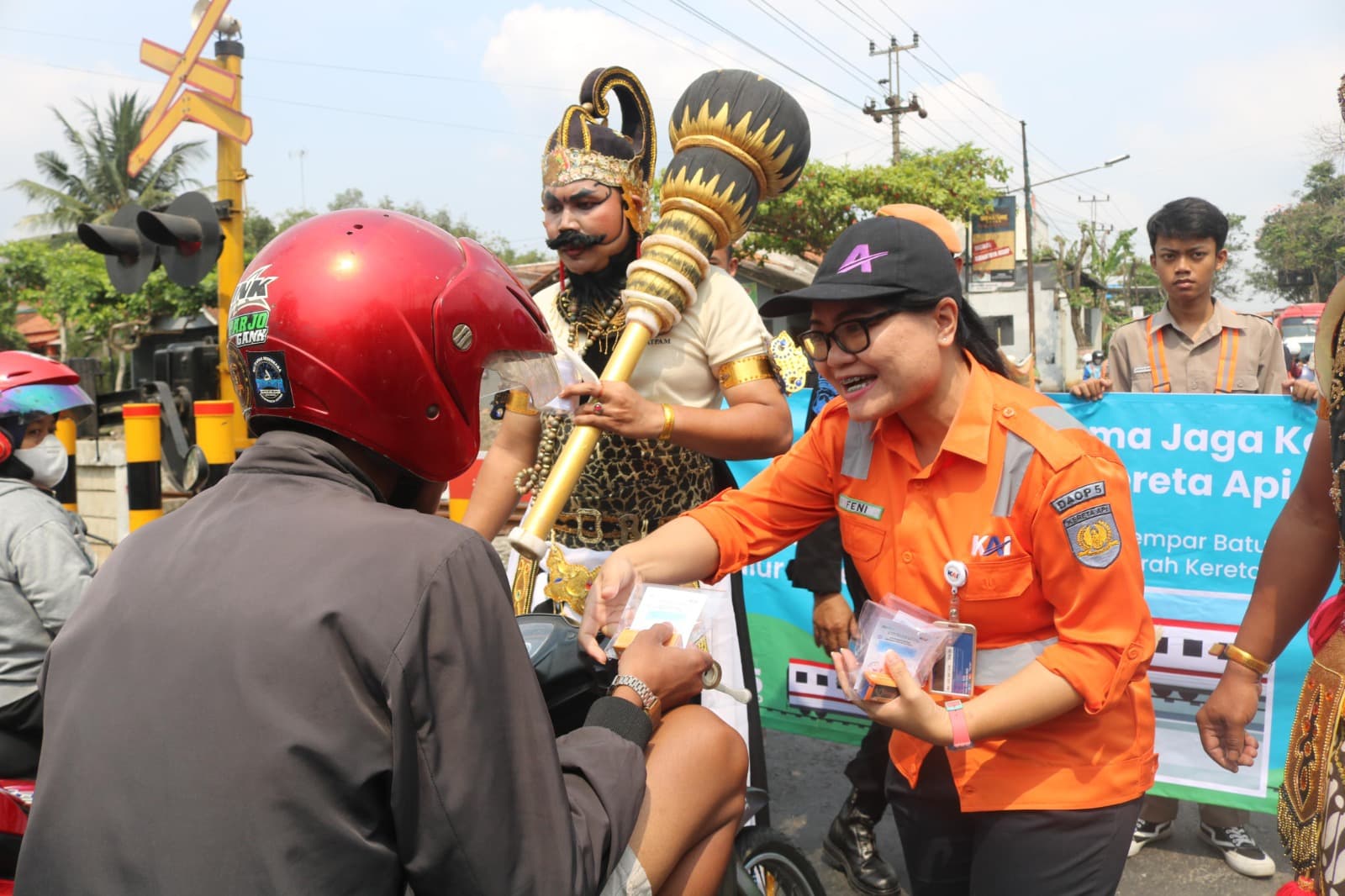
 In interpreting Sumpah Pemuda Day, KAI engages the younger generation to take part in “building” traffic safety, especially safety at railway level crossings.
The younger generation has long been recognized as a valuable asset for national development and progress. They bring innovation, creativity, and new enthusiasm to create a better future. Therefore, the involvement of the younger generation in national development is a necessity.
In interpreting Sumpah Pemuda Day, KAI engages the younger generation to take part in “building” traffic safety, especially safety at railway level crossings. They are expected to become agents of change and successors in maintaining safety at railway crossings, including conducting safety socialization.
One example of recent safety socialization activities was carried out in Daop 5 Purwokerto. Under the theme "Youth as Role Models for Safety," they conducted socialization activities in 28 schools located along railway lines in the Daop 5 Purwokerto area. The activity held on October 25, 2023 involved scouting students from SMK Tujuh Lima 1 and SMK Tujuh Lima 2 as well as the Spoorlimo railway enthusiast community, most of whom are young people.
“The meaning of ‘Youth as Role Models for Safety’ is to invite all young generations from various backgrounds to pay more attention to safety and security aspects in railway travel,” said Vice President Public Relations Joni Martinus.

Youth involvement in national development is a necessity.
In the period from January to October 22, 2023, there were 259 accident cases at level crossings, consisting of 40 cases at guarded crossings and 219 cases at unguarded crossings.
Accidents at railway crossings are caused by some road users, including young people, who do not obey regulations and lack discipline. Therefore, it is important for all of us to jointly understand that every road user or member of the public has an obligation to obey and be disciplined in traffic in accordance with applicable regulations.
According to Law No. 22 of 2009 concerning Road Traffic and Transportation (LLAJ) Article 114, drivers are required to stop when the railway crossing signal sounds and the crossing gate begins to close, and are required to give priority to trains. This rule is in line with Law No. 23 of 2007 concerning Railways Article 90 point (d) and Article 124, which emphasizes the importance of prioritizing train travel at level crossings.
“The above regulations state that train travel has priority on routes intersecting with roads. Based on these rules, it is clearly stated that road users must give priority to train travel at level crossings,” emphasized Joni.
Over the past two years, KAI has consistently carried out 1,670 safety socialization activities at railway crossings involving all parties such as the Transportation Agency, railfans, the community, and others. Good collaboration with various parties, as well as public awareness in complying with applicable regulations, is expected to create a better level of safety at railway crossings.
“Good collaboration with various parties and awareness among road users or the public to comply with applicable regulations are expected to improve safety levels at railway crossings,” concluded Joni.