
Getting to Know Sidotopo Depot, a Century-Old Railway Workshop
As one of the facilities for maintaining railway rolling stock, KAI has a maintenance facility called a “depot.” One of the depots owned by KAI is Sidotopo Depot, located at Jalan Sidotopo Lor No. 2 Surabaya, East Java.
In its journey, Sidotopo Depot has now reached its 1st century or 100 years since it became actively used in 1923. To get to know more closely the history of Sidotopo Depot, let us look at its journey from time to time.
Sidotopo Depot in the Dutch East Indies Era
The Dutch East Indies government at that time established the Staatsspoorwegen (SS) on April 6, 1875 to build a railway line project connecting the Surabaya–Pasuruan–Malang areas. This line was first opened on May 16, 1878 with the Surabaya–Pasuruan route and was fully completed in 1879, coinciding with the opening of the final section of the Lawang–Malang railway line on July 20, 1879.
In the early period, all workshop activities and locomotive depots were centralized at Surabaya Kota Station or commonly known as Semut Station. Over time, with the expansion of the railway network after the 1900s accompanied by the increasing number and size of locomotives, the need for adequate maintenance facilities in the form of depots became very important. To meet this urgent need, the company sought to build a new, larger and more modern depot compared to the old one at Surabaya Kota Station. This was also done to reduce dependence on the central workshop in Madiun, which was considered less strategically located. In 1918, it was decided that a new main locomotive depot along with a large yard would be built in Sidotopo to accommodate the busy train traffic during sugar transportation activities.
Within a period of three years, SS transformed the area that was once rice fields, swamps, and villages in Sidotopo into a depot area covering more than 80 hectares. This depot was claimed by SS as the largest and most extensive ever owned, even the largest in Asia. This was reinforced by an article in the “Deli Courant” newspaper published on May 9, 1921. According to the newspaper, this depot began operating on April 30 with a length of 3 kilometers and a width of 300 meters, and construction was still ongoing.
In the commemorative book of the 50th anniversary of the Staatsspoorwegen, “Gedenkboek Staatspoor-en Tramwegen” written by S. A. Reitsma, it is stated that Sidotopo Locomotive Depot has been actively used since 1923. J.J.G Oegema in his book “STOOMTRACTIE OP JAVA EN SUMATRA” also wrote that Sidotopo Depot was the most modern main depot at that time. With an area of more than 80 hectares, SS built a locomotive depot complex along with a remise for maintenance and repair of locomotives, as well as trains and wagons.
Sidotopo Depot in the Independence Defense Era
On November 13, 1945, after independence, Sidotopo Station became one of the silent witnesses of the battle between Indonesian fighters and Allied troops during August–November 1945 in Surabaya, precisely in the Sawah Pulo area. The fighters who were part of the North Indonesian Youth Organization (PRI Utara) under the leadership of Kustur had a defensive post around Jatipurwo near Prince Hendrik Railway Station.
At that time, the fighters received heavy gunfire resistance and pressure, which forced them to shift their defense to Sidotopo Station. The fighters then joined youths and railway workers who had already established defenses at Sidotopo Station. In this battle, 20 fighters fell and were buried on Jalan Sidotopo Wetan.
Sidotopo Depot Today
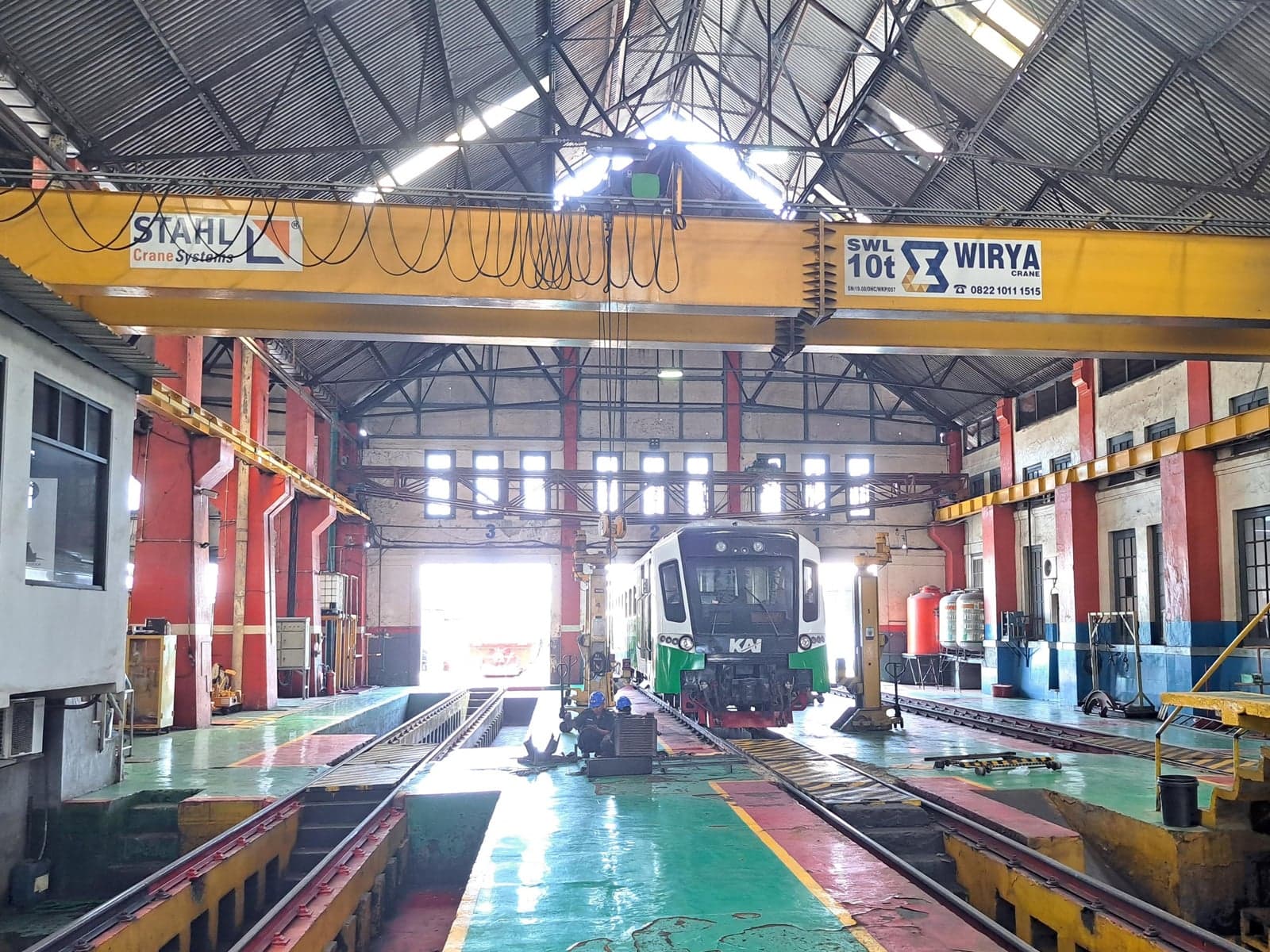
Currently, Sidotopo Depot located in the Daop 8 Surabaya area is still actively used as a place for maintenance and repair of locomotives, trains, and wagons. At Sidotopo Depot, maintenance is also carried out for Commuter Line train sets such as Tumapel Line, Jenggala Line, Supas Line, Dhoho Line, and Penataran Line. In addition, the area also includes a station, a KAI-owned health clinic (Mediska), and Griya Karya Bima, which serves as a resting place for train drivers. Everything in the Sidotopo Depot area today remains very authentic. Although there have been some renovations, the original buildings from its construction in 1923 have not been changed.