
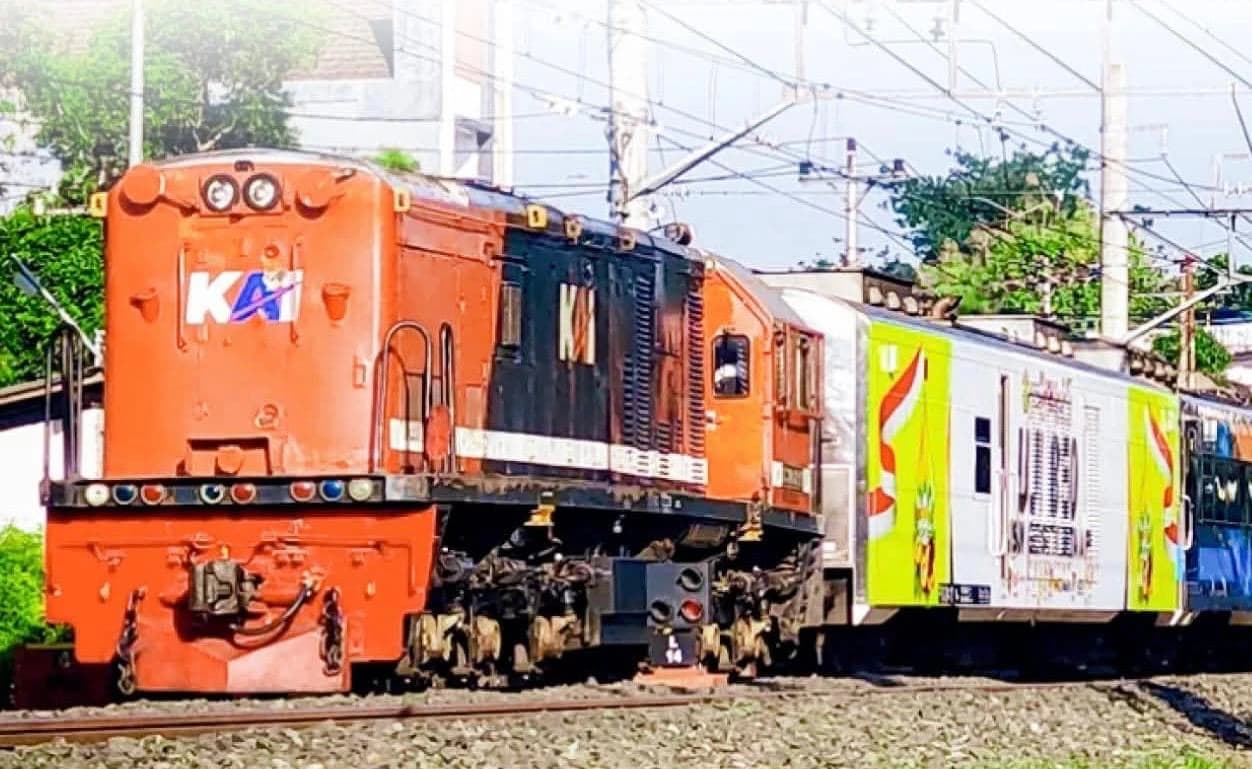
Over 40 Million Customers Choose Rail, KAI Boosts Energy Efficiency with B50
Rail continues to play an important role in supporting public mobility across Indonesia. From January to August 2026, KAI's long-distance and local train services served more than 40.3 million customers.
Behind this growing level of mobility, KAI continues to introduce innovations aimed at making its operations more efficient and sustainable. One of these efforts is the implementation of B50 biodiesel-blended fuel for KAI's diesel-powered trains.
The use of B50 began on July 1, 2026, supporting the operation of KAI's long-distance and local train services. The initiative forms part of KAI's broader efforts to improve operational energy efficiency while contributing to lower emissions in the transportation sector.
Between January and August 2026, KAI's long-distance and local train operations consumed 172,228,585 liters of fuel. Based on estimates, this represents approximately 4.27 liters of fuel per customer served during the period, highlighting the scale of energy required to support the mobility of millions of KAI passengers.
KAI Vice President of Corporate Communication Anne Purba stated that energy efficiency is an important part of the company's operational development. As rail continues to play a key role in supporting public mobility, KAI is introducing innovations designed to make train services more efficient and better prepared for future transportation needs, including through the use of lower-emission fuel alternatives.
The initiative is already showing a positive impact. During the first 55 days of B50 implementation, from July 1 to August 24, 2026, the use of biodiesel-blended fuel in KAI's train operations was estimated to reduce emissions by approximately 9,000 tonnes of CO₂e.
The national B50 program is also part of Indonesia's broader strategy to increase the use of domestically sourced energy while reducing carbon emissions. According to data from the Ministry of Energy and Mineral Resources, nationwide implementation of B50 is projected to reduce emissions by approximately 44.46 million tonnes of CO₂.
KAI's journey toward greater energy efficiency goes beyond B50. In 2025, the company's energy consumption decreased by 15.39 percent, from 11,945,467 GJ to 10,107,302 GJ. Energy intensity per customer also declined by 22 percent during the same period.
The company is also expanding its use of renewable energy through 113 solar power units installed across 92 locations, with a combined capacity of 4,430.65 kWp. These solar installations contribute to the reduction of more than 5,000 tonnes of CO₂ emissions each year.
Anne added that energy transformation is an important part of KAI's journey toward building a more sustainable rail-based transportation system. Through energy efficiency, renewable energy adoption, and continuous improvements in operational quality, KAI continues to develop rail services that not only support public mobility but are also better prepared for the future.