
Lebaran Transportation, KAI Records 855,322 Transactions on KAI Access Application
The KAI Access application has become increasingly popular among KAI customers during the 2022 Lebaran holiday transportation period. Customers were highly enthusiastic about conducting transactions using the KAI Access app.

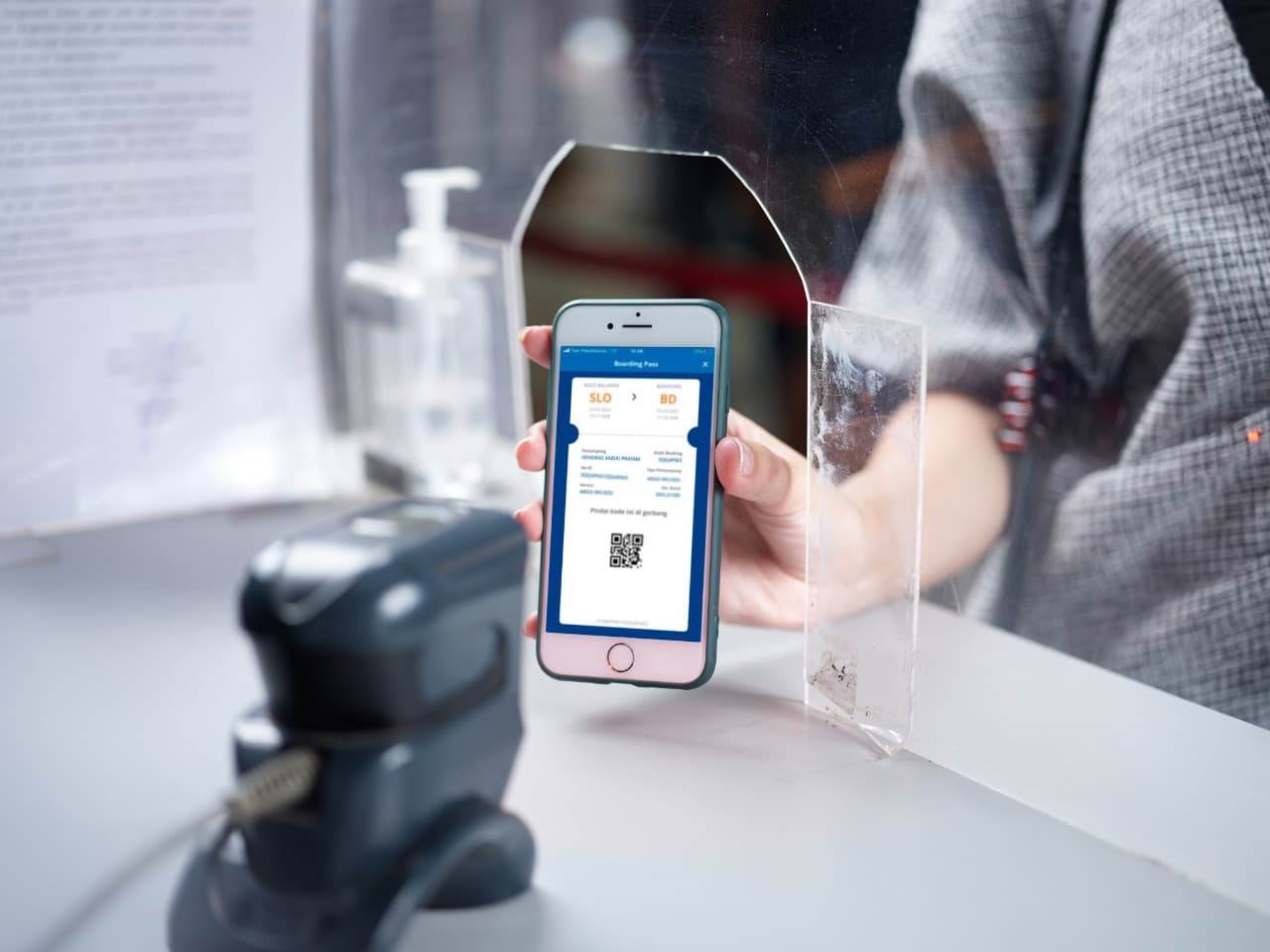
A KAI passenger scans a barcode during boarding
KAI noted that ticket purchase transactions for Long-Distance and Local Trains departing during the Lebaran transportation period, from April 22 to May 13, 2022, were predominantly made through KAI Access.
The breakdown consists of 48.9 percent or 855,322 transactions through KAI Access; 37.9 percent or 662,191 transactions through external channels; 9.4 percent or 164,268 transactions through ticket counters; 3.5 percent or 60,926 transactions through the KAI website; 0.1 percent or 2,391 transactions through the KAI Contact Center; and 0.1 percent or 1,216 transactions through vending machines.
“KAI expresses its gratitude for the public's enthusiasm in purchasing tickets during the 2022 Lebaran transportation period using KAI's flagship application, KAI Access. Through the KAI Access application, KAI also supports the government's program to reduce physical sales amid the pandemic and promote non-cash payments,” said KAI VP Public Relations Joni Martinus.
People who do not yet have the KAI Access application can download it from Google Play or the App Store. The advantage of KAI Access is that it not only handles train ticket reservations but also provides first-mile and last-mile services, schedule changes, ticket cancellations, bookings, and information on KAI Group services, among others.
These various features of KAI Access successfully attracted more public interest to install KAI's flagship application, particularly in welcoming the 2022 Lebaran transportation momentum. It was recorded that as of May 20, 2022, there were 7,524,765 KAI Access users, a 14.6 percent increase compared to February 2022, which saw 6,564,940 users.
KAI Access features KAIPay, a digital wallet for paying for various transactions within KAI Access. Not only can it be used to pay for train tickets, but KAIPay can also be used to pay for first-mile and last-mile services, as well as various products and services available on the KAI Access app. A total of 25,529 Long-Distance Train ticket purchase transactions were recorded via KAIPay.
During the holiday transportation period, the number of transactions by users of first-mile and last-mile services on KAI Access was also quite high, reaching nearly 1,000 transactions. Transactions using Bluebird taxis accounted for 931 transactions, while DAMRI Buses accounted for 44 transactions. This intermodal integration within the KAI Access application is a form of service enhancement for customers by providing the convenience of booking Bluebird taxi and DAMRI Bus tickets in a single application.
To encourage the public to travel by train during the 2022 Eid homecoming period, KAI also held the KAI Access Ramadan Festive 2022, where the public could purchase more than 6,000 train tickets at special discounted prices. The total number of tickets sold during the program reached 6,815 tickets for passengers departing during the holiday transportation period.
Another flagship feature of KAI Access is that customers can change schedules and cancel tickets online. Customers who changed their schedules via KAI Access during the holiday transportation period reached 69,779 customers or 69.7 percent of the total 100,100 customers who made schedule changes. Meanwhile, customers who cancelled their tickets through KAI Access during that period reached 106,215 customers or 61.7 percent of the total 172,110 customers who performed cancellations.
KAI will continue to enrich the KAI Access application with various useful features for customers as part of KAI's digital transformation. Through fully digital services, customers find it increasingly easy and practical to utilize various KAI services.
“We hope KAI Access will continue to be favored by the public, especially millennials, when using train services,” Joni concluded.