
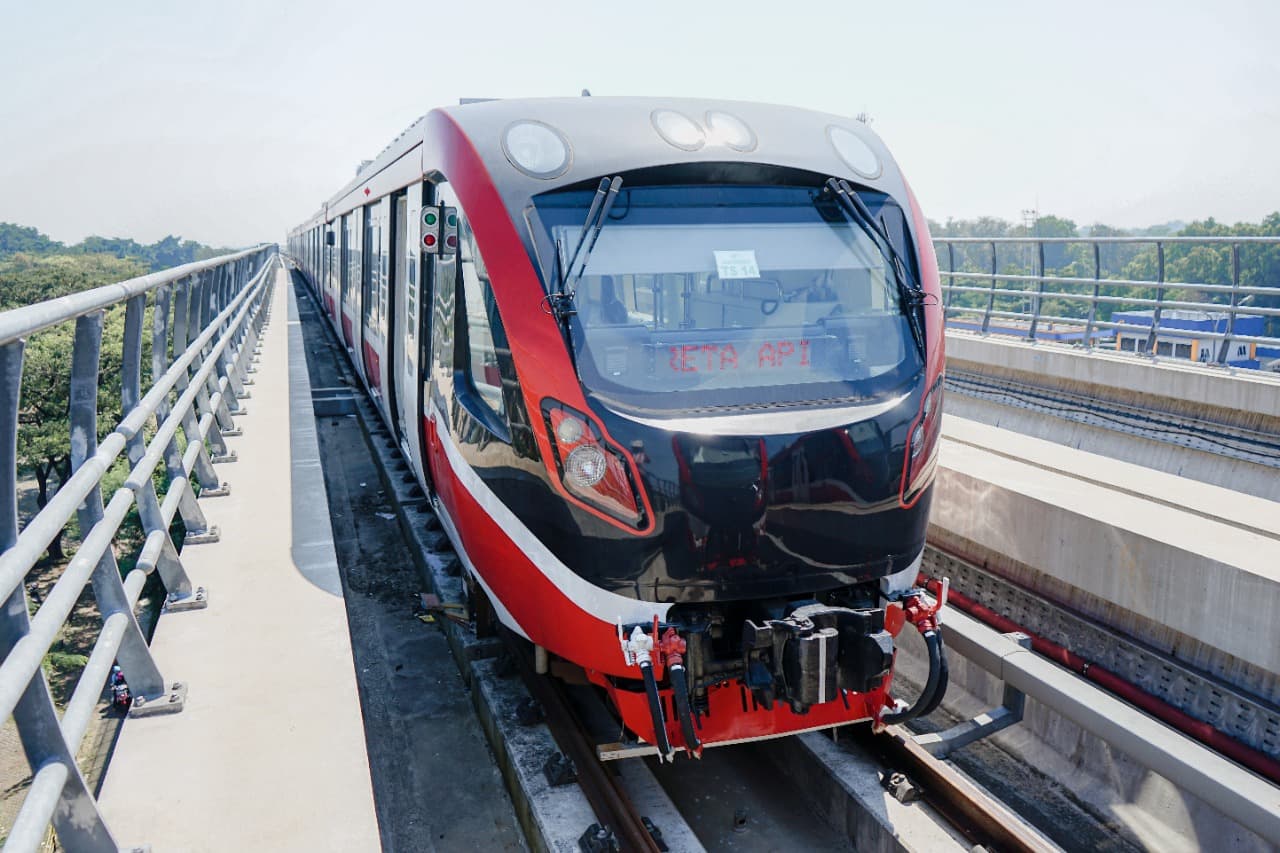
KAI Ensures the Safety and Security of Greater Jakarta LRT by Preparing Preventive and Anticipatory Measures
PT Kereta Api Indonesia (Persero) is preparing preventive and anticipatory measures to ensure the safety and security of Greater Jakarta LRT (LRT Jabodebek) passengers ahead of its soft launch scheduled for August.
KAI has now entered the Grade of Automation 3 (GoA 3) testing phase on the operational line. During this stage, LRT Jabodebek will undergo automated trial operations with the utmost care.
KAI Vice President of Public Relations Joni Martinus said that KAI, together with other stakeholders, has evaluated the incidents that occurred during previous trial runs to ensure that similar incidents will not happen in the future.
"KAI has prepared a comprehensive strategy and developed strict safety protocols throughout the testing process and into the future operation of the LRT," said Joni Martinus.
These preventive measures include a series of regular testing, inspections, and maintenance activities carried out by competent personnel under the supervision of experts in their respective fields. These measures are particularly important as LRT Jabodebek will operate using an automated system.
"Although the trains operate without drivers, a properly functioning automated system that performs according to its programming will ensure operational safety," Joni explained.
The integrated automated system consists of two key components: signalling and telecommunications. The signalling system regulates the distance between trains and automatically controls acceleration and braking. Meanwhile, the telecommunications system manages data communication, power supply management, and electrical protection.
As part of its preventive efforts, KAI is also providing specialised training for its personnel on all aspects of LRT Jabodebek operations to ensure safe and reliable services. In addition, Standard Operating Procedures (SOPs) for emergency situations have been implemented for both onboard operations and station facilities.
To anticipate emergency situations, each train is equipped with an emergency intercom, fire and smoke detectors, and derailment and collision detection systems that automatically stop the train if necessary. In addition to these sensors and detection systems, KAI has also installed portable fire extinguishers and emergency glass-breaking hammers inside every LRT Jabodebek train.
Continuous monitoring is carried out through CCTV cameras installed throughout the trainsets and stations. Furthermore, to support evacuation procedures, every LRT Jabodebek station is equipped with a connecting bridge.
Train Attendants and security personnel are also on duty at all times to ensure passengers' safety and comfort throughout their journey, from departure until arrival at their destination.
On 1 April 2022, the Government, represented by Coordinating Minister for Maritime Affairs and Investment Luhut Binsar Pandjaitan, Minister of Transportation Budi Karya Sumadi, and Deputy Minister of State-Owned Enterprises Kartika Wirjoatmodjo, visited the LRT Jabodebek project to ensure that the GoA 3 testing process was progressing smoothly. During the visit, the delegation joined a GoA 3 test run from Harjamukti Station to TMII Station and the LRT Depot in East Bekasi.
"The testing has been running smoothly, and we will continue conducting these trials across all operational lines and trainsets with the utmost caution. The Government has also expressed its appreciation for the team's performance and the achievements of Indonesia's own engineers, which have enabled this project to progress well," said Joni.
As of April 2022, the LRT Jabodebek project had reached 81.45% completion. The system is targeted for a soft launch on 17 August 2022, followed by commercial operations.
"KAI is committed to providing safe, secure, and comfortable LRT Jabodebek services through comprehensive safety policies and strong operational commitments during both the testing phase and future public operations," Joni concluded. (Public Relations KAI)