
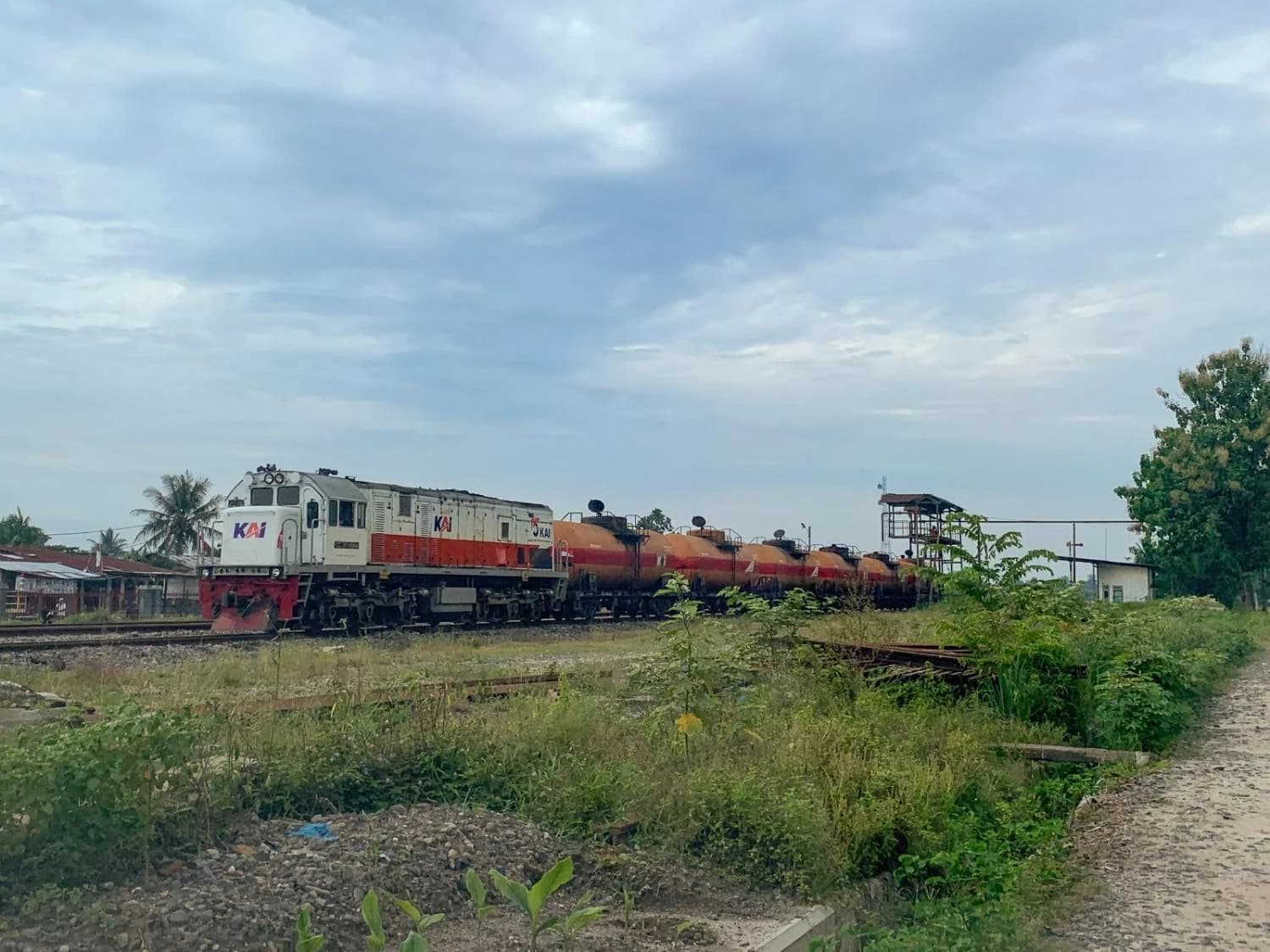
324,579 Tons of Plantation Commodities Transported: KAI Reinforces Rail as a Trusted Logistics Solution
From plantations to ports, rail freight keeps CPO moving for industry, exports, and a more sustainable energy future.
Rail-based freight continues to play a vital role in supporting Indonesia's agricultural supply chain. During the first half of 2026, KAI transported 324,579 tons of plantation commodities, marking a 17.83% increase compared with the same period last year.
The majority of the volume consisted of crude palm oil (CPO) and palm-based derivative products—strategic commodities that support manufacturing, interregional trade, exports, and Indonesia's growing renewable energy sector.
Anne Purba, Vice President of Corporate Communication at KAI, said the strong growth reflects increasing confidence from businesses in rail freight as a reliable logistics solution capable of delivering high capacity, operational consistency, and seamless connectivity.
Plantation commodities, particularly palm oil, play a significant role in driving Indonesia's economy. Reliable transportation helps maintain industrial supply chains, strengthen export competitiveness, and support economic growth across producing regions.
As downstream processing industries continue to expand and demand for renewable energy feedstocks grows, efficient CPO distribution has become increasingly important. KAI supports this momentum by connecting production areas with processing facilities and export ports, while helping strengthen logistics readiness for Indonesia's B50 biodiesel initiative.
A stronger renewable energy ecosystem requires a dependable logistics network. Rail transportation provides consistent, efficient, and integrated distribution that supports both industrial demand and the country's long-term energy transition.
Across Sumatra, KAI's freight services connect plantation estates with processing industries and major ports, helping ensure a smooth flow of commodities while supporting local businesses and regional economic development.
Rail freight also offers significant sustainability benefits. Its ability to move large volumes in a single trip reduces heavy truck traffic on highways, improves energy efficiency per ton of cargo, and provides a more environmentally responsible logistics solution for high-volume commodities such as CPO and its derivatives.
For KAI, the continued growth of plantation freight demonstrates the increasing role of rail transportation in Indonesia's logistics ecosystem. Looking ahead, the company remains committed to strengthening connectivity between production centers, industrial zones, and ports to support national supply chains and long-term economic growth.
We will continue enhancing our logistics services to support Indonesia's productive sectors. By leveraging rail transportation, we aim to create a more efficient supply chain, strengthen regional economies, and contribute to the sustainable movement of strategic commodities across the country.