
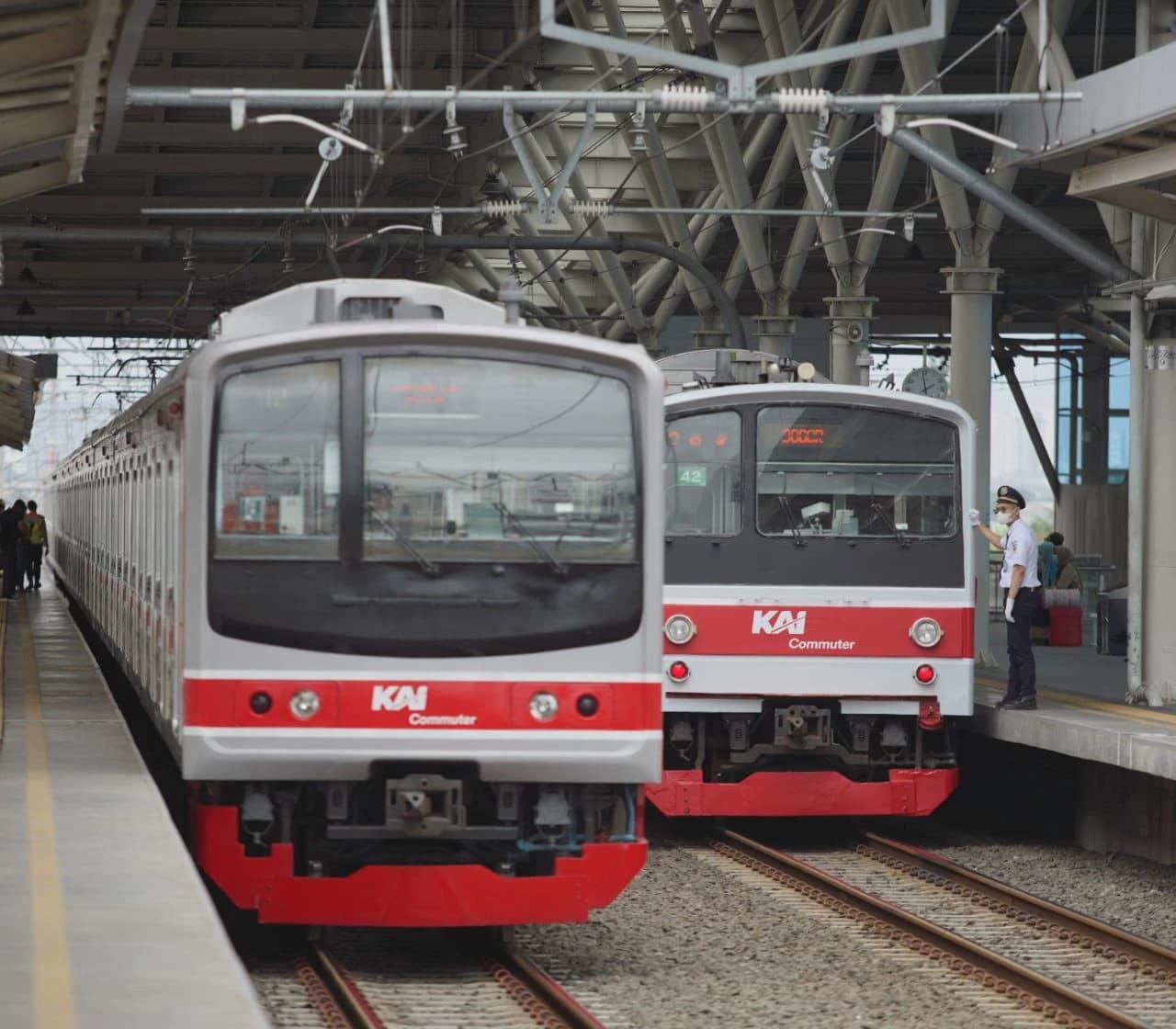
178 Million Journeys, Commuter Line Keeps Millions Moving Toward New Opportunities Every Day
The sky is still dark when millions of people across Greater Jakarta begin their day. Some quietly say goodbye to children still asleep, others prepare meals before heading out, while many hurry to the nearest station to make sure they arrive at work on time.
Behind every journey is a story of perseverance. There are office workers racing against the clock, traders bringing goods to market, public service workers reporting for duty, university students pursuing their dreams, and countless breadwinners striving to provide for their families. For millions of Indonesians, Commuter Line is more than just public transportation—it is a trusted companion that connects them to opportunities and helps sustain their livelihoods every single day.
Between January and June 2026, PT Kereta Api Indonesia (Persero) recorded 178,001,308 journeys on the Greater Jakarta Commuter Line network. The figure highlights the essential role of urban rail services in supporting everyday life while keeping the economic engine of Indonesia's largest metropolitan area moving.
KAI Vice President of Corporate Communication Anne Purba said that travel patterns during the first semester of 2026 demonstrate the consistently high demand for commuter rail services on weekdays.
Average weekday ridership from Monday through Friday reached approximately 1.05 million journeys per day, around 29.3% higher than the weekend average of approximately 813,600 daily journeys.
Every journey begins with hopes carried from home. There are parents working to pay for their children's education, employees striving to secure their income, and traders and entrepreneurs whose businesses depend on reliable transportation. They are the breadwinners who place their trust in Commuter Line every day.
Of the total journeys recorded during the first semester of 2026, approximately 135.7 million journeys, or 76.2%, took place on weekdays. Passenger volumes peaked during the morning and evening rush hours as millions traveled to work and returned home after completing their daily responsibilities.
Behind these impressive numbers are millions of personal stories. Every crowded train carries parents eager to reunite with their children, workers standing after a full day's work, and countless breadwinners hoping to return home safely before beginning another day of hard work tomorrow.
When we see crowded trains during peak hours, we don't simply see high travel demand. We see millions of breadwinners working hard to arrive at their workplaces on time and return home with the rewards of their efforts. That's why expanding capacity is a challenge we must continue addressing together.
The strong weekday demand further reinforces the strategic role of Commuter Line in sustaining productivity across Greater Jakarta. Reliable rail services directly support punctuality in the workplace, business continuity, access to schools and public services, and the smooth circulation of economic activity throughout Jakarta and its surrounding cities.
According to Anne, continued ridership growth must be matched with gradual capacity improvements through additional rolling stock, expanded railway and station capacity, upgraded signaling and electrical systems, and continuous optimization of operational patterns.
Government support for additional rolling stock and infrastructure improvements brings tremendous benefits to the public. Every increase in capacity creates more comfortable travel space, reduces overcrowding, and improves the commuting experience for millions of people who rely on Commuter Line every day.
Public confidence in Commuter Line has continued to grow over the past five years. Annual ridership increased from 168 million journeys in 2021 to 252 million in 2022, 331 million in 2023, 328.2 million in 2024, before reaching 349.3 million journeys throughout 2025. In just the first half of 2026, the network had already recorded 178 million journeys.
As mobility demand continues to increase, the Commuter Line network has also expanded significantly. The number of stations has grown from 71 stations in 2015 to 85 stations in 2026, including the opening of Jatake Station and Jakarta International Stadium (JIS) Station, providing better rail access to emerging residential areas and new activity centers.
Operational capacity has also continued to improve. Daily KRL services increased from 881 train trips per day in 2015 to 1,063 trips per day in 2025, representing an increase of approximately 21%. These additional services are accompanied by continuous operational evaluations to ensure safety, punctuality, and reliable customer service.
Throughout 2025, the Bogor Line recorded the highest ridership with approximately 155 million journeys, followed by the Cikarang Line with 85.9 million journeys, the Rangkasbitung Line with 77.6 million journeys, the Tangerang Line with 27.3 million journeys, and the Tanjung Priok Line with approximately 3.5 million journeys. These figures reflect the enormous daily movement of people between Greater Jakarta's surrounding cities and the capital's major employment and business centers.
Looking ahead, the continued development of the Greater Jakarta Commuter Line will focus on increasing network capacity, strengthening multimodal integration, expanding digital services, and supporting transit-oriented development. Achieving these goals will require close collaboration between KAI, KAI Commuter, the Government, and other key stakeholders.
For some people, riding the Commuter Line may seem like just another daily routine. But for millions of breadwinners, every journey represents the effort to provide for their families, support their children's education, and return home with hope. Every improvement in capacity means a better journey for the people who work every day for those they love.