
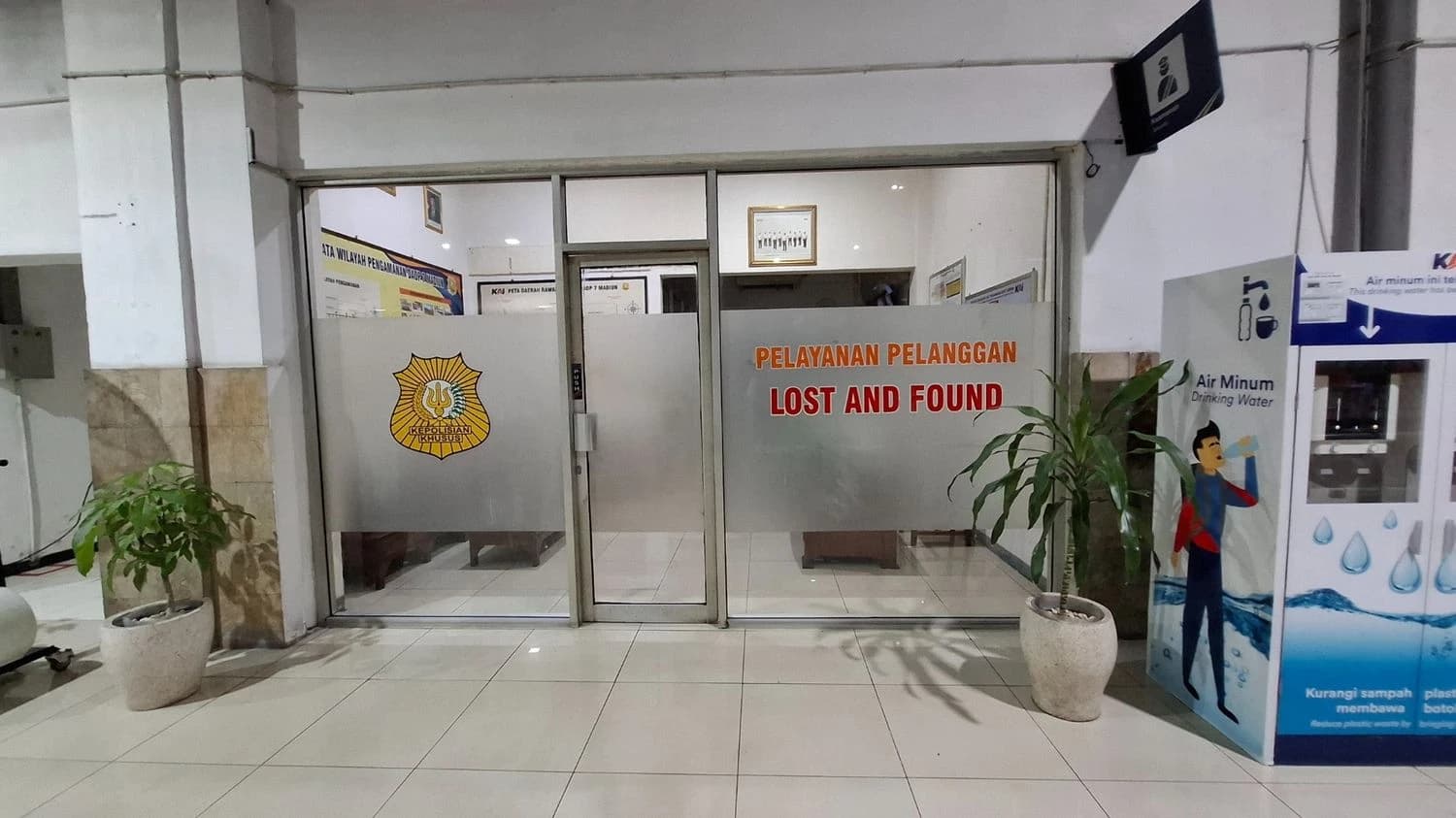
12,656 Lost Items Found by KAI in Semester I 2026, Ranging from Wallets to Laptops
A total of 12,656 lost items were recorded at stations and on board trains throughout Semester I 2026. These items are estimated to have a value of Rp8,861,383,500 and are handled through KAI’s Lost and Found service.
Vice President Corporate Communication of KAI, Anne Purba, explained that the handling of left-behind items is an important part of the customer experience. When customers realize that they have left their belongings behind, the speed of response, ease of obtaining information, security of storage, and certainty of the verification process all contribute to their experience with train services. Through the Lost and Found service, every found item is recorded, documented, secured, and verified to ensure that its handling is orderly and accountable.
Based on its category, lost items from January to June 2026 consist of 622 food items, 9,165 general items, and 2,869 valuable items. General items include bags, clothing, water bottles, umbrellas, chargers, books, and various travel equipment. Meanwhile, valuable items may include mobile phones or handphones, laptops, wallets, jewelry, cash, and important documents. This variety of items shows that a single lost item may have economic value, important function, or personal value that is difficult to replace for the owner.
Anne added that lost items can affect the continuity of travel, work activities, and access to important documents for customers. Therefore, officers carry out each stage carefully, starting from recording, storage, data matching, to ownership verification.
From a regional perspective, the highest number of lost items was recorded in Operating Area (Daop) 8 Surabaya with 3,050 items. This is followed by Daop 1 Jakarta with 2,611 items, Daop 5 Purwokerto with 1,952 items, Daop 2 Bandung with 1,479 items, and Daop 4 Semarang with 1,284 items. This distribution reflects the implementation of Lost and Found services across KAI’s operational areas, where officers at stations and on trains play a role in securing found items, recording their characteristics in detail, and connecting customer reports with lost item data.
Anne explained that items found on trains or at stations will first be announced through loudspeakers. If no customer claims them, officers will secure, record, document, input them into the Lost and Found system, and store them according to the applicable categories and procedures.
Customers who are still on their journey can immediately report to the conductor, security officers, or Customer Service on Train. After arriving at the station, reports can be submitted to Customer Service on Station, security officers, or Lost and Found service officers. Customers who cannot report directly may contact KAI Contact Center 121.
To speed up the search process, customers need to provide detailed descriptions of the items, date and time of travel, train name and travel route, seat number, booking code, and the last known location of the item. Travel data and item descriptions should be submitted through KAI officers or official channels to ensure the security of customers’ personal data.
If the item is found, officers will match the report with the lost item data. Customers need to show identification, ticket or booking code, and explain the specific characteristics of the item as part of ownership verification. After the data is confirmed, the handover is carried out through official recording and documentation. KAI’s Lost and Found service is free of charge.
KAI advises customers to store valuable items in places that are easy to monitor and to label bags or suitcases with names or contact numbers. Before disembarking, customers are advised to recheck luggage racks, seating areas, folding tables, power outlets, seat pockets, and under-seat areas.
Anne encourages customers to take a moment to check all belongings before getting off the train or leaving the station. The sooner the report is submitted, the greater the chance the item can be found. KAI will continue to improve service quality so that every customer receives a response that is fast, clear, secure, and reliable.