
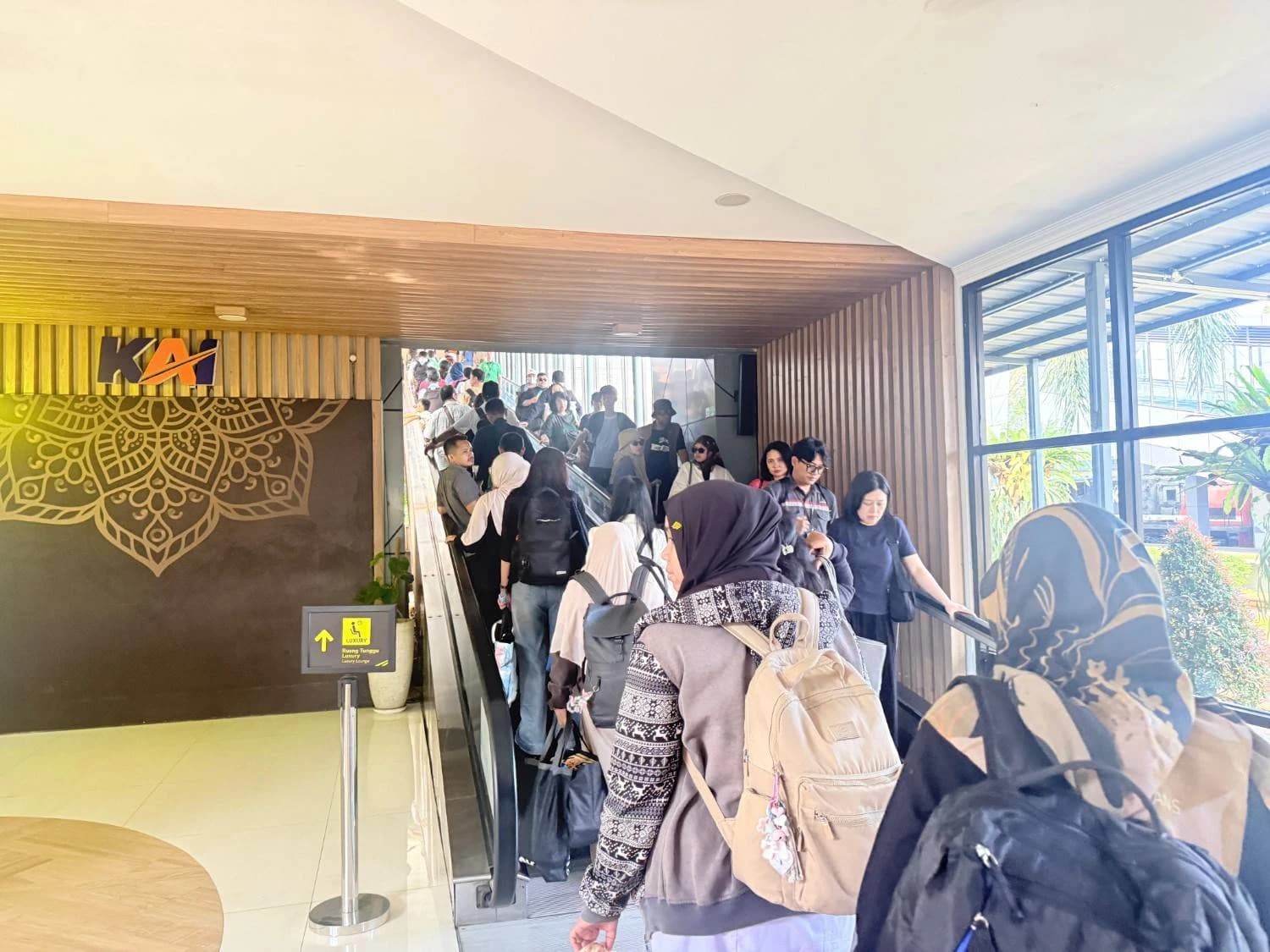
By the End of Q3 2026, KAI Group Served 394.44 Million Customers
PT Kereta Api Indonesia (Persero), or KAI, recorded growth in customer numbers throughout January–September 2026. During this period, KAI Group served 394,443,300 customers, an increase of 7.06 percent compared to 368,429,917 customers in the same period in 2025.
This growth reflects the high demand for rail-based transportation to support various activities, ranging from daily mobility and intercity travel to airport access, tourism, and high-speed rail journeys.
Statistics Indonesia (BPS) recorded 104.30 million domestic tourist trips in August 2026. In the same month, international tourist arrivals reached 1.60 million visits. Meanwhile, cumulatively, international tourist arrivals to Indonesia from January–August 2026 reached approximately 10.58 million visits.
KAI Vice President of Corporate Communication Anne Purba stated that the increase in customer numbers reflects the diverse mobility needs of the public, which must be supported by integrated and reliable transportation services.
“In the first nine months of 2026, nearly 394.5 million customers used KAI Group services. This figure reflects the diverse travel needs of the public, whether for daily activities, intercity travel, airport access, or tourism. KAI Group continues to develop its services to meet these needs optimally,” Anne said.
KAI Commuter was the largest contributor, serving 312,302,440 customers, an increase of 6.38 percent compared to the same period last year. Its services support public mobility across Greater Jakarta, Banten through the Rangkasbitung–Merak corridor, Bandung, Yogyakarta through Commuter Line Yogyakarta and Prameks, as well as Surabaya.
For long-distance and local train services, KAI served 43,959,327 customers, an increase of 8.33 percent. Meanwhile, LRT Jabodebek recorded 24,702,905 customers, an increase of 18.94 percent, while LRT Sumsel served 3,303,595 customers. In South Sulawesi, KA Makassar–Parepare served 253,547 customers, an increase of 10.78 percent.
Airport transportation services also contributed to the growth in KAI Group's customer numbers. Throughout January–September 2026, KAI Bandara served 5,110,010 customers through KA Bandara YIA and KA Srilelawangsa services. In addition to providing airport access, these services also support public mobility in North Sumatra.
In the tourism and high-speed rail segments, KAI Wisata served 234,635 customers, growing by 39.43 percent. Meanwhile, Whoosh recorded 4,576,841 customers, an increase of 1.16 percent compared to the same period last year.
Anne explained that KAI Group continues to strengthen connectivity between services to make travel planning easier for customers. Integration between stations, urban transportation, intercity trains, airport services, high-speed rail, and connecting transportation modes is part of efforts to improve the public's travel experience.
“We want customers to be able to plan their journeys more easily, including when transferring from one mode of transportation to another. Strengthening connectivity is an important part of ensuring that all KAI Group services complement one another and provide more travel options for the public,” Anne said.
As travel volumes increase, KAI also maintains operational reliability to ensure smooth journeys for customers. Based on performance from January–September 2026, the average On Time Performance (OTP) for passenger train arrivals reached 97.31 percent.
KAI uses customer demand data, punctuality, transport capacity, and the readiness of rolling stock and infrastructure as the basis for operational management, particularly in preparation for increased public mobility toward the end of the year.
“The growth of more than 26 million customers compared to the same period last year motivates KAI Group to continue improving service quality. We will continue to strengthen connectivity, maintain operational reliability, and adapt our services to public needs so that rail-based transportation becomes more accessible across various regions of Indonesia,” Anne concluded.