
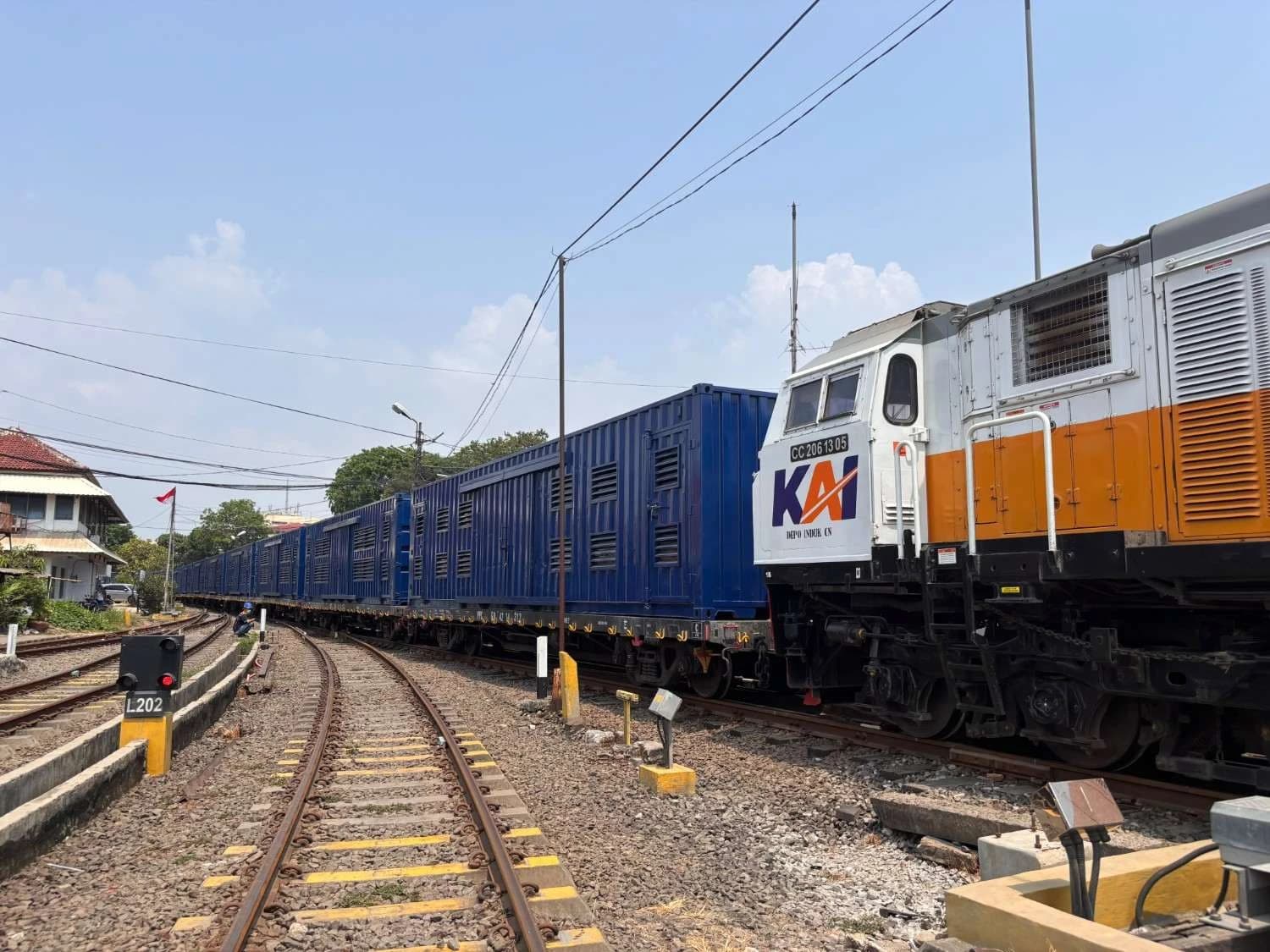
Taking Farm Produce to the Next Level, KAI Trials Dragon Fruit Service from Banyuwangi-Jakarta
Dragon fruit from Banyuwangi now has a new route to Jakarta. A trial for transporting agricultural products by rail officially began on September 28, 2026, marking a new step in expanding the distribution of food commodities from production centers to major consumption areas.
The trial departed from Argopuro Station, Banyuwangi, at 8:00 a.m. local time with 10 cars. Dragon fruit became the first cargo transported under the service, which is being developed to carry agricultural and livestock products from East Java to Jakarta.
The service is being developed through KAI Logistik as part of an effort to expand the use of the railway network for commodity distribution. Beyond agricultural products, the service is being prepared to transport vegetables, fruit, food commodities, and livestock including live cattle.
Rail-based freight continues to show strong potential. From January to September 2026, non-coal freight volume reached 9,148,571 tons, a 2.6 percent increase from 8,912,566 tons during the same period in 2025.
A wide range of commodities already use non-coal freight services, including cement and clinker, containers, fuel, plantation products, retail goods, and fertilizer. Expanding into agricultural and livestock commodities marks another step in strengthening the role of railways in the national supply chain.
The Banyuwangi–Jakarta trial serves as an important stage in evaluating the overall readiness of the service. The evaluation covers loading at production areas, railway operations, travel time, loading and unloading processes, supporting facilities, and service readiness at the destination.
The service is planned to begin regular operations in November 2026 on a round-trip Banyuwangi–Jakarta route. Its development is projected to continue through December 2030, with a planned volume of 84,200 flat cars throughout the cooperation period.
To support operations, loading areas are being prepared at four strategic stations: Argopuro and Kalisetail Stations in Banyuwangi, Rambipuji Station in Jember, and Probolinggo Station.
Once fully operational, each train is planned to carry up to 20 container cars with a capacity of approximately 550 tons of commodities per journey. This setup allows various types of cargo to be transported through a more scheduled and integrated system.
The return journey from Jakarta to Banyuwangi is also being prepared to maximize capacity. Potential return cargo includes animal feed, fertilizer, bran, and other logistics supplies, ensuring that the available freight capacity can be utilized more efficiently in both directions.
For livestock transportation, approximately 75 cattle can be carried using three cars under the planned operational scheme. Facilities for live animals will follow technical, safety, operational feasibility, testing, certification, and regulatory requirements while taking animal welfare into account.
Containers will also be adapted to the characteristics of each commodity. This allows agricultural products, food commodities, livestock, and other logistics supplies to be transported using suitable facilities from production points to their destinations.
The Banyuwangi–Jakarta service adds another dimension to the growing non-coal freight portfolio. Railways are not only moving passengers but also helping move the commodities people rely on every day.
From Banyuwangi’s dragon fruit to logistics supplies heading back from Jakarta, the railway network creates a new connection between production centers and markets. With high capacity and scheduled operations, rail-based freight offers another way to support the national food supply chain while strengthening economic connectivity between regions.