
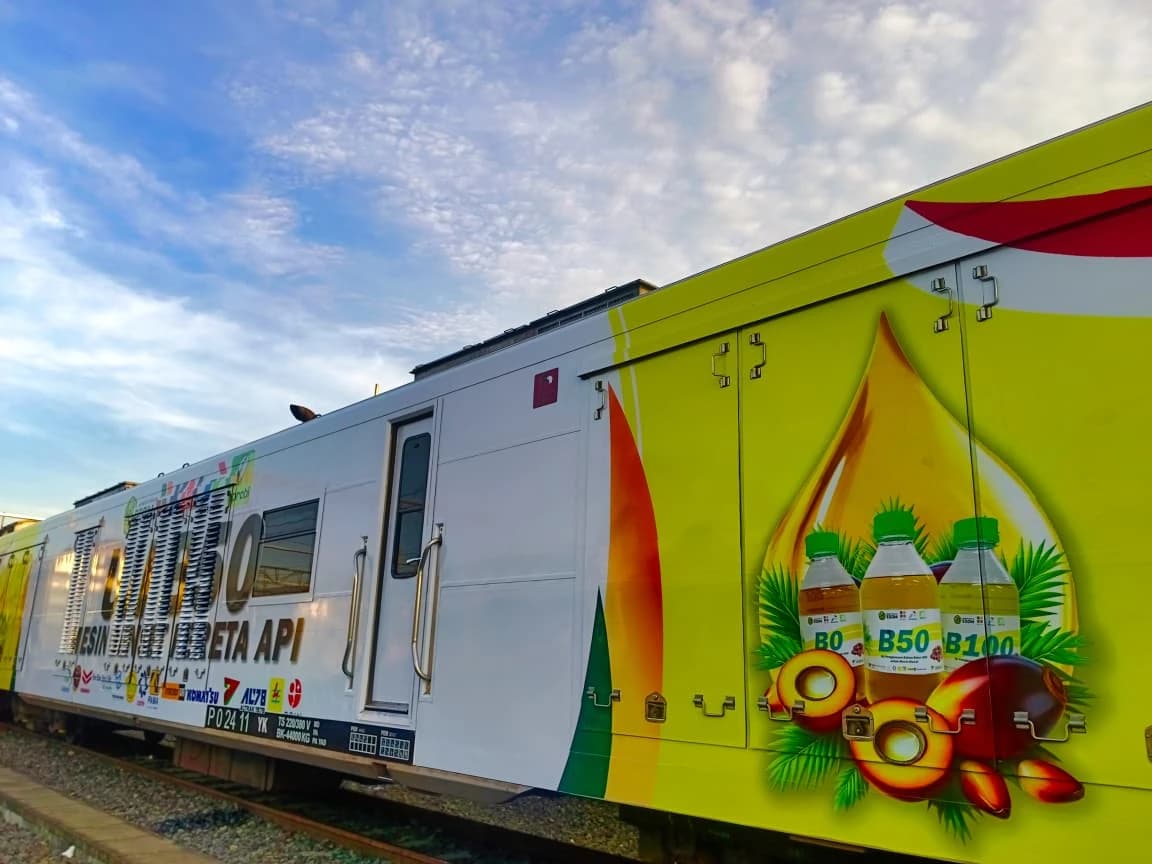
B50 Becomes KAI’s Largest Decarbonization Program, Targeting a Reduction of 133,676 Tons of CO₂e
PT Kereta Api Indonesia (Persero), or KAI, is strengthening its commitment to sustainability by adopting B50 biodiesel as a key program in the company's decarbonization roadmap. Of the total emissions reduction target of 166,873 tons of CO₂e across three decarbonization programs, the transition from B35 to B50 fuel is targeted to contribute 133,676 tons of CO₂e, or approximately 80 percent of the overall target.
The implementation of B50 began gradually on July 1, 2026, across KAI's diesel-powered rolling stock. This fuel contains 50 percent plant-based biodiesel and 50 percent diesel, making it part of efforts to reduce dependence on fossil fuels while lowering emissions from railway operations.
KAI Vice President of Corporate Communication Anne Purba said that the use of B50 is an important step in the company's efforts to reduce carbon emissions, considering that fuel is one of the main components of diesel-powered operations.
“B50 is the decarbonization program with the largest contribution in KAI's roadmap, targeting emissions reductions of 133,676 tons of CO₂e. Its implementation is being carried out gradually, taking into account rolling stock readiness, fuel quality, safety, and operational reliability,” Anne said.
The use of biodiesel plays an important role in supporting KAI's operations, which still rely on fuel for locomotives and diesel-powered rolling stock on several routes. Based on KAI's internal data as of August 24, 2026, subsidized fuel consumption for passenger trains reached approximately 129.64 million liters. Fuel is also required for freight operations, including parcels, containers, clinker, and cement.
Anne explained that implementing B50 involves more than simply changing the fuel composition. Technical evaluations are also necessary to ensure that its use supports optimal railway operations. The aspects being assessed include engine performance, combustion quality, filtration systems, maintenance procedures, and rolling stock operational stability.
“The energy transition in the transportation sector must go hand in hand with service reliability. Therefore, every fuel change needs to be supported by technical testing and evaluation to ensure that environmental benefits remain aligned with safety and operational readiness,” Anne said.
In addition to using B50, KAI continues to make sustainability an integral part of its corporate development. These efforts go hand in hand with energy efficiency, emissions reduction, and resource optimization to support increasingly sustainable operations.
The use of biodiesel also creates opportunities to expand the utilization of plant-based energy in the transportation sector. Through gradual implementation across diesel-powered rolling stock, KAI aims to achieve measurable emissions reductions while maintaining the smooth operation of passenger and freight services across various regions.
“KAI's decarbonization direction is to reduce emissions through programs that deliver a tangible contribution to company operations. B50 is one of our key programs, and we continue to evaluate its emissions reduction impact, technical readiness, and operational effectiveness,” Anne concluded.