
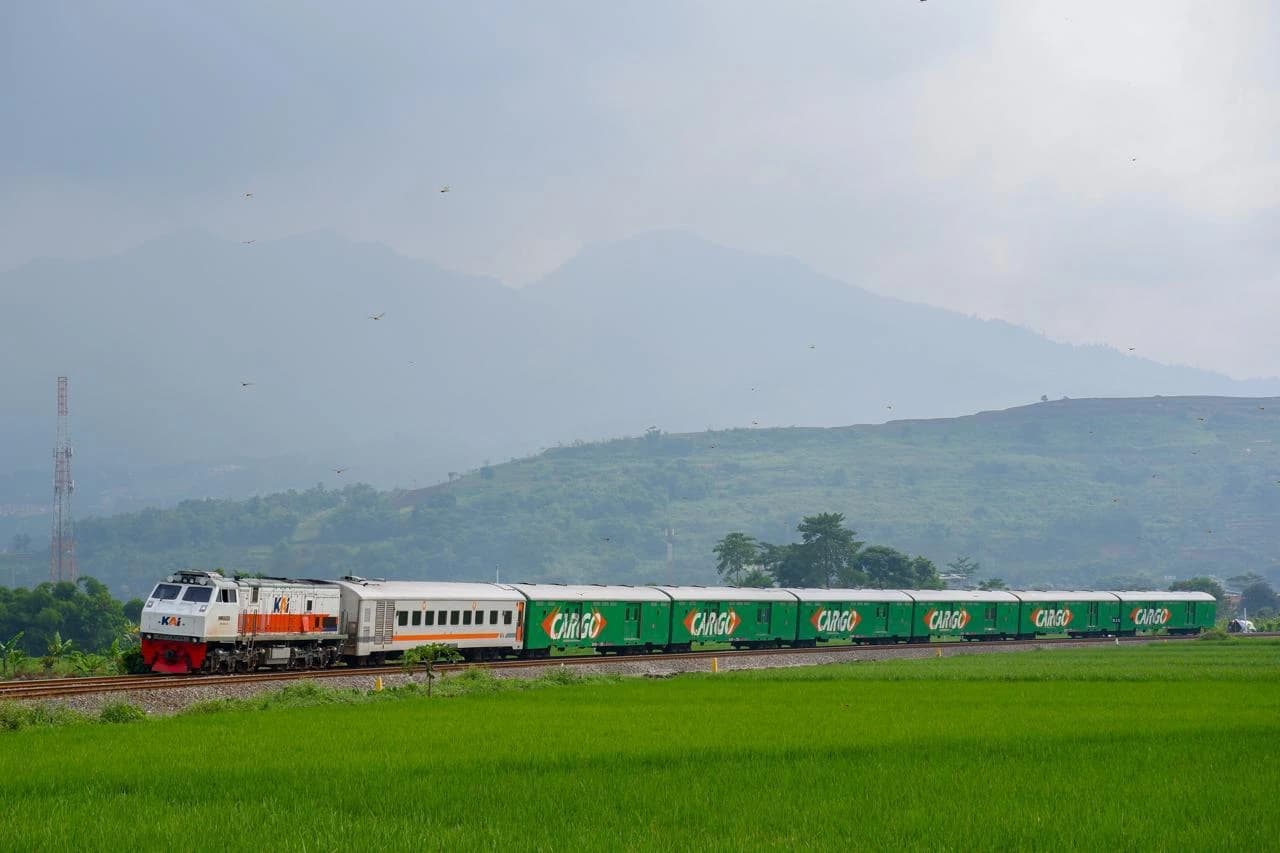
KAI Retail Freight Reaches 191 Thousand Tons Through September 2026, Growing 2.96 Percent
PT Kereta Api Indonesia (Persero), or KAI, recorded growth in retail freight transportation from January to September 2026. During this period, retail freight volume reached 191,232 tons, an increase of 2.96 percent compared to 185,733 tons in the same period in 2025. This growth added approximately 5,499 tons of goods transported through the railway network.
This increase is part of KAI's efforts to strengthen rail-based logistics services to support more efficient goods distribution. Rail transportation has a large carrying capacity per trip, making it an alternative for businesses to optimize shipments, particularly along routes with high distribution volumes and frequencies.
KAI Vice President of Corporate Communication Anne Purba said that the growth in retail freight demonstrates opportunities for rail transportation to support distribution needs across various business sectors.
“During the first nine months of 2026, 191 thousand tons of retail freight were transported by rail. We see that logistics needs continue to grow, so freight services must become increasingly adaptive in supporting distribution patterns and the needs of business customers,” Anne said.
Overall, KAI's non-coal freight volume reached 9,148,571 tons as of September 30, 2026, growing by 2.6 percent compared to 8,912,566 tons in the same period the previous year. The freight commodities included containers, fertilizer, cement, fuel, pulp, plantation products, and retail goods.
In line with this volume growth, KAI's non-coal freight revenue reached approximately IDR 1.095 trillion, an increase of 7.2 percent compared to the same period in 2025.
Anne explained that rail transportation offers advantages for handling large and regular shipments along specific corridors. Integrating rail services with other modes of transportation can help businesses manage distribution from production sites to final destinations.
“Trains can transport large quantities of goods in a single trip, particularly for shipments with planned volumes and schedules. Meanwhile, trucks continue to play an important role in connecting production sites, terminals, and final destinations. Integrating these two modes can support a more efficient distribution chain,” Anne said.
The development of rail-based freight transportation is also an alternative to reducing dependence on road transportation for distribution. With its large carrying capacity, rail transportation has the potential to help reduce the burden of heavy vehicles on certain routes while supporting more efficient energy use and transportation infrastructure.
In addition, interregional connectivity is an important factor in goods distribution. Differences in commodity needs and availability across regions drive the movement of goods between areas, making a reliable logistics system essential for maintaining smooth supply chains and price competitiveness in destination markets.
KAI continues to explore opportunities to develop retail freight services along corridors with sufficient shipment volumes. These efforts are supported by strengthening terminal connectivity, scheduling train services, optimizing freight capacity, and integrating rail services with land-based logistics.
“The growth in retail freight presents an opportunity for KAI to expand the role of rail transportation in the national logistics chain. We continue to promote integrated services that meet customer needs so that goods distribution becomes smoother, carrying capacity is utilized optimally, and interregional logistics connectivity becomes stronger,” Anne concluded.