
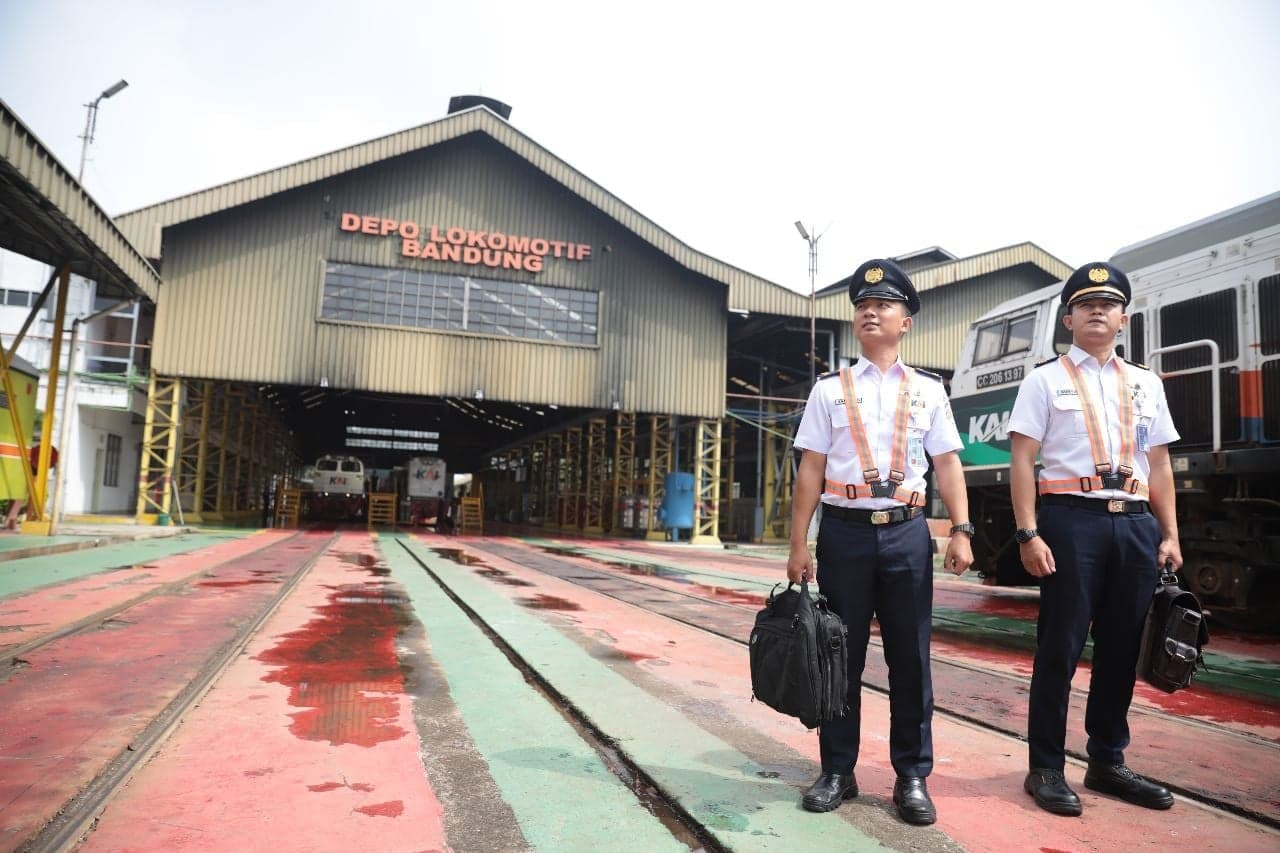
The Long and Challenging Journey of Becoming a Train Driver
KAI is one of Indonesia’s state-owned enterprises (BUMN) that is highly sought after by job seekers. Railway-related professions, including train drivers (masinis), are especially attractive for fresh graduates who want to be part of the transportation industry. But what are the actual requirements set by KAI for prospective train drivers? Let’s take a closer look at the stages required to become a railway train driver.
First, the journey begins with a series of recruitment tests conducted by KAI. Applicants must compete with tens of thousands of candidates through a strict selection process that lasts approximately three months. The selection stages include administrative screening, initial medical examination, psychological tests, interviews, and final medical checks. For positions directly related to railway operations and train crew roles such as train drivers, conductors, and train dispatch officers (PPKA), candidates must be in excellent physical condition. Psychological test standards for these roles are also different from other positions.
KAI Vice President of Public Relations, Joni Martinus, explained that both physical and mental health significantly affect work productivity.
“Health examinations during recruitment are intended to ensure that the company obtains employees who are physically fit and suitable for the work they will perform. This has a positive impact, because human resources are a crucial investment in a company. Train drivers must also be meticulous, alert, not easily stressed, and confident so that train safety and operations are guaranteed,” said Joni.
Second, candidates who pass recruitment and become prospective employees do not immediately become train drivers. They must first undergo a probation period of about three months. During this time, they participate in programs such as the Work Orientation Program and the Basic Development Program (BDP), conducted in collaboration with the Indonesian Armed Forces (TNI) to build discipline and introduce KAI’s fundamentals.
After the probation period, candidates undergo evaluation for permanent employment, including a physical health check.
“To become a permanent employee, candidates must pass every stage, including orientation, BDP, and health examinations,” Joni explained.
Even after that, the journey continues. Candidates must undergo formal education and training (diklat) before being eligible to become train drivers. They attend basic railway equipment training at the Railway Technical Training Center (BPTT) Darman Prasetyo, Yogyakarta.
After completing basic training and passing, they receive technical training related to train operation and route understanding tests. They then begin practical training operating locomotives or diesel trains at KAI depots under supervision.
Next, candidates practice shunting operations using non-electric rolling stock with instructor guidance. This practical phase lasts about four months.
After completing all training stages, candidates must pass certification exams conducted by the Directorate General of Railways (DJKA). If successful, they are appointed as assistant train drivers, not yet full train drivers.
As assistant train drivers, they support senior drivers while gaining experience. After at least 2,000 working hours or approximately one year, they may proceed to the next stage toward becoming a full train driver.

Eventually, candidates must pass the Junior Level Railway Operations Certification Exam (DJKA), which requires higher competence. Only after passing this stage are they officially appointed as train drivers.
Railway operation certification is divided into three levels:
Entry Level Railway Operations Personnel
Junior Level Railway Operations Personnel
Intermediate Level Railway Operations Personnel
Certificates are valid for four years, depending on position and regulatory requirements from the Ministry of Transportation.
Additionally, train drivers undergo refresher training every two years and periodic competency checks, including annual reassessments and quarterly technical evaluations.
Pre-Duty Procedures for Train Drivers
Before duty, train drivers and assistants must complete attendance checks and undergo inspections by supervisors to ensure readiness. This is not merely procedural—those deemed unfit are replaced.
They must also undergo health checks including temperature, blood pressure, and alcohol testing. KAI provides breathalyzer tests ensuring zero alcohol content before duty.
“Train drivers and assistants will be tested using a breathalyzer. The result must be zero; otherwise, they are not allowed to work,” Joni explained.
After passing, they receive a health clearance certificate. They must present required items such as certification cards, health clearance, watch, whistle, flashlight, and ensure mobile phones are turned off if carried. Only then is a duty assignment letter issued.
Drivers also receive train schedules and conduct final locomotive inspections before departure.
In emergency situations such as weather disruptions, accidents, or track incidents, train drivers must act quickly and correctly to ensure passenger safety, while reporting to authorities and following emergency procedures.
The profession requires high discipline and responsibility. KAI also regularly provides coaching for drivers and their families to ensure proper support at home.
KAI also conducts annual Medical Check-Up (MCU) programs to monitor employee health and prevent workplace risks.
“Being a train driver is not easy. It requires a long journey from recruitment to certification. A train driver is not just an operator but a key figure in ensuring safe and smooth railway operations,” Joni concluded.

.