
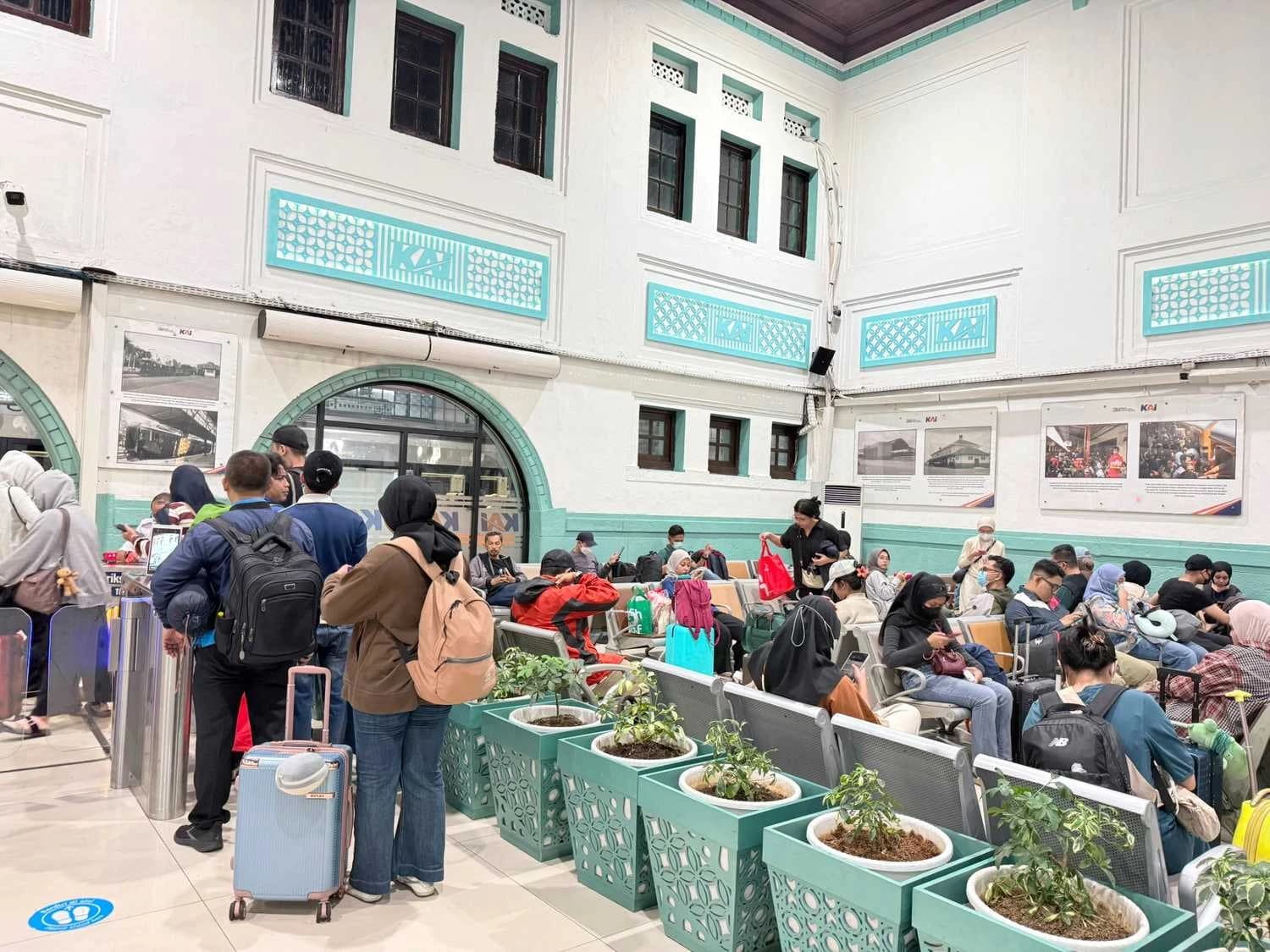
School Holiday Travel Gets More Affordable as 1.30 Million Passengers Grab 30% Off Economy Train Tickets
Building a strong culture of railway safety starts with educating the next generation. As part of this commitment, KAI invited students of SMAN 6 Bandung to take part in its railway safety awareness program themed "Smart, Safe and Sustainable: Empowering Young People to Care About Railway Safety." The program introduced students to the fundamentals of railway operations, including train characteristics, potential hazards around railway tracks, safety rules at level crossings, and simple actions that can help prevent accidents.
By reaching students at an early age, KAI aims to inspire safe habits that extend beyond the classroom. The knowledge gained is expected to be shared with families, friends, and local communities, creating a wider culture of railway safety.
One of the highlights of the session explained why trains cannot stop instantly. A typical passenger train in Indonesia can weigh around 600 tons, requiring a much longer braking distance than ordinary road vehicles.
Through interactive demonstrations, students learned that a train traveling at 60 km/h requires approximately 221 meters to stop. At 80 km/h, the stopping distance increases to around 379 meters. A train traveling at 100 km/h may require about 505 meters, while at 120 km/h, the braking distance can reach approximately 860 meters, depending on operational conditions.
These examples helped students understand why safety at railway crossings depends heavily on public awareness and responsible behavior. Stopping before the tracks, obeying warning signals, and never attempting to cross after barriers are lowered are simple actions that can save lives. The program also explained the risks associated with emergency braking, helping participants understand that railway safety is a shared responsibility between train operators and road users.
Students were encouraged to adopt five essential safety habits: never play near railway tracks, never cross through closed level crossings, always stop when warning signals are activated, always give priority to trains, and look after both personal and public safety. They were also reminded to avoid using mobile phones or headphones while approaching railway crossings, allowing them to remain fully aware of visual and audible warning signals.
The session introduced participants to Indonesia's railway and road traffic regulations, which require all road users to give priority to trains at level crossings and comply with warning devices and railway personnel. KAI also promoted a simple safety routine before crossing railway tracks: stop, look both ways, make sure it is safe, then cross. This practice remains important even at crossings equipped with gates and railway officers.
Beyond railway safety, students were introduced to sustainable transportation, railway innovation, customer protection, and career opportunities within Indonesia's railway industry, giving them a broader understanding of how railways contribute to national mobility and future development. Through continuous education and community engagement, KAI is committed to building a stronger safety culture across Indonesia. Every decision to stop, stay alert, and follow safety rules helps create safer railway journeys for everyone.