
KAI Transports 50.7 Million Tonnes of Freight to Strengthen National Logistics Distribution
Freight distribution plays an important role in keeping industrial and commercial activities running smoothly, from delivering raw materials to factories to moving finished products to warehouses and distribution centres. To support these needs, PT Kereta Api Indonesia (Persero), or KAI, continues to transport a wide range of commodities through its railway network.
From January to September 2026, KAI transported 50,756,132 tonnes of freight. This comprised 41,607,561 tonnes of coal and 9,148,571 tonnes of non-coal commodities. Non-coal freight volumes increased by 2.65% compared with the same period in 2025, when they totalled 8,912,566 tonnes, representing an increase of 236,005 tonnes.
These results come amid shifts in global trade and ongoing efforts to strengthen Indonesia’s domestic supply chains. In its October 2026 forecast, the World Trade Organization (WTO) projected global merchandise trade volume growth of 3.9% for the year. Meanwhile, Statistics Indonesia (BPS) reported that the Indonesian economy grew by 5.29% year-on-year in the second quarter of 2026, with gross domestic product (GDP) at current prices reaching IDR 6,552.1 trillion. The transportation and warehousing sector also grew by 5.65% during the period.
KAI Vice President of Corporate Communication Anne Purba explained that freight services support economic activities across different regions. The commodities transported include industrial raw materials, manufactured products, and goods needed for commercial activities and everyday consumption.
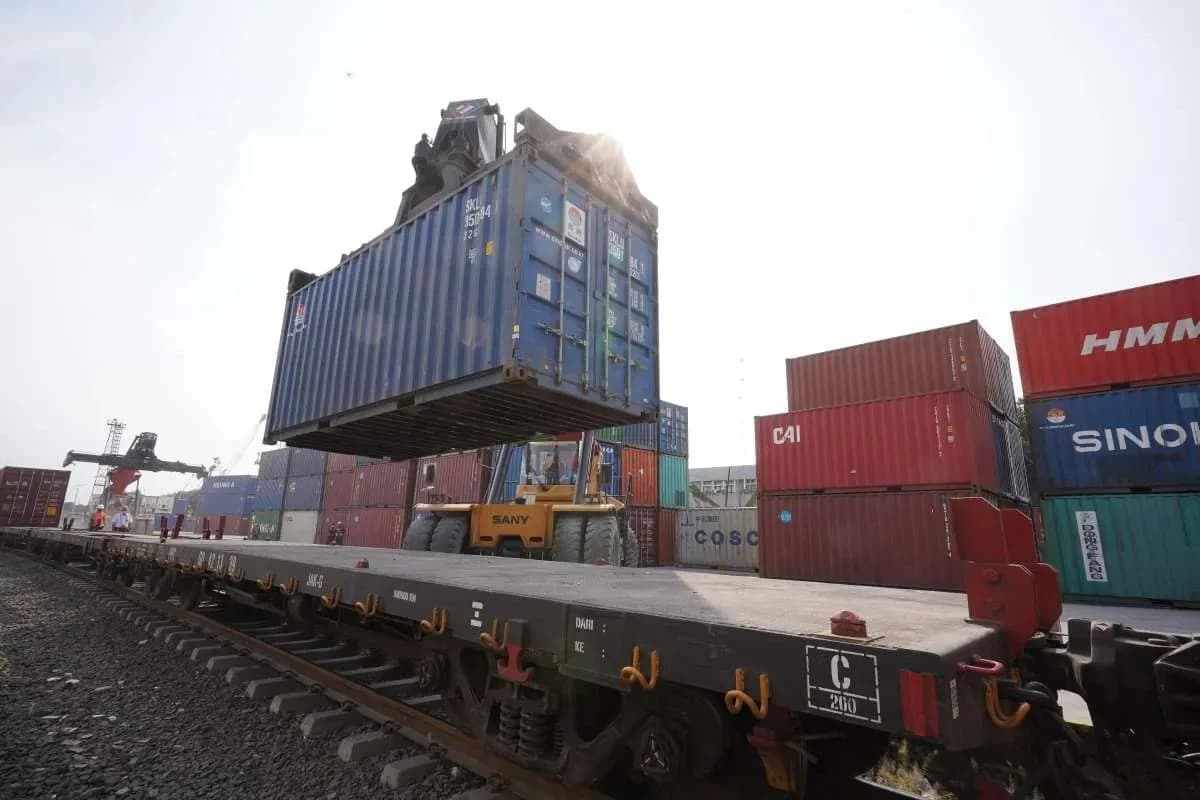
Non-coal commodities accounted for 18.02% of KAI’s total freight volume. Within this category, container freight reached 4,438,999 tonnes, representing 48.52% of all non-coal freight. Container volumes rose by 19.57% compared with January–September 2025.
In addition to containers, KAI transports various other commodities, including fuel, cement and clinker, plantation products, fertiliser, and retail goods. Each commodity has different distribution requirements in terms of volume, destination, and handling facilities. This range of cargo reflects the need for logistics services that accommodate customers across the industrial and commercial sectors.
Anne noted that efficient freight distribution depends not only on rail services but also on connections with terminals, warehousing facilities, and onward transport. Cooperation between businesses and infrastructure operators is essential to ensure goods can move from the railway network to their final destinations.
The ability of trains to carry large volumes of freight in a single consist offers businesses another option for planning distribution. Additional transport is still needed to reach destinations beyond the rail network. This combination allows companies to select delivery methods according to commodity type, distance, cargo capacity, and the conditions of each distribution corridor.
Developing rail freight services is also relevant to improving logistics efficiency and energy use. Where operating conditions are suitable, rail can be an option for transporting large volumes of goods. The most appropriate mode still depends on operational requirements and the characteristics of each route.
KAI continues to develop logistics partnerships so that its freight services can better meet the needs of industry and trade. Stronger connections between railway services and other transport modes are expected to expand distribution options for businesses, support smoother supply chains, and contribute to Indonesia’s economic growth.