
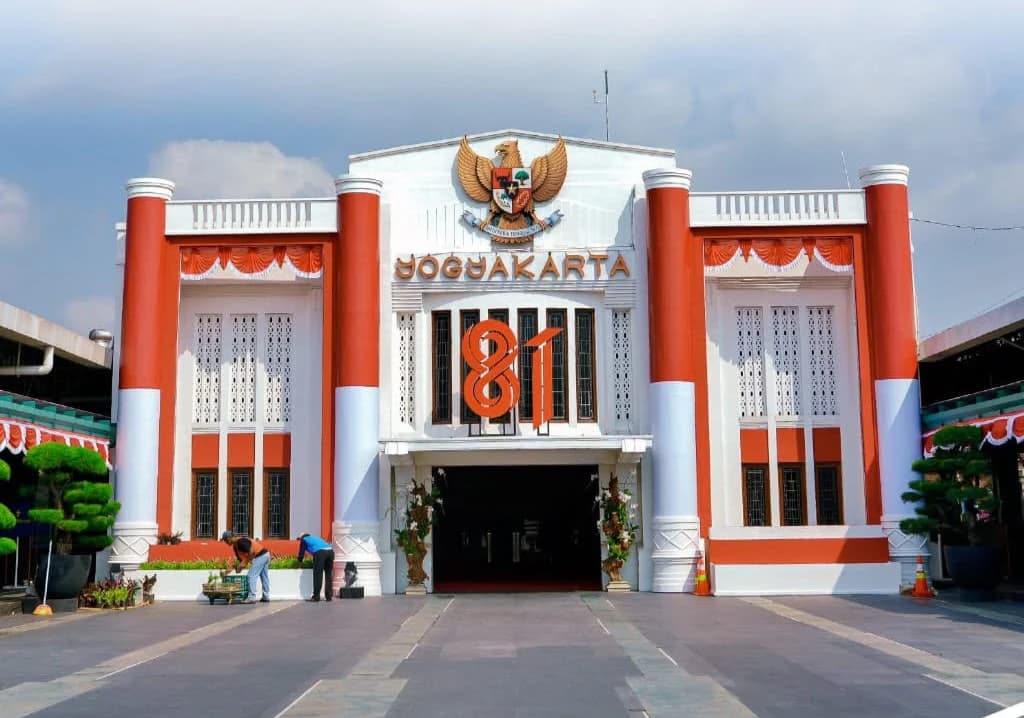
Independence Day Marks Peak Travel Day as KAI Serves 800,651 Passengers During the Long Weekend
Independence Day, August 17, 2026, became the peak travel day during the Independence Day long weekend. A total of 216,158 passengers used KAI-operated long-distance and local train services on that day, making it the highest daily passenger volume throughout the August 14–17, 2026 period.
Overall, KAI’s long-distance and local train services served 800,651 passengers during the four-day Independence Day long weekend. During the same period, the 17% discount program for commercial economy-class long-distance trains with departures specifically on August 17, 2026, recorded sales of 31,634 tickets.
Passenger movements reached 190,353 on August 14 and then increased to 202,327 on August 15. Travel volume reached 191,813 passengers on August 16 before rising again to its peak of 216,158 passengers on August 17, 2026.
The peak in travel, which coincided with the 81st Anniversary of the Independence of the Republic of Indonesia, showed strong public mobility during the Independence Day holiday period. People traveled for various purposes, including meeting family, visiting tourist destinations, and returning to the cities where they carry out their daily activities.
The 17% discount program for commercial economy-class long-distance trains also became part of public travel on Independence Day. By the end of the program, a total of 31,634 tickets had been sold at the discounted fare, providing people with a more affordable travel option on August 17.
Of the total 800,651 passengers from August 14 to 17, 2026, 380,775 passengers traveled on long-distance services, 304,176 on medium-distance services, and 115,700 on short-distance services.
Based on service type, 576,099 passengers used commercial train services, 222,619 passengers used PSO train services, and 1,933 passengers used pioneer train services.
High mobility during the long weekend was also reflected in activity at several stations. Yogyakarta Station recorded the highest departure volume with 52,108 passengers, followed by Pasar Senen with 52,053 passengers, Gambir with 49,871 passengers, Semarang Tawang with 31,919 passengers, and Surabaya Gubeng with 29,162 passengers.
For arrival stations, Yogyakarta again recorded the highest volume with 51,875 passengers. It was followed by Pasar Senen with 45,524 passengers, Gambir with 45,147 passengers, Semarang Tawang with 34,740 passengers, and Bandung with 27,259 passengers.
This distribution shows strong mobility toward cities that serve as activity centers while also offering tourist attractions during the holiday period.
Intercity travel patterns were also reflected in the routes chosen by passengers. Gambir–Yogyakarta recorded the highest volume with 10,688 passengers, followed by Yogyakarta–Gambir with 10,278 passengers, Gambir–Semarang Tawang with 8,031 passengers, Semarang Tawang–Gambir with 7,380 passengers, and Lempuyangan–Pasar Senen with 6,870 passengers.
Among commercial train services, KA Joglosemarkerto recorded the highest passenger volume during the August 14–17, 2026 period with 19,369 passengers. It was followed by KA Sancaka with 17,942 passengers, KA Kaligung with 17,647 passengers, KA Ambarawa Ekspres with 15,780 passengers, and KA Pangrango with 15,620 passengers.
Travel patterns during the Independence Day long weekend demonstrate the role of railways in connecting people during the national holiday period. Family visits, tourism trips, and journeys back to activity centers took place across various routes and cities.
The spirit of the 81st Anniversary of the Independence of the Republic of Indonesia, with the theme “Sovereign, Just, and Prosperous Indonesia,” also supports efforts to maintain connectivity between regions through consistent services. Passenger trust continues to encourage KAI personnel to maintain safety, comfort, and smooth journeys across every service.