
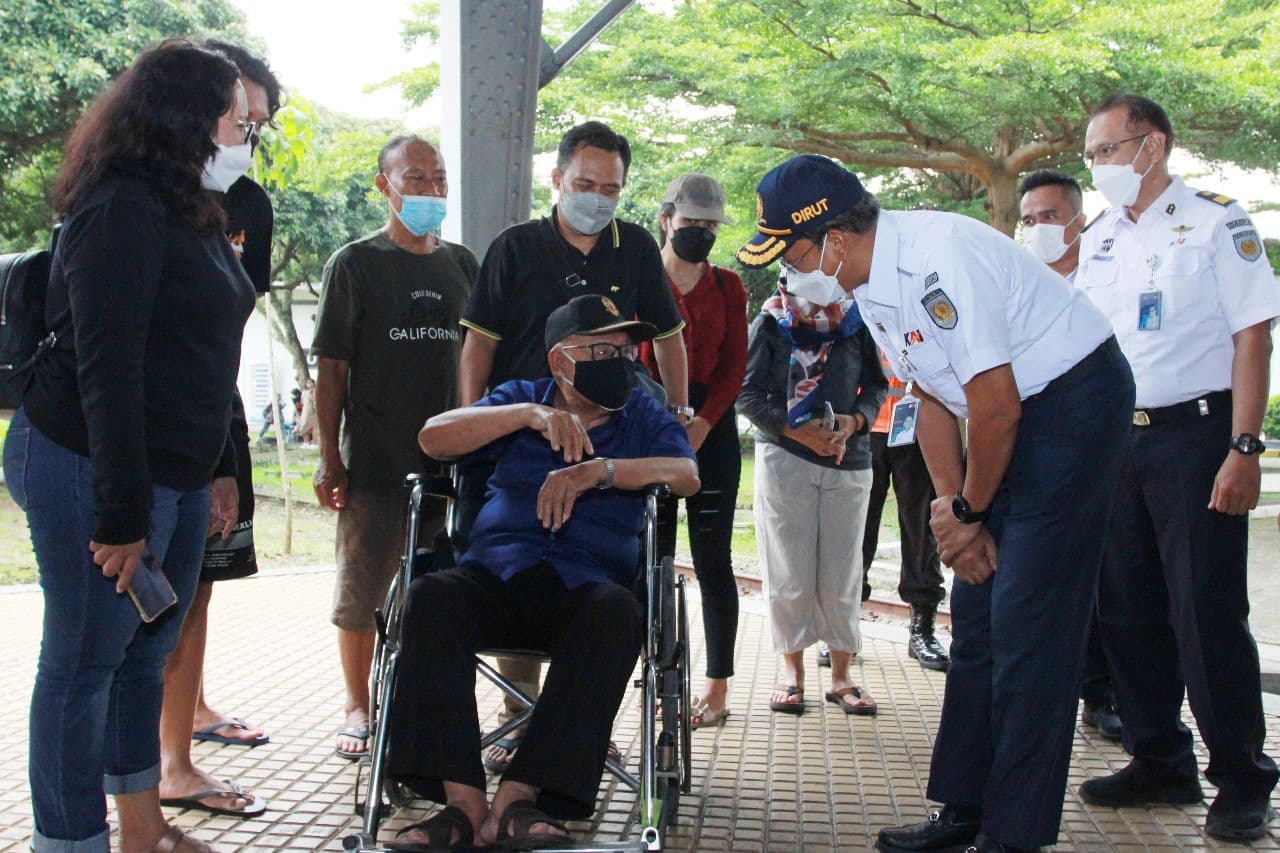
Didiek Hartantyo: Overcoming the Pandemic and Building a World-Class Railway System
In May 2020, amid the severe impact of the COVID-19 outbreak, Didiek Hartantyo was appointed as President Director of PT Kereta Api Indonesia (Persero). Known as Mas Didiek, he previously served as KAI’s Finance Director. As a result, he immediately faced major challenges as President Director, having to navigate the company through the pandemic crisis from the beginning of his leadership.
The pandemic had a significant impact on KAI, forcing the company to suspend train operations, which resulted in a sharp decline in passenger numbers. Almost all train services were halted, except for KRL commuter services in the Greater Jakarta area. This exception was made following public input, as many people depended on trains for their daily income activities in the capital city.
"In 2020, we truly experienced extraordinary pressure," said Didiek. This situation significantly affected KAI’s performance that year. Previously, KAI achieved its highest performance in company history in 2019, recording revenue of Rp22.5 trillion and profit of Rp2 trillion.
To face the challenges during 2020–2021, KAI implemented four main strategies.
The first strategy was protecting its people. This commitment applied not only to customers but also to all employees. One of the steps taken was ensuring there were no layoffs. KAI also provided maximum protection for employees and their families by facilitating COVID-19 vaccinations and providing treatment and assistance for employees affected by COVID-19.
For frontline employees who directly interacted with customers, KAI provided health protection equipment such as masks, gloves, hand sanitizers, and face shields. These measures demonstrated KAI’s commitment to protecting everyone interacting within the company’s working environment.
From the customer perspective, KAI consistently implemented proper health protocols according to government regulations. The company provided handwashing facilities, hand sanitizers, masks, disinfectant tissues, and social distancing reminders in customer areas.
"The second strategy was maintaining liquidity. During a crisis, revenue declines faster than costs. That is always how a crisis works, so preventive measures must be taken quickly," Didiek explained.
"The third strategy was improving efficiency. Unnecessary costs were reduced, while planned investments were postponed because our focus was survival first. The final strategy was finding new sources of revenue that could support KAI during the crisis, such as freight transportation and asset optimization," he added.
The year 2022 became a recovery period for KAI. During this year, KAI began rebuilding its performance through digital transformation.
"The pandemic provided many valuable lessons for KAI, one of which was that technology adaptation could be implemented quickly. This means technology adaptation must be developed under any circumstances. Therefore, in 2022 KAI carried out digital transformation," said Didiek.
"I lead this railway company with a clear ambition. I want to build a railway system with world-class standards. To implement this digital transformation, we worked with one of the world's leading consultants. This consultant has experience advising world-class operators, allowing us to adopt international best practices," he said.
Through this digital transformation, KAI upgraded five major areas: passenger transportation, freight transportation, rolling stock, procurement, operational excellence, and infrastructure maintenance. KAI management aims to identify areas with the greatest impact on future railway development, enabling the company to move faster, improve quality, and provide better services.
"Our way of working and thinking must change. It is not only about digitizing processes, but also about ensuring our people adapt," Didiek said.
In 2022, Didiek observed a faster recovery. KAI is committed to expanding its business portfolio and achieving its vision of becoming the best transportation ecosystem solution provider in Indonesia. To grow further, KAI must collaborate with other transportation modes and develop an integrated ecosystem.
For passenger transportation, KAI collaborates with other transportation providers by developing first-mile and last-mile connectivity. For example, KAI Access allows passengers to book Blue Bird taxi services, making travel from home to stations easier. KAI also collaborates with Damri.
In freight transportation, KAI continues developing a transportation ecosystem by collaborating with Pelindo, accessing various ports and industrial areas.
"Railway transportation serves as the mid-mile connection. We are also developing logistics hubs across Java. In Sumatra, we are building container yards for coal transportation, while in Java we are developing container yards for freight containers to strengthen logistics services," Didiek explained.
KAI has also developed warehousing and terminal services, creating a complete transportation ecosystem for freight operations.
Previously, KAI relied on two main business pillars supporting revenue: passenger transportation and freight transportation. Today, KAI is developing a third pillar: asset optimization. This focuses on maximizing existing assets at stations and railway facilities across Indonesia. As a result, various stations have begun improving and optimizing retail areas.
KAI continues adapting to remain relevant with changing conditions. Through these strategies, KAI recorded revenue of approximately Rp23 trillion in 2022, surpassing its pre-pandemic performance in 2019 of Rp22.5 trillion. In 2022, the largest contribution came from freight transportation, generating Rp9.8 trillion.
"Currently, 80% of KAI customers are from Generation Y and Z, so we continue creating new experiences by utilizing Artificial Intelligence and databases. The ability to innovate and transform is one of the keys to adapting and remaining relevant under any circumstances, ensuring that rail transportation continues to meet the needs of every era," Didiek said.
For KAI’s achievements and continued performance improvements after the pandemic, Didiek received the The Best CEO 2022 award in the category of companies with more than 1,000 employees at the 18th Indonesia Best CEO Forum: Commanding Growth Strategy Amidst Global Crisis Challenge on 28 February 2023.
The 18th Indonesia Best CEO Forum is an appreciation event recognizing business leaders and CEOs who achieved outstanding results based on a survey conducted by SWA Magazine.
Didiek stated that the award was dedicated to all KAI and KAI Group employees who continued supporting the company’s vision and helped KAI recover from the crisis.
"I would like to express my gratitude for this appreciation and award. This recognition is dedicated not only to employees but also to all KAI customers who have chosen trains as their preferred transportation mode. This award will further motivate KAI to continue providing the best services for the people of Indonesia," Didiek concluded.

.