
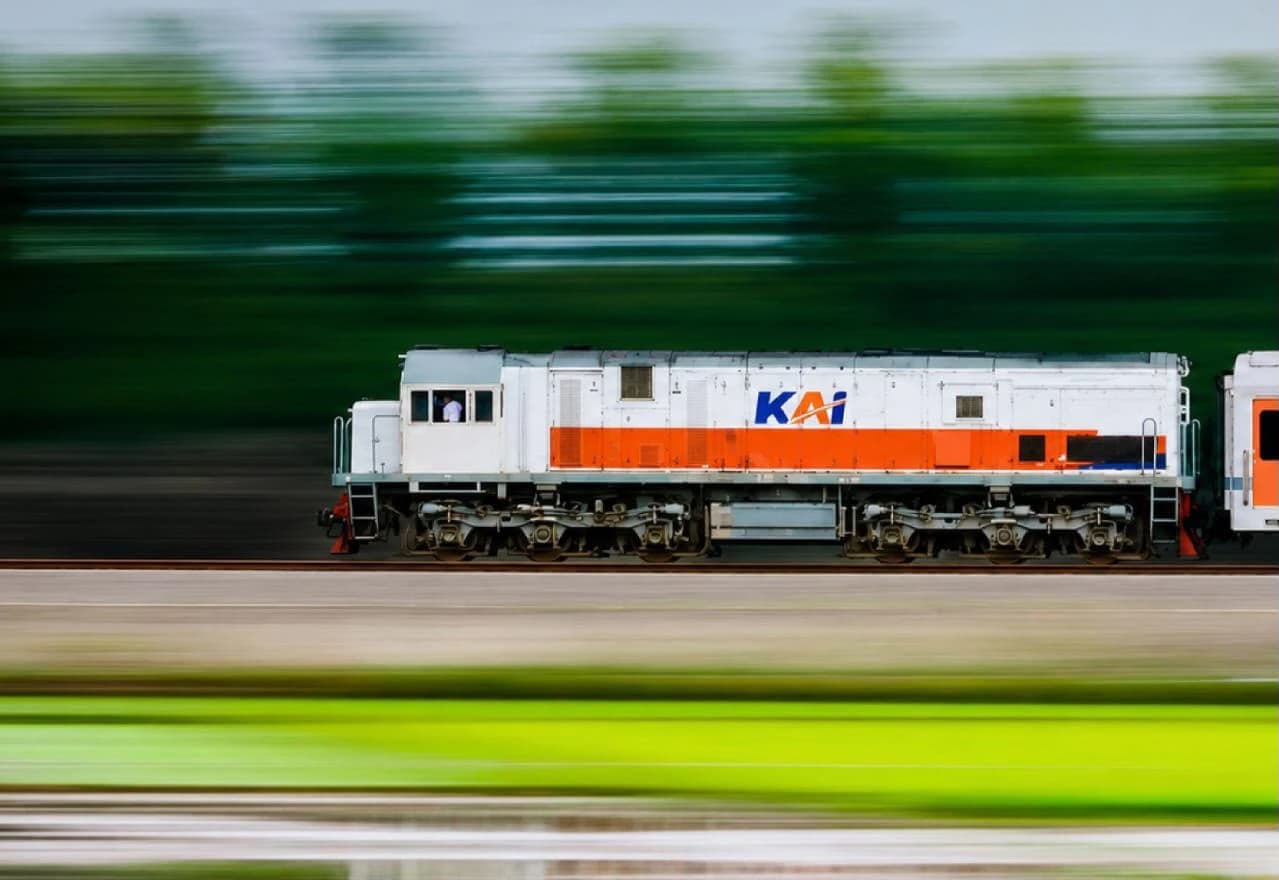
Keeping Indonesia Moving: KAI Optimizes 119.44 Million Liters of Subsidized Fuel
Every safe, comfortable, and on-time train journey begins long before passengers board. Behind the scenes, one of the key elements that keeps Indonesia's rail network moving is the responsible management of subsidized fuel, which powers passenger train services and selected freight operations. As of 13 July 2026, KAI had utilized 119.44 million liters of subsidized fuel, representing 55.73% of its annual allocation of 214.34 million liters. This means 94.90 million liters, or 44.27% of the quota, remain available to support train operations throughout the rest of the year.
KAI manages subsidized fuel under the principles of Good Corporate Governance (GCG) through transparent, accountable, and data-driven monitoring. Every liter is carefully tracked by allocation, utilization, service category, and operating region to ensure it is used responsibly and in accordance with government regulations. Passenger train services account for the largest share of subsidized fuel consumption. By mid-July 2026, passenger operations had used 106.37 million liters, representing 89.06% of KAI's total subsidized fuel usage.
The remaining allocation of 84.65 million liters will continue supporting reliable passenger services throughout the year.
Subsidized fuel also supports several strategic freight services, including container transportation (9.40 million liters), parcel services (1.96 million liters), cement transportation (1.41 million liters), and clinker shipments (290,601 liters). Separate monitoring for each service enables KAI to manage fuel consumption more accurately based on operational needs.
This data-driven approach allows KAI to optimize fuel utilization while ensuring every service remains within its allocated quota and continues operating efficiently. Among passenger operations, the highest fuel consumption was recorded in Daop 8 Surabaya with 26.64 million liters, followed by Daop 1 Jakarta with 26.26 million liters, and Daop 6 Yogyakarta with 13.09 million liters. These figures reflect the operational requirements of diesel-powered services across different regions.
As part of its governance commitment, KAI also maintains clear separation between subsidized and non-subsidized fuel usage. As of 13 July 2026, non-subsidized fuel consumption reached 20.67 million liters, or 52.88% of the annual target. Combined fuel utilization across all operations totaled 140.12 million liters, equivalent to 55.29% of KAI's projected fuel demand for 2026.
Non-subsidized fuel is allocated to freight services such as coal, fuel distribution, crude palm oil (CPO), pulp, fertilizer transportation, Balai Yasa maintenance activities, and other operational needs outside the government subsidy scheme.
Strengthening its commitment to sustainable energy, KAI also began the phased implementation of B50 biodiesel on 1 July 2026 for diesel locomotives and power generator cars. The rollout is supported by comprehensive technical testing, engine performance monitoring, operational evaluations, and safety assessments to ensure a smooth transition toward cleaner energy.
Through transparent fuel management, responsible governance, and continuous innovation, KAI remains committed to delivering reliable rail services while ensuring every liter of subsidized fuel creates maximum value for Indonesia's transportation system and the communities it serves.